The Western Roman Empire did not collapse in a moment of spectacle. It thinned out, frayed at the edges, and lost coherence long before it lost its name. If you had lived in the late fourth or early fifth century CE, you would not have experienced “the fall of Rome.” You would have seen administrative decay, economic strain, military overreach, and a slow erosion of civic life, all of which could be explained away as temporary setbacks in an otherwise eternal civilisation.
Citizens of that era did not wake up each morning believing they were living through the final century of an empire that had defined the known world for centuries. On the contrary, they were participants in what they still understood to be a grand and enduring project. Rome had weathered crises before. It had expanded, contracted, reformed, and reinvented itself repeatedly. Why would this moment be any different? Decline, when it happens from within, rarely announces itself as decline. It presents as inconvenience, as disruption, as something to be endured until normalcy resumes.
There were, of course, observers who noticed the pattern. Administrators, thinkers, generals, and writers who could see that the foundations were weakening, that the system was no longer self-correcting, that what appeared cyclical might in fact be terminal. They spoke, they warned, they argued for reform. They were not celebrated for their clarity. They were dismissed as alarmists, pessimists, or traitors to a shared belief in Rome’s inevitability. It is difficult to take seriously a voice that challenges a story you have been raised to believe, especially when that story is one of permanence and destiny.
History gives those voices a name, even if it borrows it from elsewhere. Cassandra, the figure doomed to speak truth and never be believed, becomes a convenient shorthand for such people. Yet there is a deeper irony. Sometimes, when a warning is loud enough, persistent enough, and reaches enough people, it alters behaviour. It forces course correction. It creates just enough awareness, just enough pressure, that the worst outcomes are delayed, mitigated, or even avoided.
When that happens, the warning appears, in retrospect, to have been exaggerated. The catastrophe did not fully materialise; the system held, at least for a while longer. And so the very people who raised the alarm are judged to have been wrong. This is sometimes called a self-defeating prophecy, where the act of prediction changes behaviour enough to avert the predicted outcome. The paradox is that the warning was effective precisely because it was taken seriously, even by those who claimed otherwise.
The late Roman world offers no neat moral. It offers a pattern. A civilisation can continue to function long after its internal logic has begun to break down. Its citizens can continue to believe in its permanence even as its capacity to sustain itself diminishes. And those who attempt to articulate what is visible to them may find themselves unheard, or heard only after the fact, when the pattern has completed itself and hindsight has made everything obvious.
The more interesting question, then, is not when an empire ends, but whether its people ever recognise the conditions of ending while they are still within them, and if they do, whether they are willing to act on that recognition.
Here, then, is the warning this frame was built to carry.
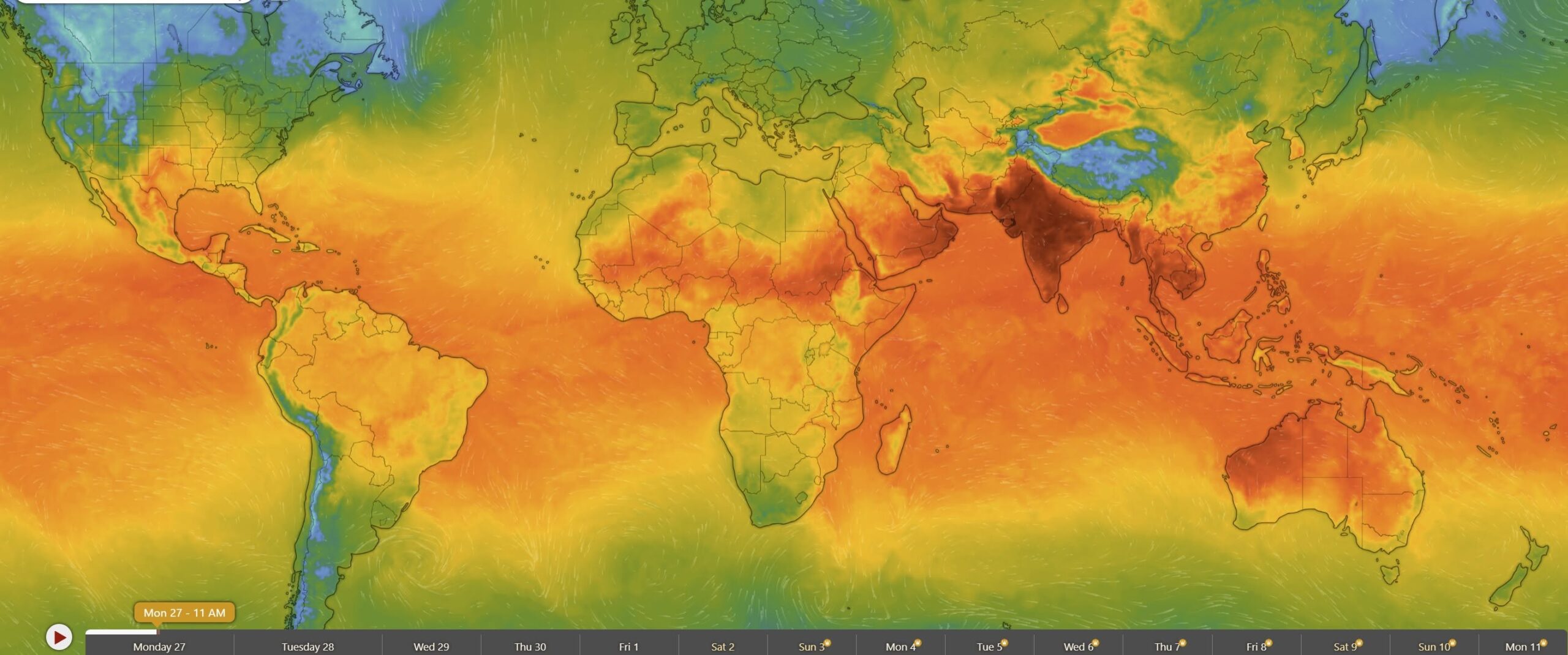
India is rapidly, irreversibly, and with remarkable indifference proceeding towards desertification. The consequences will not be abstract or distant. They will be immediate and generational. Our grandchildren will inherit a land that is simply unliveable (and not just because of the environmental fallout of our actions), and that will be squarely our fault. When I say “our,” I mean something precise, which I will explain in another post. But rest assured: if you were born in the closing decades of the last century and the last millennium, you are personally, generationally, and inescapably responsible for everything that will befall this ancient, long-suffering land.
As a parent, I can only hope that my daughter either corrects what my generation so spectacularly screwed up, or has the wherewithal and foresight to leave before it all goes comprehensively to shit. I certainly will not be around to witness how it ends.
And I thank dog for that small mercy.