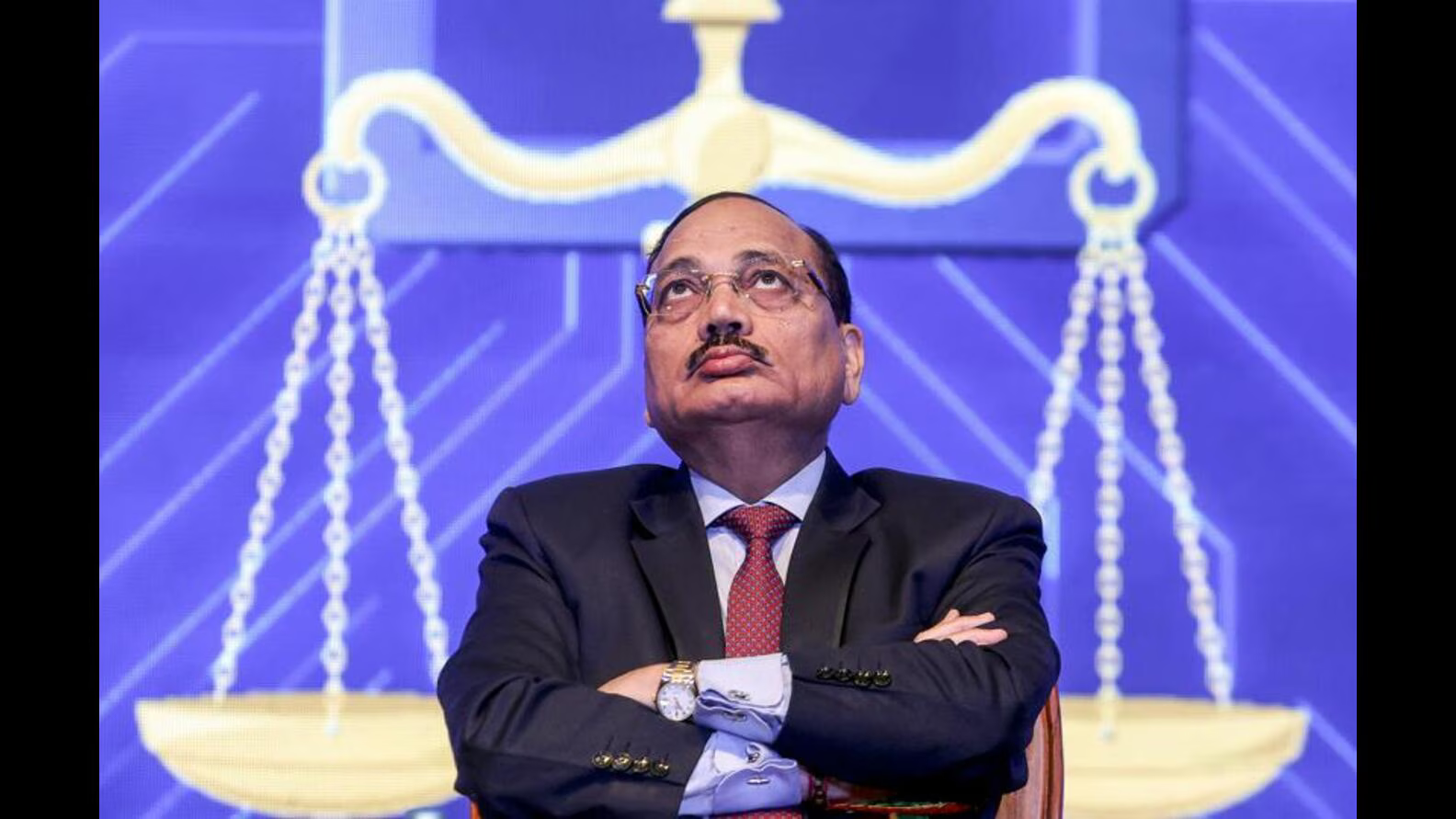
There was a time when the King was the supreme political, military, religious, and judicial authority. Any insult to the King was considered detrimental to the health of the kingdom, purely because the kingdom’s health was defined as that of the King and not of the people residing in it. To question the ruler was not merely to question a man. It was to question the State, the law, the army, the moral order, and often even God Himself, because all of them converged into a single sacred authority seated upon a throne.
Absolute monarchy has been out of style for a while now, having been replaced by some form of rule by the people in most parts of the world, with even dictators (rare as they are in 2026) claiming they rule in the name of the very people they dominate. And in a democracy, especially in a democracy, those temporarily in power (for that is how democracies function) are not immune to questioning, accusations, satire, scrutiny, or public anger. The Prime Minister of India, for example, can be caricatured. He can be criticised. He can be laughed at. He can be held accountable for his utterances and actions. (Yes, before the naysayers begin their throat-clearing, remember, as a pedant, the difference between can and is. We are discussing what is legally and philosophically permissible in a democracy, not whether mobs, governments, or ecosystems of power always behave democratically.) The Army Chief, ditto. The Chief Secretary, the LoP, the editor of a national newspaper, the captain of the Indian cricket team, the local police commissioner, everyone is fair game. No public office in a republic is supposed to stand above criticism or commentary.
Except God, of course. Only in India. But there are historical and sociological reasons for that, which I will return to later. Anyway, to continue where I left off; except God. And the judiciary. Or perhaps I should say, the “Judiciary”, given the almost theological reverence with which it is expected to be spoken about in India.
And that brings us to contempt.
Now, contempt itself is not some bizarre or uniquely Indian concept. Every legal system requires a mechanism to ensure that courts can function. If a judge directs a government department to release documents, or orders a corporation to comply with a ruling, or restrains somebody from interfering with an ongoing proceeding, there must exist consequences for deliberate defiance. This is civil contempt. It refers, broadly speaking, to wilful disobedience of judicial orders. Without such a mechanism, courts would simply become advisory bodies whose judgments could be ignored at convenience. A judiciary without enforcement power is theatre, or more precisely, a circus. Civil contempt, therefore, is logical, necessary, and entirely compatible with democracy.
The trouble begins with criminal contempt, especially the branch dealing with “scandalising” the court. While the current framework formally comes from the Contempt of Courts Act, 1971, the doctrine itself long predates independent India. It entered Indian law through colonial jurisprudence under British rule, where Indian courts inherited the English common-law offence of “scandalising the court”. The British codified contempt powers through the Contempt of Courts Act, 1926, but even before that, colonial courts exercised inherent contempt jurisdiction derived directly from English legal tradition. Independent India did not invent this doctrine. It inherited and retained it almost intact.
And that matters because colonial courts were not functioning inside a democratic republic. They were functioning inside an empire. Preserving the “authority” of courts was therefore inseparable from preserving the prestige and legitimacy of imperial rule itself. That logic still survives in modern Indian law, where any act or publication that “scandalises or tends to scandalise” the authority of a court may amount to criminal contempt. The problem with language like this is not merely that it is vague, but that its vagueness is effectively limitless. Is satire scandalising? Is alleging judicial inconsistency scandalising? Is accusing judges of ideological bias scandalising? Is publicly expressing distrust in a judgment scandalising? Nobody can answer these questions with precision, which means citizens inevitably begin censoring themselves long before a court ever intervenes.
But republics are supposed to function differently. Judges in a democracy are not custodians of sacred truth. They are public officials exercising enormous constitutional power. Their legitimacy is supposed to emerge from transparency, consistency, fairness, and legal reasoning, not from criminal statutes protecting them from embarrassment. Which is why mature democracies gradually abandoned the idea that public confidence in courts can be manufactured through fear.
And this is not some dormant legal fossil lying forgotten in constitutional storage. Arundhati Roy was convicted for criminal contempt in 2002 after criticising the Supreme Court during the Narmada Bachao Andolan controversy and spent a symbolic day in jail for it. Prashant Bhushan was convicted for criminal contempt in 2020 over tweets criticising the judiciary and former Chief Justices of India. Justice V.R. Krishna Iyer himself, one of the most respected judges in Indian legal history, faced contempt proceedings after publicly criticising judicial functioning. E.M.S. Namboodiripad, the first communist Chief Minister elected in India, was convicted in 1970 for remarks suggesting that the judiciary reflected class interests. P. Shiv Shankar, a former Law Minister, found himself facing contempt proceedings after criticising the class composition of judges.
A former Supreme Court judge. A Booker Prize-winning author. A senior advocate. A former Law Minister. An elected Chief Minister. All, at different points, accused of weakening public confidence in the judiciary through criticism. That is not the behaviour of a republic comfortable with scrutiny. It is the behaviour of an institution anxious about irreverence.
Which is precisely why most mature democracies have either abandoned such doctrines entirely or hollowed them out into irrelevance. The United Kingdom abolished “scandalising the court” in 2013. New Zealand abolished the offence in 2012. In the United States, the First Amendment effectively renders such prosecutions constitutionally impossible except in cases involving direct obstruction of justice or immediate interference with proceedings. France and Germany, despite having stricter speech frameworks than the United States in several other contexts, generally treat criticism of judges as part of democratic discourse unless it crosses into threats, intimidation, or procedural interference. Japan retains formal contempt powers but uses them sparingly and overwhelmingly in procedural contexts rather than as instruments protecting judicial prestige. Israel, despite its intense constitutional conflicts and deeply polarised politics, has seen ferocious criticism of judges without evolving an Indian-style culture of criminalising institutional embarrassment.
Most modern democracies eventually concluded that courts derive legitimacy from public trust earned through conduct, not from criminal statutes protecting them from discomfort. And yet India persists with it. Respect that survives only under threat of punishment is not respect. It is institutional insecurity codified into law.
Now, before somebody predictably misreads this article as an anarchic argument against all legal restraint, let me clarify something. There are many laws in India that deserve scrutiny, reform, narrowing, or outright abolition. The UAPA, the NSA, and increasingly the PMLA all sit within larger debates around terrorism, organised crime, separatism, hawala networks, narco-financing, and money laundering. Those debates are real. But unlike ordinary criminal jurisprudence, these statutes are explicitly designed around the idea that detention itself is often necessary before guilt is fully established. Which is why the famous principle that “bail is the rule, jail the exception” does not comfortably exist within these frameworks even in theory. The architecture itself is different.
Under statutes such as the UAPA and PMLA, the threshold for bail is intentionally made extraordinarily difficult because the State’s argument is that the accused is not merely an individual facing trial but a potential threat to national security, economic stability, or the integrity of the investigative process itself. One may agree or disagree with that logic, but at least there exists a coherent ideological and security argument behind it. The State is openly saying: these are exceptional crimes and therefore exceptional restraints are justified. Between 2019 and 2023, more than 10,400 people were reportedly arrested under the UAPA while convictions during the same period hovered around 335, roughly 3.2%. Those numbers should provoke serious constitutional debate.
Then there are anti-conversion laws, which may be among the strangest legal experiments in a constitutional democracy because they attempt to police not merely action but conscience itself. Most prohibit conversion through “force”, “fraud”, “coercion”, or “allurement”. Force and fraud are understandable categories. Threatening somebody with violence in order to convert them should obviously remain illegal. But “allurement” collapses under even mild philosophical scrutiny. What exactly does it mean? If a religion tells you that accepting its teachings will grant salvation, moksha, redemption, heaven, jannat, transcendence, inner peace, or eternal life, is that not inducement? Evangelising religions are built precisely on the idea that life within the faith is superior to life outside it.
So when the State starts pretending it can distinguish between “genuine” spiritual persuasion and “improper” allurement, it enters intellectually absurd territory where bureaucrats effectively become auditors of human belief. Madhya Pradesh alone reportedly registered over 280 anti-conversion cases in roughly five years while producing only a handful of convictions. Which tells you something important: the process appears far more active than the proof.
Even sacrilege or blasphemy-style restrictions, which I personally oppose as a rationalist, exist within a more complicated social reality. I do not believe gods require legal protection from criticism. If a supposedly omnipotent being can be emotionally injured by a stand-up comedian, a cartoonist, or a meme, then perhaps omnipotence was oversold in the brochure. However, India is not a Scandinavian philosophy seminar. It is an emotionally combustible civilisation where religion often functions not merely as theology but as identity, tribe, inheritance, and political mobilisation. So while I oppose sacrilege laws philosophically, I at least understand the public-order argument underlying them.
But criminal contempt for “scandalising” the court stands apart from all these debates because there is no serious republican defence for it anymore. UAPA, NSA, PMLA, anti-conversion laws, even sacrilege laws, all emerge from some identifiable argument around security, social stability, or public order, however flawed one may find those arguments. Criminal contempt for offending judicial dignity does not even possess that. It belongs intellectually to another era altogether. It belongs to crowns, thrones, and sacred authority. Not to a constitutional republic.
In fact, this may be one of the rare genuinely bipartisan reforms available in India today. I struggle to imagine any serious democratic argument, whether from the BJP, the Congress, the Left, libertarians, liberals, conservatives, or centrists, for retaining the offence of “scandalising the court”. Civil contempt must remain because courts need the power to enforce orders. But criminal contempt for offending judicial dignity should be abolished immediately and completely.
Judges are not monarchs. Courts are not temples. And the Republic of India cannot continue using the psychological architecture of empire while pretending to celebrate free citizenship.