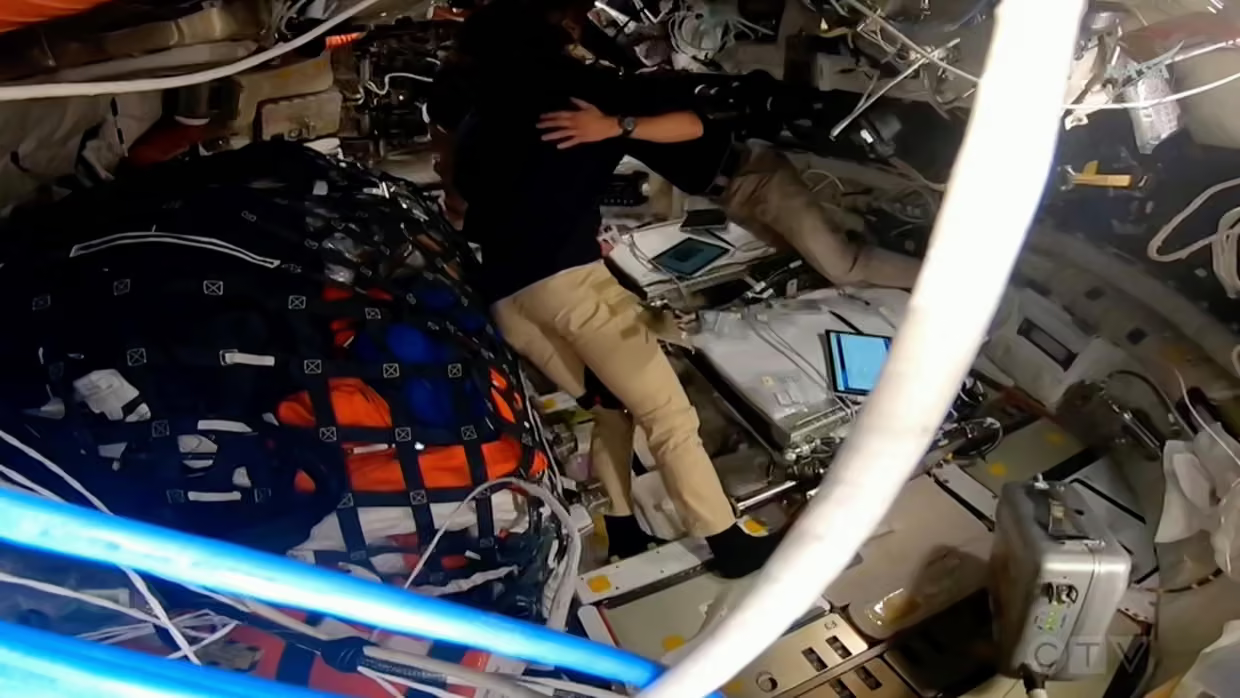
We are a species that can place four human beings, three men and one woman, strangers once and now bound by training, trust, and a shared thirst for adventure, inside a metal canister for a machine and hurl them across over 400,000 kilometres of empty, indifferent space using a rocket powered by 2.8 million litres of cryogenic propellant slingshotting on an infinity-shaped round-trip from Earth towards a dead grey rock, airless and ancient, orbiting our planet, carrying with them not just instruments and calculations but a small fragment of the Wright brothers’ first fragile aeroplane from 123 years ago, as if to stitch together the entire arc of human flight from those 12 trembling seconds covering 37 metres at a height of barely 3 metres above the sand to a silent glide over another world at 11,000 metres per second, sustain them there on mathematics, engineering, and an almost unreasonable faith in one another, and then, when confronted with the opportunity to leave a mark upon that alien landscape, choose not conquest or ego or national glory but the name of a loved one, a private grief carried across the vacuum and made permanent in dust that has not known air for billions of years, so that in that single unscripted moment four trained, disciplined, mission-focused astronauts, Reid Wiseman, Victor Glover, Christina Koch, and Jeremy Hansen, become simply human, embracing and breaking, because even at that distance, even with the Earth reduced to a fragile blue abstraction hanging in the void, what asserts itself first is not dominance or ambition but love, the same impulse that shaped Neil Armstrong’s words into something belonging not to him but to all of us, a leap measured not in metres or the arrogant hubris of achievement but in meaning, and this is the very same species that builds vaccines, deciphers the genome, designs systems of governance aspiring towards fairness, rescues animals from the brink of extinction, cares for the weak, the ill, and the ageing, writes poetry, composes music, hugs trees, and tells stories to children at night, and yet, with those same hands and that same intellect, constructs weapons capable of annihilating itself many times over, stockpiles them with pride, refuses to relinquish them, wages wars over resources, bombs hospitals and schools, kills the sick and the very young, and starves whole populations through policy and blockade, so that any observing alien intelligence arriving tomorrow to make sense of us would find a civilisation suspended in contradiction, capable of reaching the moon with a piece of its earliest flight tucked inside the vessel and naming a crater after a deceased lover, and capable, in the very same breath, of justifying the destruction of its own people, and would be forced to conclude that the defining feature of humanity is not its technology, nor its violence, nor even its compassion, but the unresolved, perhaps unresolvable, tension between what it can be and what it keeps choosing to become.