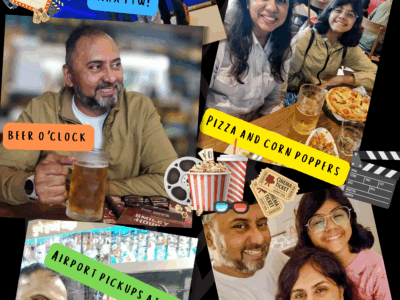
I am a child of aviation.
Raised, for the first half of my childhood, in the Indian Air Force (which my father served with distinction until 1985), and for the second half, all the way through late youth, in Air India, where Baba flew the big jets around the world until he retired on his 58th birthday in 2005 (I still remember surprising him on his very last flight by turning up unannounced at Frankfurt airport, and standing with a big smile at the end of the line his crew formed to greet him as he walked back to the cockpit one final time), I still look at an aircraft (any aircraft) taking off or landing in rapt attention until it passes my visual horizon.
In fact, it would not be an exaggeration to say that aircraft hangars and flight simulators, the smell of jet fuel and the roar of engines as the throttle is pushed forward, the click of a five-point harness in the cockpit jump seat and the whirr of the motorised seat adjuster, the laughter in crew transport buses and the feel of soft pillows on plush beds in transit hotels in strange, exotic cities, formed the texture of my upbringing, in that peculiar half-world of aviation where the sky was not a metaphor but a workplace, which meant that flying, to me, was never aspirational in the Instagram sense, never a lifestyle flex, but simply life, slightly elevated, slightly pressurised, smelling faintly of kerosene, coffee, cigarettes, and aftershave, even if I lived it only vicariously through my father and, later, my kid brother.
And while I was not around to witness the true golden age of the 60s and 70s, when civil aviation was theatre and privilege rolled into one, I certainly grew up in the 80s and 90s, that long, unbroken, pre-9/11 stretch when flying was still charged with energy, dignity, and style, not to mention an unspoken, yet unmistakable, pride.
People dressed up, because flying felt like something you dressed up for. Security existed, but mostly in the background. Luggage rules were generous because trust still existed. Customs and immigration were firm, but rarely brusque. Airports were places of movement, not shopping malls. And it was perfectly normal for passengers (with the Captain’s permission, of course) to step into the cockpit and stand behind the pilots, chatting. Baba would sometimes let me come up, and I would sit there watching grown men do something that felt impossibly adult and impossibly beautiful at the same time, speaking in calm, precise voices, surrounded by dials and switches, while earth and sky slid past beneath us, the radio crackling and Baba going, “Namaskar, Bombay Tower, this is Air India 111. How are you?” “Bonjour, Paris, Air India 143. Comment ça va?”
Those were the days. Smoking was allowed. There was silverware, actual china, and meals were more than just food. Nobody spoke of “full service” because there was no alternative category. There was no “no-frills airline”. There was no “Premium Economy”. There was just… flying.
All of this has been mourned enough, though. Enough ink has been spilled about the loss of style, the triumph of convenience, the replacement of service with brisk, transactional professionalism, and the steady humiliation of ritualised suspicion, where you undress for security, unpack your life into plastic trays, submit to groping, repack yourself under harsh lights, and then earn the privilege of boarding a flight you have already paid through the nose for. Once, at least, this loss was compensated for by cheaper tickets. Today, flying is once again expensive. And now, it is also joyless.
But, as I said, enough people have written, spoken, and expressed this already. I am not interested in rehashing that lament. The obituary has been written, many times over, and unfortunately, it is not something that can be repaired or reverted to. What is lost is lost. One must accept it and move on. Flying is not the same as it was, and it is unlikely to ever be.
What interests me are the small things. The cheap things. The easy things. The things that should still be possible. The things where the result (in terms of what it makes the passenger feel) is disproportionately large compared to the effort that goes in.
Take service. We all know the possibly apocryphal story of American Airlines saving millions by removing one olive from each martini. Fine. Believe it or don’t. But here is my lived reality, and it happened last night on Air India Express HYD-PNQ. I pre-pay for a rather expensive cup of tea while buying my ticket, already lowering expectations because I know what is coming, and I am handed a plain paper cup containing a pre-mixed powder of sugar and spice into which boiling water is poured, stirred with a flat wooden spatula, and presented with the least amount of interest humanly possible.
Leave aside warmth or charm. Even basic hospitality feels optional now.
I am not asking for the return of kettles, milk pots, and brewed tea leaves, with an elegant air hostess or purser smiling gently, leaning in and whispering so as not to disturb others, “Tea or coffee, Sir?”, as I light up a post-prandial cigarette! That would be an absurd expectation. Indeed, I understand times have changed. I understand logistics. I understand cost pressures. I understand modern aviation economics. And the modern life. But would it really kill you to offer a cookie with the beverage, or a small chocolate, or even sugar on the side instead of pre-mixed (so I can add it to taste instead of having some faceless entity decide it for me)? Would it be unreasonable to think about the cup itself, its design, its print, its texture, its weight, the way it feels in the hand, the way it quietly translates your brand into the passenger’s mind?
Design is not extravagance. Design is intent.
A plain paper cup and a wooden stirrer announce, very clearly, that nobody cared long enough to imagine a better version. Indeed, it is almost a careless “f**k you” to the passenger, a “see how little we care.” Now, I understand that these may seem like petty complaints. But pettiness is cumulative, and experience erodes grain by grain until there is nothing but frustration left.
Then there are the announcements. In short: why are they so bad?
I remember my father’s voice coming on the public address system, beginning with a line that now feels almost antique,
“Ladies and gentlemen, this is the captain from the flight deck. Welcome aboard Air India’s non-stop service from Bombay to London…”,
followed by the names of his crew, weather en route, expected flying time, sometimes a gentle heads-up about turbulence, sometimes pointing out an interesting sight out of the window, occasionally even a small joke, and always at least one sentence in the language of the destination (this never failed to wow the passengers).
On long-haul flights, he would step out of the cockpit once, walk the aisle, make eye contact, and gently remind everyone that there was a human being in command of this metal tube hurtling through the sky. Passengers saw him as one sees the captain of a seagoing ship: reassuring, attentive, generous with his presence, and unmistakably in charge. His visibility, and the ease and confidence of his carriage, created comfort.
Today, the captain is a rumour.
A disembodied, cryptic announcement confirms origin, destination, and regulatory compliance, and then vanishes. Yes, I understand that flying is a job. It always was. My father was a professional to the core. So were his peers, men born in the 40s and 50s who flew the big jets through the 70s, 80s, and 90s. Professionalism never precluded pride. It never excluded warmth. Somewhere along the way, policy strangled presence, and the voice was reduced to a compliance artefact.
And then there is the cabin crew.
Once, air hostesses were admired, sometimes unfairly romanticised, sometimes later cruelly mocked as they aged (a cruelty I have written against elsewhere), but always recognised as service professionals who carried themselves with warmth and authority. I grew up around Air India crew, so perhaps my view is biased, but even beyond that, there was a time when Jet, Kingfisher, EastWest all understood that a smile was not an optional extra, that joy was part of the uniform.
Today, exhaustion hangs in the aisle. Everyone is simply trying to get through the sector. Service has narrowed into task completion. Even grooming, hair, makeup, presentation, all feel strangely pedestrian compared to earlier decades. You can feel morale leaking from both sides, passengers and crew locked in a shared disappointment, going through the motions, neither quite remembering why this ever felt special. The aircraft, and the experience, feel less personal, almost sterile, as though nobody wants to touch it for fear of contaminating it with personality and joy.
Finally, the recorded announcements, the ones that supposedly represent the airline’s voice, the ones I grew up listening to Baba and his crew making with such gusto and purpose.
Today, they are uniformly dreadful. Garbled. Mumbled. Diction mangled in both Hindi and English. No rhythm. No clarity. No sense that anyone has listened to how they sound. Even I, an Indian adept at these languages and knowing exactly what is said in such announcements, find it difficult to separate out words into comprehensible sentences. Imagine the plight of people whose native languages are not these. They are probably missing out on crucial information (belt numbers, transfer instructions, and so on), as I could tell from my experience last night.
The problem is that these voices are trained to complete a requirement, not to communicate. Indeed, I do not even think they are trained to convey a message, merely to memorise a standard written script and to vomit it out quickly into a microphone so as to get it over with.
Nobody seems to have said, “All right. This is how you sound to a cabin full of people. This is how you need to pronounce this word. This is where the stress falls in this sentence. This is how you make it clear without sounding robotic.” I do not think they are ever played back a recording of their announcements and given feedback. If that is so (and I strongly suspect it is), airlines are missing a trick, not only in communication clarity, but also in branding, because this is one of the few moments where the airline’s voice literally fills the cabin, and it is easy to correct.
Now, I do not particularly care about which airline dominates a fare chart this quarter. But I do care about one particular one: Air India. Because I am, unavoidably, an Air India brat. I carry it in my bones. I carry it in my spirit. I cannot help feeling a sense of ownership, possessiveness, and bond with that brand, regardless of who owns the equity of the company.
And so this is an appeal, perhaps a naive one, to the Tatas, or to whoever within the Tata Group still believes that legacy is not something you merely inherit, but something you must actively earn, again and again. Air India did not begin as a balance sheet exercise. It began as Tata Air, as JRD’s flying dream, built on the belief that Indians deserved excellence, style, and grace in the air, long before such ideas were fashionable, or were even thought possible.
This does not require nostalgia. It requires intent, determination, and a plan.
Here is what you can do (to begin with):
- Train announcers (both, the cockpit and the cabin crew) to be communicators, not an impersonal voice on a loudspeaker for the sake of compliance.
- Give your captains permission, and encouragement, to be visible again.
- Humanise your staff, both on ground and in the air. Let them have personalities, let them interact and engage with the passengers, make passengers care for the staff, and by association, the brand again.
- Invest in service design at the smallest scale (cups, trays, textures, words). You can look at Indigo for the way they have approached design. Hell, look at your own history. It is full of aesthetics, utility, and beauty. There’s enough there.
- Teach cabin crew that joy is contagious, but not if it is merely performed. If that means better salaries, better rostering, humane rest, better uniforms, HR interventions, whatever it takes, then do it. Make them genuinely well, and you will not need to script warmth. Right now, too many of them move about like zombies, dead inside, and it does not augur well for an industry that is, or at least used to be (and ought to be), hospitality. You are the Tatas. Making and keeping employees well is something you have over a century of practice. Live up to that legacy.
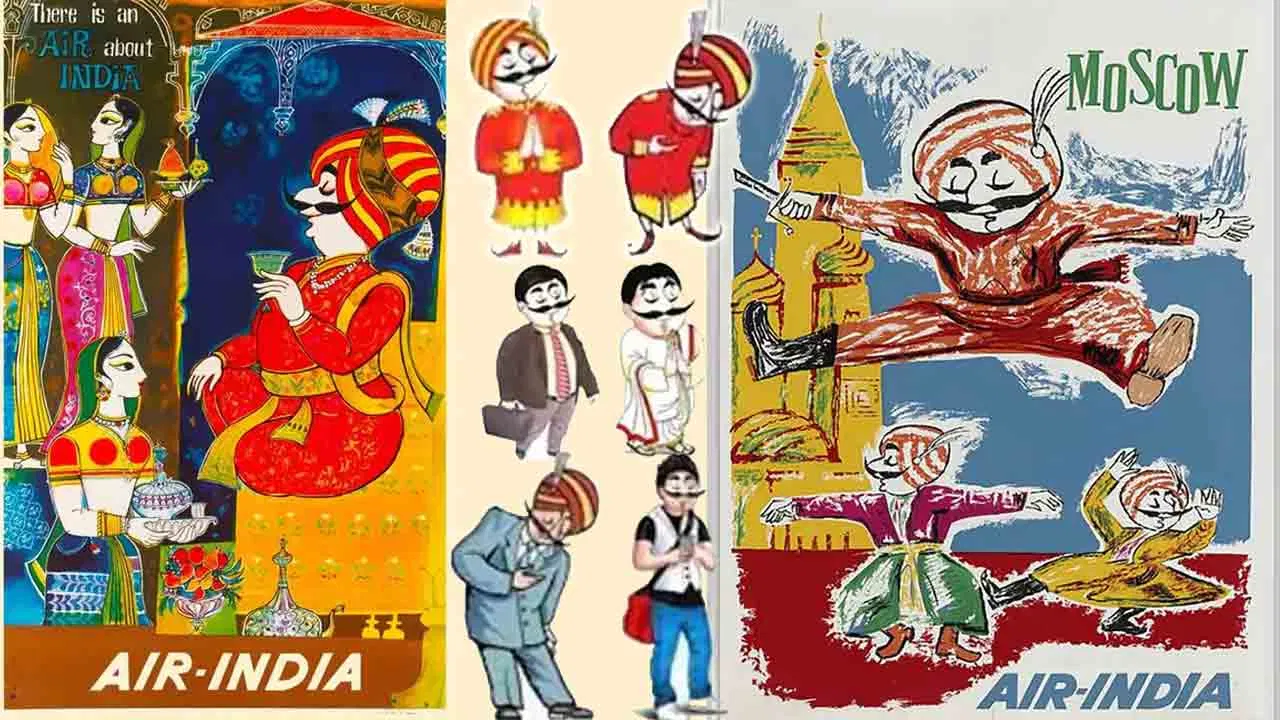
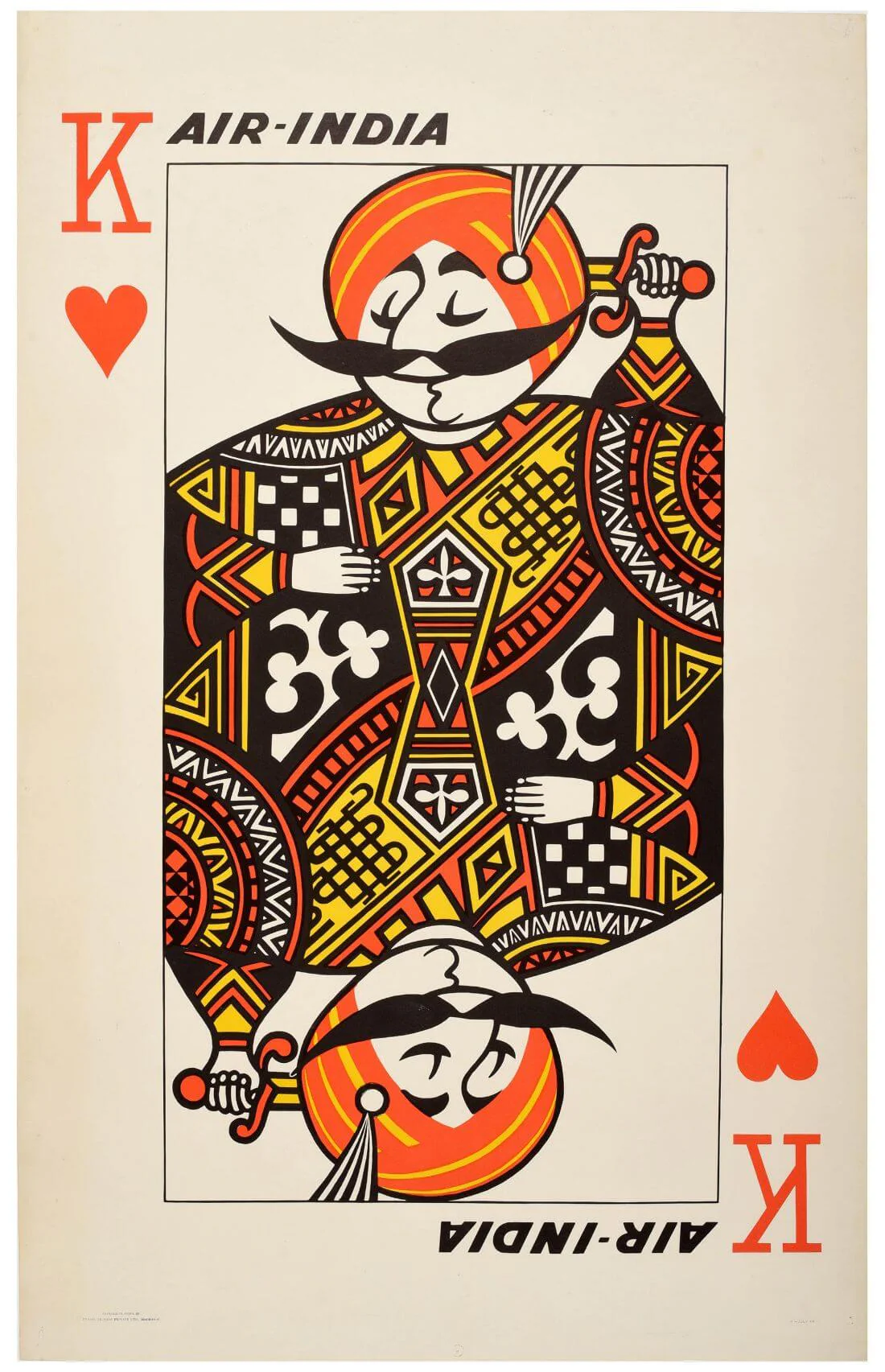
- Restore brand personality, even gently, even imperfectly. This is not a process that begins and ends by next quarter. It will take time, but do it for the Maharaja. Do it for Bobby Kooka. Do it for Nevill Vintcent. Do it for JRD. Do it for India. Air India has always been seen as the national flag carrier. And now, as a Tata property, you have the responsibility, and privilege, to make it deserve both tags: a Tata brand, and a representative of India and Indianness globally.
I am not asking for glamour. I am not asking for romance. Start with joy. Let romance follow. Let glamour arrive later, as it will, automatically, when you do the above.
Because this thing we do, this absurd, miraculous act of heavier-than-air powered flight, of human beings sitting above the clouds while the world scrolls beneath them, should still inspire something.
Coming from a family where every one of us (even those of us who do not know how to fly an aircraft) still stop and stare at an aircraft taking off or landing, even today, even after having lived amongst them for 50 years at the very minimum, it pains me that it does not.
Can you imagine a world where humans no longer feel awe at flying? Where we are not amazed that we can sit in the sky, sipping chai and listening to music, passing through cottony clouds to get from Point A to Point B so far away, in so little time, that to anyone even a century ago, it would have been nothing short of magic. That we can cross oceans. That we can beat geography. That we can rise, literally rise, above weather and mountains and curvature.
Humans. Flying!
If that no longer fills us with joy, what sort of world have we built?