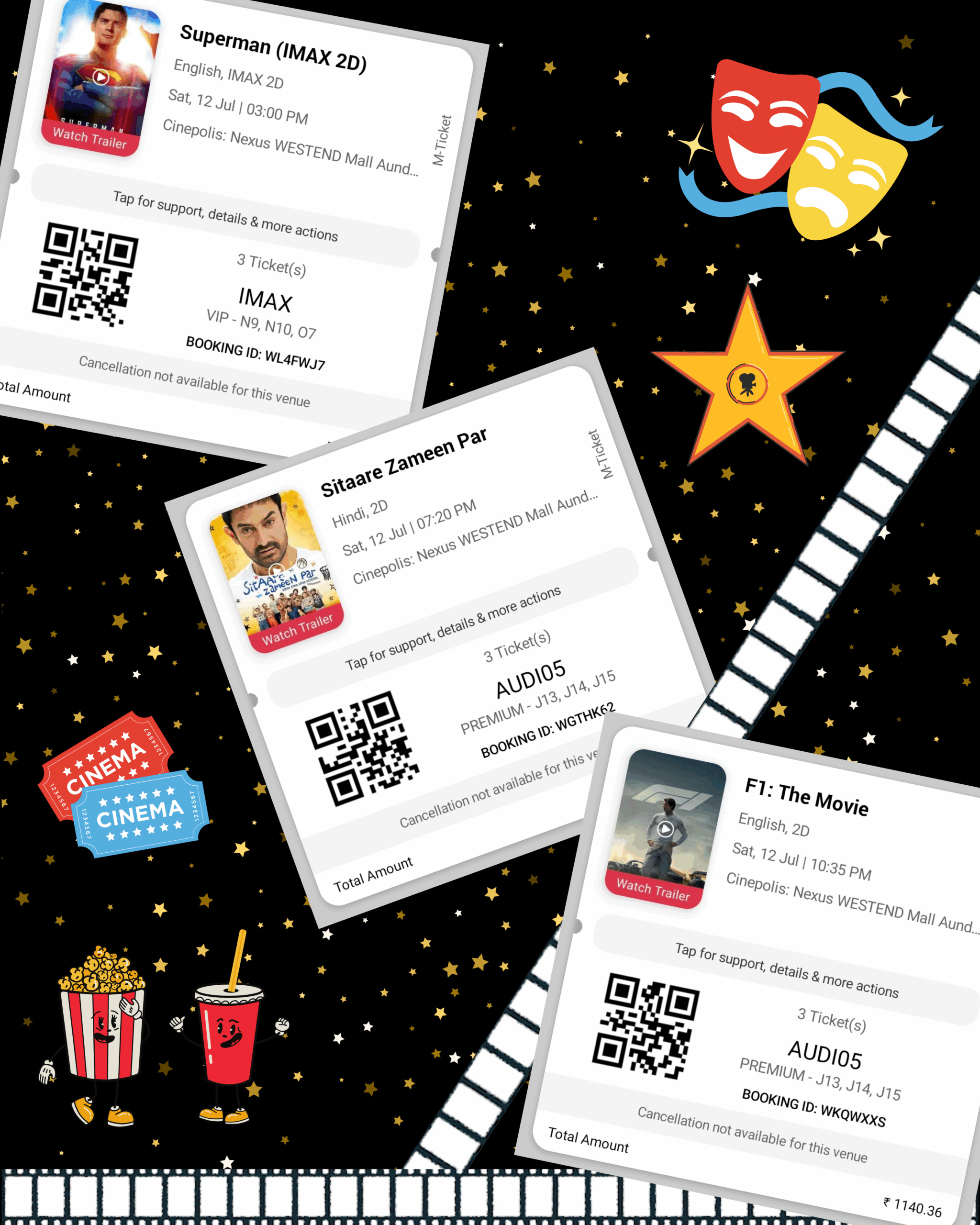
TL;DR: We saw three movies back to back, and then picked up and dropped a friend off, scoring 3/4 in terms of entertainment, value for money & time, and sheer joy.
My Ratings
Superman: English IMAX 2D, Westend Mall, Aundh. 7.7 IMDb, Rotten Tomatoes 82%, Mine 8/10
Sitare Zameen Par: Hindi 2D, Westend Mall, Aundh. 7.2 IMDb, Rotten Tomatoes 79%, Mine 2/10
F1: English 2D, Westend Mall, Aundh. 7.9 IMDb, Rotten Tomatoes 83%, Mine 9/10
Karthik: Tamil-Marathi, splendidly bearded, proudly beer-bellied, 1982 vintage. My rating: 11/10
Part One of a Three-Film Saturday at Westend Mall: Aliens
We had a plan. A noble, ambitious, three-film-marathon kind of plan.
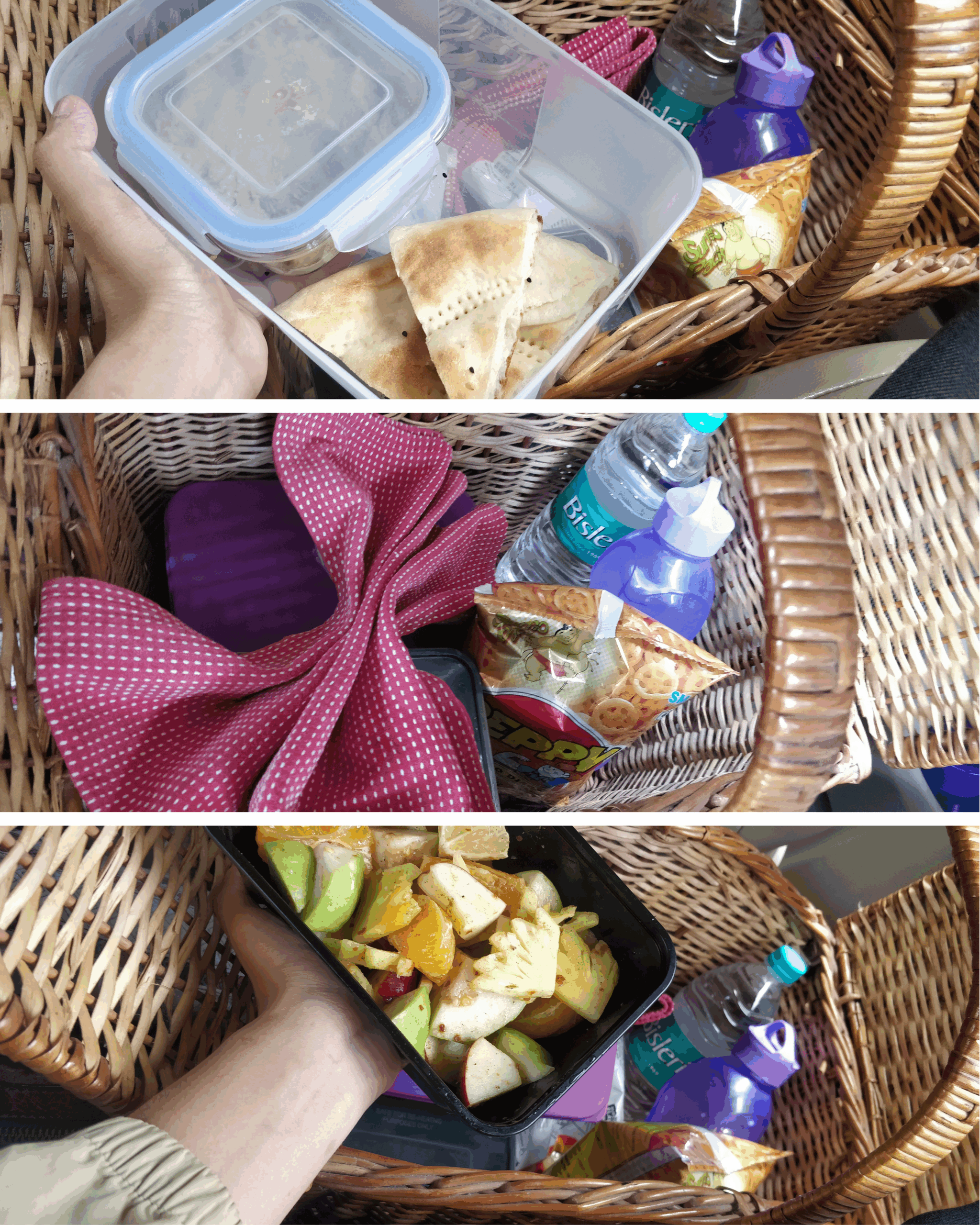
It began a week ago, in one of those rare family planning sessions where everyone agreed on everything: the theatre, the movies, the snacks (yes, Misbahji packed an elaborate picnic hamper with hummus, Afghani roti, cut fruits sprinkled with chaat masala, chips, chocolates, water, juice, towels, wet wipes, and more of the same, enough to feed an entire basketball team), and the day. Maryam was supposed to attend an interview for selection into the school robotics team in the morning. And then, Misbahji, Maryam, and I were going to spend the rest of the Saturday (from 13:00 to Sunday 01:30) watching back-to-back films, eating, drinking, and making merry at the Westend Mall in Aundh. It was supposed to be seamless.
But then, like in films, when everything is going well, Saturday happened.
By the time I had finished being designated driver to my mother and her entourage, a duty that involved navigating Pune traffic, managing impatient aunties, and suppressing the urge to abandon the car somewhere near Model Colony, and Maryam had finished her interview (her teacher conveniently forgot about the group discussion, which meant she ended at noon instead of 09:30, as was earlier planned), we were already ten minutes behind schedule. We rushed through the mall, tickets ready, three bodies hurtling toward IMAX, wondering how much we’d missed.
Turns out, not much. Thanks to the national anthem and the film industry’s relentless love affair with trailers and ads, we walked in just before the opening credits of Superman. A stroke of cinematic luck.
First, the Format
This was my first ever IMAX experience.
And my dog, it was glorious.
The screen was impossibly large. The sound had the weight of thunder but the clarity of a glass bell. Every visual was crisp enough to slice the air. I don’t say this often, but I was awed.
Cinema had turned physical. It was no longer something I watched, it was something I felt.
And then, I began watching the film itself. And I’ll be honest: the initial few minutes had me questioning my life choices.
Layer One: What It Is to Be a Child
The film, for lack of a gentler word, looked comic booky.
The characters were exaggerated. The humour was juvenile. Mr Terrific’s gadgets looked like they were built by a toddler with access to a toy drone and too much sugar. There was a selfie-taking Barbie-type. A dog. Everything screamed: this is for children.
I turned to Maryam. She was loving it.
She held up her thumb (later, she rated it 9.5 out of 10).
And that’s when it clicked.
The film wasn’t flawed. I was watching it with adult eyes.
It was designed to capture the sheer joy of being a child, the moral clarity, the playfulness, the uncomplicated belief that heroes are real and the world can be saved.
It was bright, silly, and loud, not in spite of the audience, but because of it.
I think DC realised how dark its films, and its characters, had become over time, and how far they had come from the original comic book, that it took a leaf out of Marvel, with the bright visuals, the witty one-liners, the typecast characters, the over-the-top treatment, and came up with this.
That was layer one: what it feels like to be a kid again.
Layer Two: What It Is to Be an Adult
But then came something subtler. As the plot evolved, as the characters deepened (if not always convincingly), a second theme emerged, moral agency.
Superman can rule the world. He has the power.
But he chooses not to.
He chooses, instead, to protect, to serve, to feel.
Lex Luthor, played with delicious bitterness by Nicholas Hoult (I remember him from “About a Boy”), makes it clear: his envy isn’t about Superman’s strength, it’s about his restraint.
He is a tech genius who is obsessed with Superman, not because he wishes to be him, but he is envious that Superman, even when he could easily choose to be a tyrant, with all that power, still chooses to be kind, something Lex finds confounding, because he’d choose otherwise.
This is what it means to be an adult, to do what you should, not what you can.
To choose principle over impulse.
To say no when you could say yes.
To serve when you could dominate.
That was layer two, the painful nobility of adulthood.
Layer Three: What It Is to Be an American (…and Also an Indian)
Superman isn’t from here. Not just America, not even Earth. He’s the ultimate immigrant.
And yet, he becomes the embodiment of American values: decency, freedom, personal sacrifice, suburban kindness.
He’s the all-American hero, in jeans and checked flannel, raised on a Kansas farm, dripping wholesomeness and eating his cereal.
But he is forever under suspicion.
Every film in this franchise has one thing in common: Superman having to prove, again and again, that he means well. That he is in fact, a patriot.
His loyalty is never a given. He is accepted, conditionally.
That, for me, is the sharpest metaphor in the film.
Because to be American is not about birthplace, but belief.
You can be born in a rocket from Krypton and still be a citizen, if you embody the myth of America.
And this is where Indian audiences might feel a flicker of recognition.
Because India, too, is a melting pot, not over 300 years like America, but over 3,000.
We are Aryan and Dravidian, tribal and urban, Persian, Chinese, Greek, Hun, Uzbek, Afghan, Mongol, Mughal, African, colonial, and post-colonial.
We are black, white, brown, and yellow. We are saffron, white, and green. And we bleed blue.
Our Constitution, drafted in the ashes of Partition, drew on the American and French ideals of citizenship and freedom.
We are a country held together not by blood or language or religion, but by a shared imagination. And a history of assimilation, of getting people who come to conquer us to become like us. By taking the best they have. And making them feel at home. Never wanting to return.
Superman’s story is an American one, yes. But it is also, deeply and fundamentally, an Indian one.
That was layer three, identity is chosen, not inherited.
Layer Four: What It Is to Be Human
And then, finally, the deepest cut.
Superman is not human.
But in his compassion, his grief, his love, and most importantly, his choices, he becomes more human than most of us.
He rebels against his own parents’ expectations. He rejects his destiny.
And that’s something only humans do.
Only we say no to instinct.
Only we choose morality over survival.
We use condoms.
We care for the elderly.
We help the disabled.
We save endangered species.
We defy our own evolutionary logic, and we call that civilisation.
Superman, in choosing to not become a god, chooses to become a man.
He opts into humanity, rather than claiming superiority over it.
That was layer four, the fight against nature is the beginning of civilisation.
As the credits rolled, I found myself deeply moved. Not because the film was perfect, it wasn’t. It was loud, messy, uneven in places. But it was ambitious. It tried to speak to the child, the adult, the citizen, and the soul, all in the same two and a half hours.
We stepped out into the mall, all three of us hungry and buzzing.
We’d consumed popcorn by the bucket, drowned it in Thums Up (because that’s what one does), and now we were headed for beer and chicken before our next screening, Sitare Zameen Par, an entirely different galaxy of emotion, I suspect.
There’s still a long Saturday ahead.
But this first chapter, Superman, gave us enough to talk about over a dozen meals.
And that’s the thing about great cinema.
It may be fiction.
But it shows you who you are.
Part Two of a Three-Film Saturday at Westend Mall: Stars
After Superman, I found myself full of thoughts and in need of solitude. It’s a strange thing to crave when you’re in a mall packed with weekend shoppers, but then again, reflection doesn’t wait for the right setting.
I asked Misbahji and Maryam to go find a place where we could sit down for a bit, maybe grab a beer, eat something light, and rest our legs before the next screening. While they went off to scout, I took the long way around, wandering through the mall like a ghost in conversation with himself, pacing the corridors and escalators, speaking voice notes into my phone like a man whose thoughts might evaporate if not quickly trapped in digital bottles. I’ve always done this: used movement to ignite memory, let my feet guide my mind into clarity. Naturally, I attracted a few confused glances, but I’m far too old to be embarrassed by such things.
Eventually, Maryam called. She had found Pop Tate’s, a name that made us all smile since we’d eaten there once before in another mall and it had left us with good memories. This one felt just right. Not too crowded, lit warmly, and with that unmistakable familiarity of places you didn’t realise you’d missed.
We ordered a corn starter and a Farmer’s Delight vegetarian pizza, both of which turned out far better than I expected. I was, admittedly, amused to find both Misbahji and Maryam opting for vegetarian fare, but the food was well-prepared and comforting in the best way. I also ordered a draft Heineken, part of a happy hour offer that included a second glass. One now, one later. To my surprise, the beer was excellent, crisp and flavourful, and served at just the right temperature, unlike bottled beer that’s usually too cold to actually taste. It was, quite honestly, one of the best beers I’ve had in a while.
The only downside was the service, which was unhurried to a fault. By the time our pizza arrived, we had just under twenty minutes to get back for the next film. I finished the first beer in a few steady sips and politely asked the floor captain if he could hold my second glass until after the screening. He agreed without hesitation, a small but welcome act of grace.
We dashed back upstairs. Our seats this time were in the back corner. Misbahji prefers them there, while I’d have chosen the dead-centre of the last row, but we were too short on time to negotiate seating philosophy. The theatre was much fuller than it had been for Superman, perhaps two-thirds filled, with a fair number of children. As always, there was the national anthem, then the trailers, and then the second feature of our day: Sitare Zameen Par.
A Dry Eye in the House
Let me begin with a confession.
I am, by all accounts, an easy crier.
I cry at puppies in ads.
I cry at the sound of an old poem.
I cry at babies in strollers and grandfathers holding their hands.
I cry at full moons.
I cry in planes while taking off.
I cry when I think of my brother.
I cry when I think of my father.
So, for Sitare Zameen Par, I was prepared. I had carried not one, but two handkerchiefs, because I was almost certain this film would unspool me. After all, its spiritual predecessor, Taare Zameen Par, had reduced me to a puddle. I expected nothing less from this.
But the tears didn’t come. Not a single one.
No lump in the throat. No mist in the eye. No tremor in the chest.
It was disorienting.
At first, I wondered if I was missing something, if the fault lay with me. But the longer the film went on, the clearer it became. The problem was not my heart. The problem was the film.
Aamir, Lost and Tired
What made it so jarring is that I have always admired Aamir Khan, not just as an actor but as a shapeshifter, someone who disappears into his roles, someone who transforms so completely that you no longer see the star but only the person he is portraying. Shahrukh Khan, for instance, is always Shahrukh, no matter the role. He is the romantic hero with a crooked smile and yearning eyes. Salman, for all his charisma, is always the tough boy-child, the lovable rogue who seems to have wandered in from a different genre altogether. That is their charm. That is what their audiences expect and embrace.
But Aamir is different. With him, the magic lies in his absence. He dissolves. In his best roles. Bhuvan, Rancho, ACP Rathore, DJ. You forget who he is, and that is precisely the point.
Here, though, I only saw Aamir Khan, and not even a version I could believe in. He looked tired, worn out, emotionally absent. His performance felt like a patchwork of his past characters. Fragments of Rangeela, Lagaan, Dil Chahta Hai. All stitched together without conviction. His eyes, which usually anchor a scene with unspoken intensity, seemed hollow. Scene after scene felt like he was performing in isolation, responding to no one, speaking into a void.
It broke the illusion. It broke the spell.
Genelia, School Play Energy
And then there was Genelia, who debuted long ago opposite Aamir’s nephew, and has since gotten married, become an Instagram star, and yet not learnt any acting.
Her performance felt like something out of an annual day stage show. All exaggerated gestures, forced modulation, and an odd detachment from the emotional core of her scenes. There was no chemistry between her and Aamir. Their conversations felt stilted, their partnership on screen lacking purpose or believability. Her character, too, seemed assembled purely for convenience. She had access to a bus, could drive it, knew the right people, could put on a hammy act to extract a bribe (of a ridiculous proportion, done in a manner so dismissive that if I had blinked, I’d have missed that scene), and was available to fill space whenever the plot needed nudging forward.
Instead of lifting the film, she made it feel more laboured, more unreal. Does Aamir not have access to real actors?
The Team, the Chaos, and the Forced Fit
The basketball players themselves were a delight. Knowing that they were real children with disabilities made their presence on screen even more affecting. Each had a distinct personality, each brought authenticity that no trained actor could fake, and their energy was honest, warm, and full of life.
But the film didn’t know what to do with them.
Characters came and went without context. One moment you were trying to connect with Hargobind, and before that thread could settle, Golu appeared. Then Golu was sidelined by another. Emotional arcs were never allowed to deepen, and before you knew it, the film was juggling too many names and not enough meaning.
And then there was the awkwardness of the cultural transplant. This is a remake of the Spanish film Campeones, later adapted into English as Champions, and you could feel the Western skeleton peeking out beneath the sari. Some moments — someone having an RV/bus, the team showering together, the player dating a sex worker — might have worked well in Atlanta or Barcelona, but in Chandigrah or Delhi, in an Indian context, they felt jarring, even alien. The film seemed caught between imitation and adaptation, never quite finding its own voice.
Sights, Sounds, and the Unseen Magic
The music was, quite frankly, absent.
Not only could I not remember a single tune afterwards, I couldn’t remember them during the film. That’s how little they mattered. The score felt flat, the background music occasionally familiar in ways I couldn’t place, and the whole soundscape did nothing to elevate the story. This from a man whose films have given us the soundtracks of generations.
Visually, too, there was nothing to write home about. The final shot of Kareem, throwing the ball in the last second of the match, was framed to be iconic (slow motion, theatrical) but looked like something generated by a mid-tier AI model. Over-processed, over-posed, and emotionally inert.
And that, I think, is the core of what failed here.
The film felt like a film. That should be a compliment. It is not.
Good cinema never announces itself as such. It breathes. It lives. It enfolds you in its world. You forget the camera, the direction, the edits. You live with the characters. You see the story unfold.
But this was all scaffolding. You could see the lights. You could see the stage. You could hear the lines being delivered. The spell was never cast.
We walked out quieter than before. There were no strong feelings, no arguments, no analysis, just a muted sense of stillness. The film had not made us feel anything, and that, more than its flaws, was its failure.
I still had a beer waiting for me. And we still had one more film to go.
F1 was next.
Time to reset and try again.
Part Three of a Three-Film Saturday at Westend Mall: Flight
The final film in our cinematic odyssey was F1, starring Brad Pitt. Or should I say, carried by Brad Pitt. Because this isn’t just a film. It is an event. An ode to superstardom. An exhibition of what happens when you put a legend in the driver’s seat. Literally.
We were late. Again.
Sitaare Zameen Par had ended at 22.05. The next show, F1, was scheduled for 22.35. That left us barely half an hour to exit the theatre, make our way up Pune’s most lift-deficient mall to the fourth floor, claim my promised second beer at Pop Tate’s (thank you, happy hours), and return in time for lights out.
While Misbahji and Maryam made a dash for the restroom, I bolted up the fire stairwell like a man possessed, found our server, retrieved my beer with all the diplomacy of a Formula One pit stop, and drank it like it was liquid oxygen (took me 28 seconds to down 500ml; just in case the record-keepers are, well, keeping records). By the time I joined the others, I was back in that same corner seat we had just vacated earlier, beer in belly, adrenaline in blood.
But this time, the hall was packed.
And not just full. Buzzing. People were excited. Anticipating. Fidgeting. And then it hit me: Brad Pitt is a goddamn superstar.
There are only three true superstars in cinema today. Tom Cruise. Shah Rukh Khan. Brad Pitt. Everyone else has fame. These three have hysteria.
Rajinikanth and Amitabh Bachchan once had it. They still have the aura. The loyalty. The reverence. The frenzy too. But now? That hysteria, that electricity, that collective breath-hold the moment they appear on screen. That belongs to the current trinity.
And Brad Pitt knows it.
He makes his entry just as a superstar should. Waking up in his van, making a sandwich, knocking out a few pull-ups, and then being summoned to resurrect a failing race. His character, Sonny Hayes, is the classic comeback story. Washed-up, broken, long past his prime, but still capable of magic.
The film follows a familiar three-act structure. Entry, adversity, redemption. A known formula. No plot twists. You just know Sonny is going to win. because he’s, well, Brad Pitt. And until he doesn’t, ‘picture abhi baki hai, mere dost’. So, the end’s a given. No amount of spoilers (or otherwise) can actually spoil a Tom, Shahrukh, or Brad movie. But the thrill, you see, is in the journey.
And what a journey it is.
You are not watching Brad Pitt race. You are Brad Pitt racing.
The film puts you in the cockpit. You feel every corner. You smell the rubber… and the gas. You hear the gears shift, the engine roar, the wind slap your helmet. And then, everything goes quiet.
Because Sonny Hayes talks of a moment, when he’s truly in the zone, where the world slows down, sound fades, and the race becomes a meditation. That silence, that unity of man and machine, that moment of transcendence, let me tell you something about it: It is real. Anyone who’s ridden a motorcycle through a winding road at dawn, throttle open, heart steady, knees scraping, will know what I mean.
The film may not be original in structure, but in feeling, it is sublime.
And this time, the handkerchiefs were used. Every drop.
Because it isn’t the racing that moves you. It’s the human relationships. The bond between Sonny and Reuben (played with grace that only Javier Bardem could have mustered), old comrades scarred by time. The mentorship of young Joshua Pierce. The bromance. The grudges. The redemption. All soaked in oil and sweat and silence.
Epilogue: The Return Drive and the Last Poha
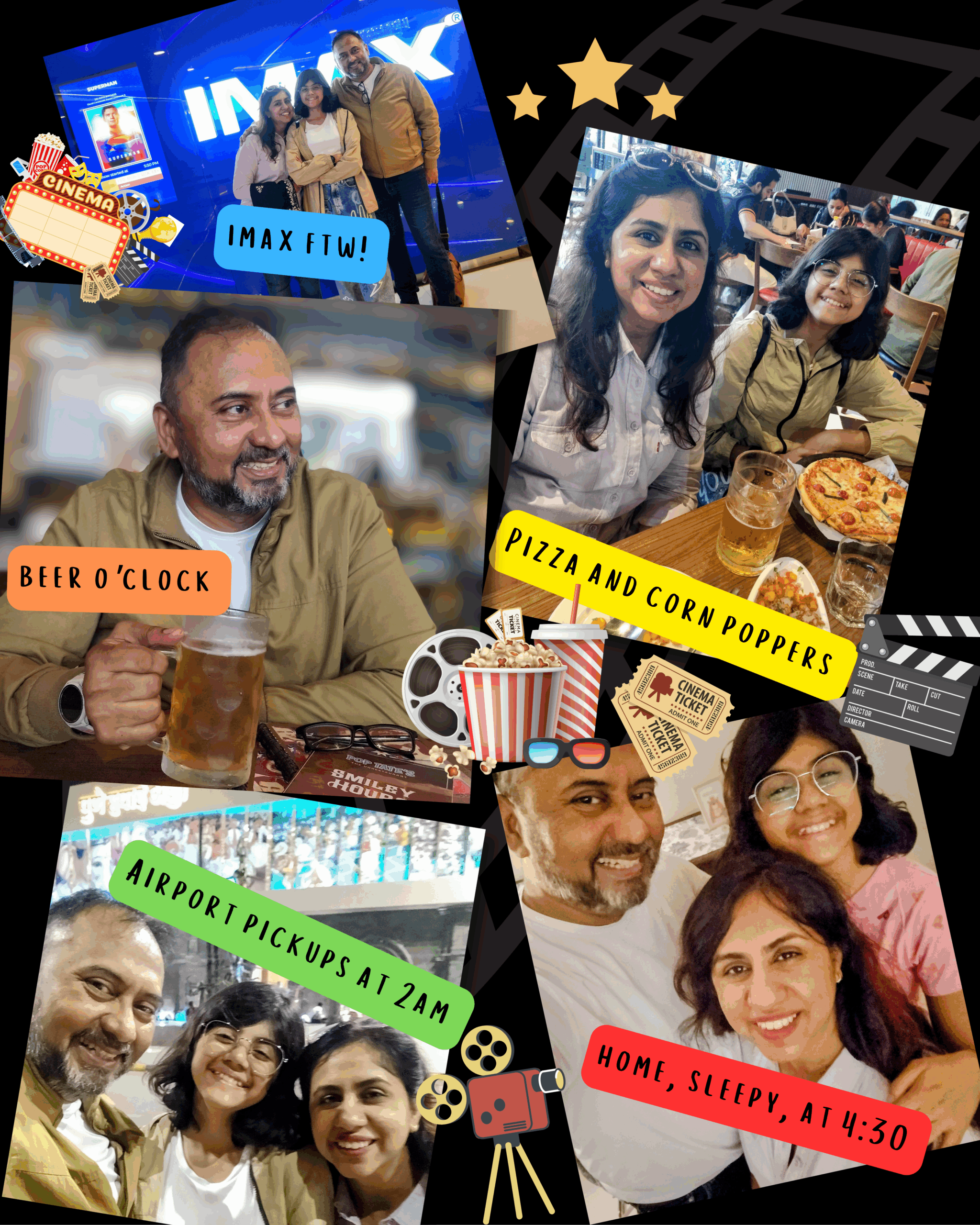
As the credits rolled, we didn’t linger. We had one final mission. We rushed to the car and drove to the airport. Karthik, one of my oldest friends, was flying in from Bangalore. And in our little tradition, whenever he lands in Pune, no matter the hour, I pick him up, and we go hunt for chai and poha in the pre-dawn dark.
Karthik and I go back. A long way back. Like Sonny and Ruben.
By 02.30, he was in the car. We navigated Pune’s sleepy streets to reach a popular late-night adda near a cluster of call centres, where the night is always young. Cars double-parked, smokers crowding kerbs, laughter floating above misal pav and vada-sambars, and conversations that range from Marxism to Marvel (in this case, DC).
We stood there, the four of us (Misbahji, Maryam, Karthik, and I) chai in one hand, poha in the other, talking about cinema and cities, governance and god, AI and advertising. Around us, young people flirted, fought, took smoke breaks, made midnight memories. And the city lived.
By 4.00, we were back in Aundh to drop Karthik. Then home. Then showers. Then bed.
By rights, we should have crashed till noon. But by 08.00, I was up. Wired. Wide-eyed.
Not just because I have a curse. Of sleeping at any time and being up early. But because something had changed.
Each of the three films had given us more than plot and popcorn. They had given us mirrors.
Superman reminded us what it is to choose kindness, even when you can choose power.
Sitaare Zameen Par showed us how dignity and love, however clumsily delivered, still matter.
F1 gave us speed and silence, and the glory of ageing with grace.
Each protagonist, alien, disabled, washed-up, mistrusted, was an outsider.
Each found their humanity.
Each film, in its own way, told us the same thing:
You don’t win when the world accepts you.
You win when you accept yourself.
In that sense, we are all Supermen. If only we wish to be.
And so yes, it was a Saturday of superheroes, beer, fast cars, prosthetics, and poha.
And I can’t think of a better way to spend a day on this planet. Or any other.
Especially if you’re trying to remember what it means to be human.