These days, it feels like everyone, their uncle, and even their dog has a hot take on how artificial intelligence is coming for our jobs. The headlines are breathless, the predictions apocalyptic: automation will replace us, algorithms will outthink us, and soon, we’ll all be irrelevant, outpaced, out-skilled, and outsourced to machines that never sleep.
But in the midst of all this noise, too few are asking a quieter, more important question: what kind of work will still matter? What will remain not just employable, but meaningful, when machines can do almost everything?
And so, here you are, young, uncertain, standing at the edge of something vast and not quite nameable, looking out at a future that everyone insists is already here, already spoken for, already coded into some giant neural network that understands you better than you understand yourself.
You’re told to choose a career, as though that were a single decision. You’re told to upskill, to hustle, to build a personal brand, to learn to code, to stay relevant. And in the middle of all that noise, you’re trying, maybe quietly, maybe desperately, to ask the question no one else seems to be pausing long enough to answer:
What kind of work will still matter when machines can do everything?
Well, I have a thought. Not a prescription, not a guarantee, but a conviction shaped by watching, listening, stumbling, recovering, and staying human through it all.
And it’s this:
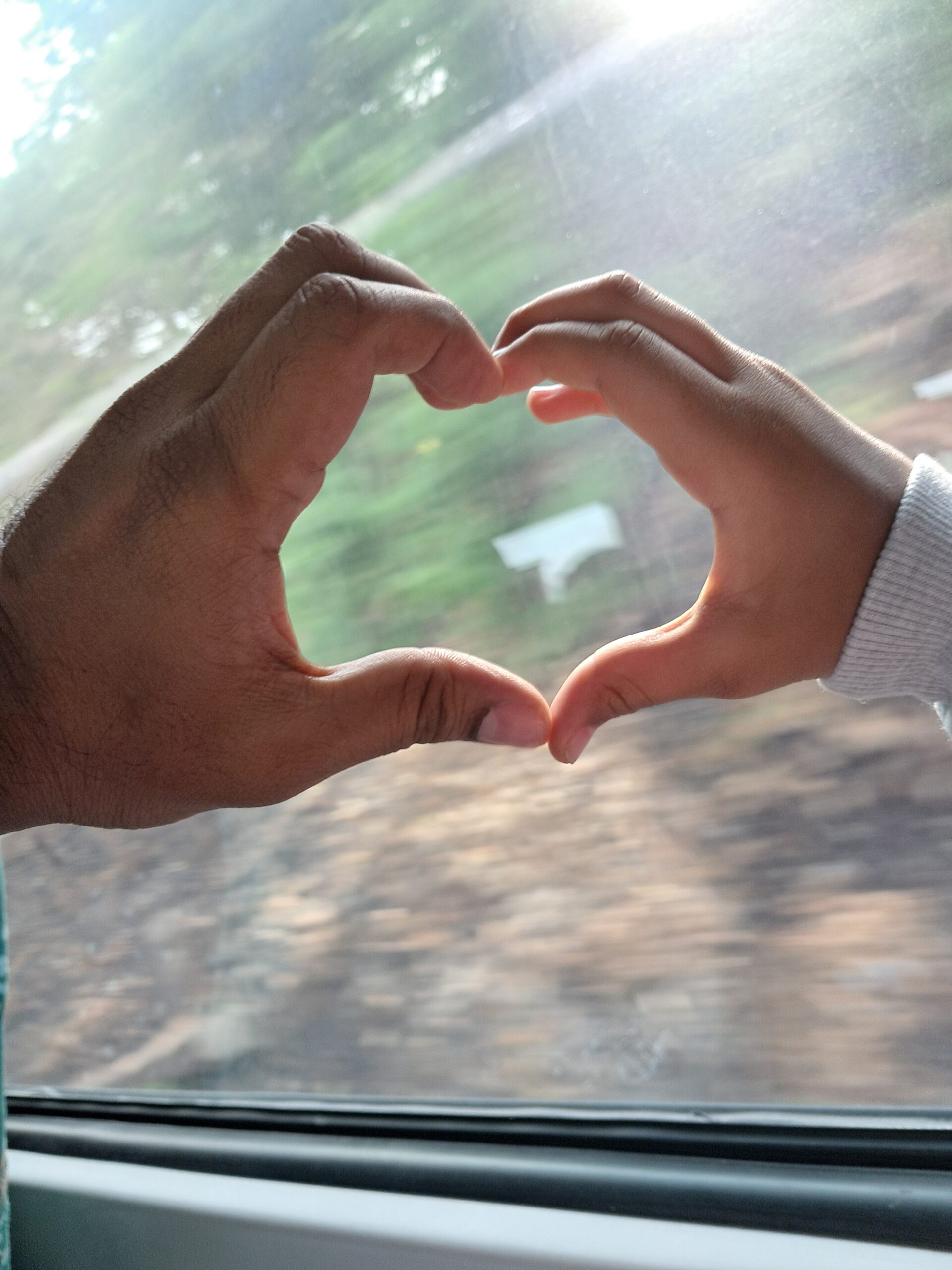
If you want to remain valuable in a world shaped by artificial intelligence, choose work that uses your hands. Or your heart. Or both.
Because what AI is coming for, and it is coming, with precision and power, is the predictable, the repeatable, the optimisable. The spreadsheet. The supply chain. The form-filled, templated, press-this-button-to-solve-the-problem part of work.
But what it can’t quite do, not yet and perhaps not ever, is manage the mess.
Let’s start with the hands.
When I say “use your hands,” I don’t mean it poetically. I mean quite literally—hands in soil, on tools, under machines, up ladders, in kitchens, on scaffolds, holding threads, tightening bolts, wiring boards, cutting fabric, planting seeds, pulling levers, cleaning filters, mixing cement, testing circuits.
Plumbers, carpenters, masons, electricians, agricultural workers, livestock handlers, mechanics, repair professionals—these are not “low-skill” or “manual” jobs; they are complex, local, interpretive, embodied roles that AI and robotics may one day replicate in labs and testbeds and controlled environments, but not in the real world, where no two walls are straight, no two leaks are identical, no two engines fail for the same reason, and no one leaves behind a clean schematic of what’s buried beneath the floor.
Yes, AI will assist. It already does. Sensors, diagnostics, remote monitoring, 3D printing, drones—all of that is part of the new ecosystem. But when something goes wrong in the real world, when it’s raining and the wiring’s wet and you have half an hour before someone’s power goes out and nobody knows what was installed in 1997 because the builder vanished and the plans were never filed, you will need a human.
Because most work is messy. And mess doesn’t automate well.
So, if you are someone who enjoys making things work, who likes figuring stuff out with your hands, who finds satisfaction in the physical, not just the intellectual, don’t let anyone tell you that’s not the future. It is. In fact, it’s one of the few futures left where you won’t be competing with an invisible algorithm sitting in a data centre somewhere, spitting out options faster than you can refresh the screen.
And then, the heart.
This is the part people are most confused about. Because somewhere along the way, we started to believe that emotions are inefficient, that caring is soft, that compassion is a nice-to-have bonus in the workplace, not a core function.
But here’s the truth: as machines get better at thinking, the value of feeling will rise.
We will need geriatric care. We will need paediatric care. We will need child-rearing, nursing, early education, therapy, companionship, support work, social work, special needs care. Not as “side” roles, but as the central nervous system of society. In fact, we already do—we just don’t pay enough attention to who’s doing it, how hard it is, or how little support they get.
And no, I don’t just mean doctors. In fact, I suspect doctors may be more replaceable than nurses. Because diagnosis can be automated. Surgery can be done by a robot. But nursing, and I mean real nursing, involves tone of voice, touch, timing, judgement, reassurance, persuasion, improvisation, compassion, endurance, and above all, attention.
It is not a science. It is a choreography of care.
And then there are roles even less visible: the young person who sits with an elderly neighbour to explain how UPI works. The teenager who shows someone how to video call their grandchild. The volunteer who listens to a story that takes forty-five minutes to tell because it has no real beginning or end. The assistant in a day-care centre who makes sure every child gets a glass of water, not just the one who asks loudly.
These are jobs. Real ones. And they are going to grow. Because as we live longer, and more digitally, we are going to need humans to bridge the distance between people and the systems that were never designed for them.
So, if you are someone with patience, empathy, and emotional stamina, don’t apologise for it. It’s not just a personality trait. It’s a professional asset.
And then, yes, there is art.
AI can compose, sketch, design, animate, sing, edit, even perform. But here’s the thing: it can’t carry the story.
We don’t just want the song. We want to know who wrote it. We want to know what they were going through. We want to follow the band, not just stream the track. We want drama. We want flaws. We want the rough edges, the backstage fight, the comeback story.
Because art is not just what is produced. It’s who produced it. When? How? And why?
So, no, art is not dying. It is filtering. What’s disappearing is the middling, the formulaic, the background noise. But if you can make something that carries your story, your voice, your truth, there will always be people who want to feel that.
Even painting survived photography. Tailoring survived ready-made. Sculpting survived 3D printing. Because scarcity creates value. And human-authored imperfection will become scarce.
As will human performance. Which brings us to sport.
We will have AI athletes, robotic competitions, simulated matches, enhanced performers. But we will still want to watch someone struggle, fail, get up, and win.
Because the miracle is not in the record. It’s in the risk.
And that miracle must be earned, not manufactured.
Finally, the roles that hold the social contract together:
Soldiers. Judges. Legislators. Politicians.
Yes, AI will advise, forecast, simulate, even draft policy. But when the moment comes, when a decision must be owned, a principle defended, a compromise struck, we will want a person.
Because accountability cannot be outsourced.
Because law without discretion is tyranny.
Because leadership is not just about outcomes. It’s about responsibility.
So, what should you do with your life?
You should do something that only a human can do.
Or (and this is just as powerful) something a machine can do, but in a way that only you can.
You can code, of course. You can build. You can research. But make it yours.
Bring your hands. Bring your heart. Bring your story.
Because in a world full of intelligent systems, scalable platforms, machine learning models, and synthetic media, the rarest thing, the most difficult, the most irreplaceable, the most precious thing, will still be a human being…
…who gives a damn.
And that could be you.