I am not a soldier, but I was raised around uniforms, brass, polish, and salutes. I am not a historian, but I read more history than any other genre (and that is a lot). I am not a filmmaker or critic, but I have a deep interest in storytelling (to me, all art is storytelling, all communication is storytelling, all teaching is storytelling, all conversations, all leadership, all management, all sales, all negotiations, even something as banal as accounting is, whether done right or wrong, storytelling), both as a narrator and as a consumer of stories.
I am not anyone, in fact, who can, with any formal qualification, opine on films, whether historical or not. What I am is a diarist. A chronicler of my times in reference to myself, attentive to what I see, hear, feel, and experience around me: the world, the people, the circumstances, the language, the actions, and the intentions and motivations that drive all of this, whether greed, fear, or plain adrenaline (more on this in another post). Basically, to badly paraphrase the quick-witted Lannister,
That’s what I do. I observe, and I write about things.
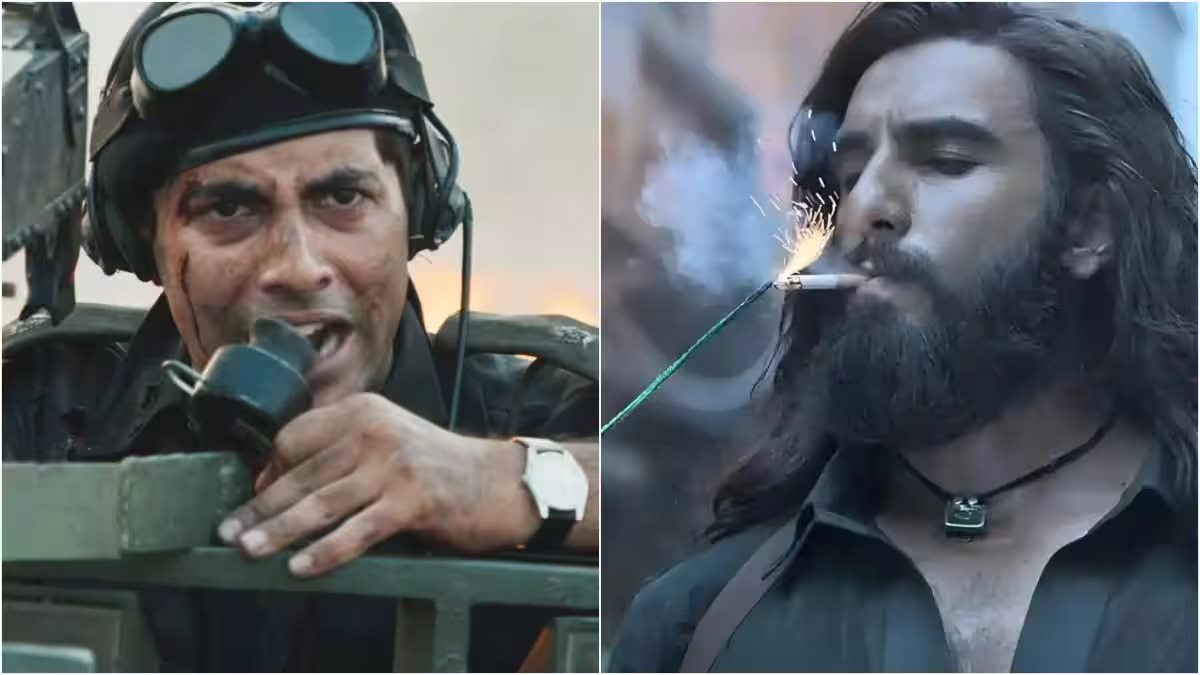
Recently, two movies came out close to each other, one at the end of 2025 and one on the first day of 2026: Dhurandhar and Ikkis.
Dhurandhar is the sort of slick action film that most propaganda films aspire to be, a mix of truth and lies, packaged in spectacle, dazzle, style, and a deeply held fantasy, mixing two genres that should never be mixed carelessly: alternate history and historical fiction. Alternate history is a fascinating parallel universe that explores what the world might have looked like had something decisive happened differently, for example, if the Nazis had won. It works precisely because it explores a universe we are not inhabiting. The audience knows this and consents to the premise. Historical fiction, on the other hand, places fictional lives alongside real events, their arcs passing through history without commanding it. The characters remain peripheral to the event itself. The story is set in those times, nothing more.
Dhurandhar takes historical fiction, draws from real events in recent memory, and then folds in alternate history, creating a highly believable illusion of reality. Good cinema does this, in the sense of persuading the audience to suspend disbelief, and in that sense the film deserves every bit of the superhit status it has earned. But there is one small issue that makes it a propaganda film, and it is this: the audience does not know it is watching alternate history. The audience is lulled into trusting the narrative to the point that its view of history shifts. The insidious part is that it shifts for the worse. At the end of the film, the dominant emotion is a volatile mix of pride, anger, frustration, grievance, and hate.
Ikkis, on the other hand, sticks to facts. Officers who served in Foxtrot Squadron during Arun Khetarpal’s tenure, officers who served in Poona Horse with 2/Lt Khetarpal, officers who were part of the 1971 war, officers who were at Basantar, officers who know this story firsthand, the Khetarpal family, have gone on record to say that the film is authentic in its portrayal of both the record and the emotion. Such films come by rarely, if at all (in my lifetime, Vijeta, Prahaar, and Lakshya are the obvious examples), and when they do, they portray military life, ethos, camaraderie, training, and battle with rare fidelity. These films too make us believe their narrative. They too are selling a story. And they too change the audience by the end. But they do so for the better. The dominant emotion at the end is kindness, generosity, love, respect, and curiosity.
That said, as mentioned, I am not interested in commenting further on technique, art, acting, style, craftsmanship, scene-by-scene historical accuracy, special effects, realism, box office numbers, or the off-screen shenanigans of the celebrity cast of either film.
In fact, I did not even want to have an opinion on this. Until I read a recent piece arguing that liberals who love Pakistan (another strawman certain writers seem to love to foist upon us slightly more open-minded folks) should have their thirst quenched after being made dry-mouthed by the success of Dhurandhar. That Ikkis disrespects soldiers because it seeks to whitewash the crimes of the East Pakistani Army in present-day Bangladesh. That it creates a false moral equivalence (“brave men on both sides,” “soldiers just following orders,” “war makes everyone equal”) and romanticises an enemy unworthy of the respect the film offers him. That highlighting one incident is a travesty of history and an insult to the real suffering endured by millions due not to individual actions, but to state policy executed through military force.
I have no dispute with this writer on most points (other than the obvious ones, which I put down to permissible rhetoric), and I agree that the 1971 war arose from an avoidable, human-made humanitarian crisis triggered and sustained by a Pakistani regime that refused to honour the results of a free and fair election, a crisis in which India had little choice but to intervene, which it did with speed, effect, and efficiency, scripting the most comprehensive military victory since the Second World War, equalled only by Desert Storm two decades later, creating both history and geography in a single campaign. Indeed, a multitude of books, songs, documentaries, articles, commentary, and films have been written, sung, and made on the same, both on the events leading up to it, the personalities involved, the atrocities and those who committed them, and the war itself, as also its swift and decisive conclusion.
The point I do object to is the claim that Ikkis ought not to have been made out of respect for Indian soldiers because it “distorts reality.” That argument is a bit rich coming from the same voices who clearly enjoyed and applauded Dhurandhar.
But this is where I stop arguing.
For that is their opinion. This is mine. We can agree to disagree. I could, if I wished, argue that Dhurandhar is the film that disrespects our armed forces, our judiciary, our intelligence agencies, and the offices of the Prime Minister, Home Minister, External Affairs Minister, and other elected leaders. I could argue that it creates its own false equivalences, where a death-row convict appears more patriotic than the highest constitutional office, where Indian political leaders are equated with their Pakistani counterparts (“corrupt men on both sides,” “intelligence officers just following orders,” “greed makes everyone equal”). I could argue that Dhurandhar ought not to have been made.
But I will not.
It is a film. It is entertainment. Its makers, despite being clear propagandists and apologists for the current regime, operate within their rights under Article 19(1)(a) of the Constitution of India, and as an Indian, I cannot grudge them that. So, once again, we can simply agree to disagree on what a film set out to achieve, whether it shows adequate “respect” to whomever we believe respect is due, and whether it deserves to come into existence at all. And I am willing to leave this here.
So, what the hell is this long-winded monologue about then, eh? It is this: Without reference to anything to do with the actual filmmaking, the history, or the box office numbers, what fascinates me is which story we choose to tell. As Indians. In the early twenty-first century.
For every civilisation is known by the stories they tell, indeed choose to celebrate, retell, and wish to hear. It is as good a marker of identity of that civilisation as any DNA test or archeological dig. With one exception, which makes these stories even more powerful. And that is these stories are not just our virtual ID cards, but a manifestation of a slice, a fleeting moment in which a civilisation reveals how it saw itself, what it admired, and what it aspired to become.
That is why we once had stories of the Angry Young Man (with a certain historical irony, given that his grandson played Arun Khetarpal in Ikkis). We have had stories of triumph and of failure. Stories of poverty and of obscene wealth. We have had, variously, the literal same people (dacoits & bandits, police & military officers, smugglers & blackmarketers, mafia & musclemen, politicians & leaders, journalists & lawyers) as both heroes and villlains, depending on the slice of time in our collective national history we chose to tell (and embrace) that story.
It is not fantasy that defines us, because all humans dream. It is not storytelling itself, because all humans tell stories. It is not even heroes and villains, because all stories have them. It is what we choose to fantasise about, which stories we elevate, and which heroes we hold up for admiration that defines who we are, not only now, but for generations that will look back on our time and judge us.
That is why Ikkis matters.
And that is why I had to write this.