It is a peculiar thing to watch a people who once built their reputation on silence suddenly become addicted to the sound of their own echo. For half a century, Indians abroad were the quiet ones, diligent, deferential, hardworking to a fault, invisible unless needed, successful without spectacle. And now, almost overnight, they have become the world’s noisiest immigrants, shouting their pride from every rooftop, waving their flags in airports, lecturing their hosts on civilisation, and forwarding nationalism one WhatsApp group at a time. It is as though a civilisation that once spoke softly (see Part I here and the preamble to the series here) now wishes to compensate for centuries of being unheard by talking all at once.
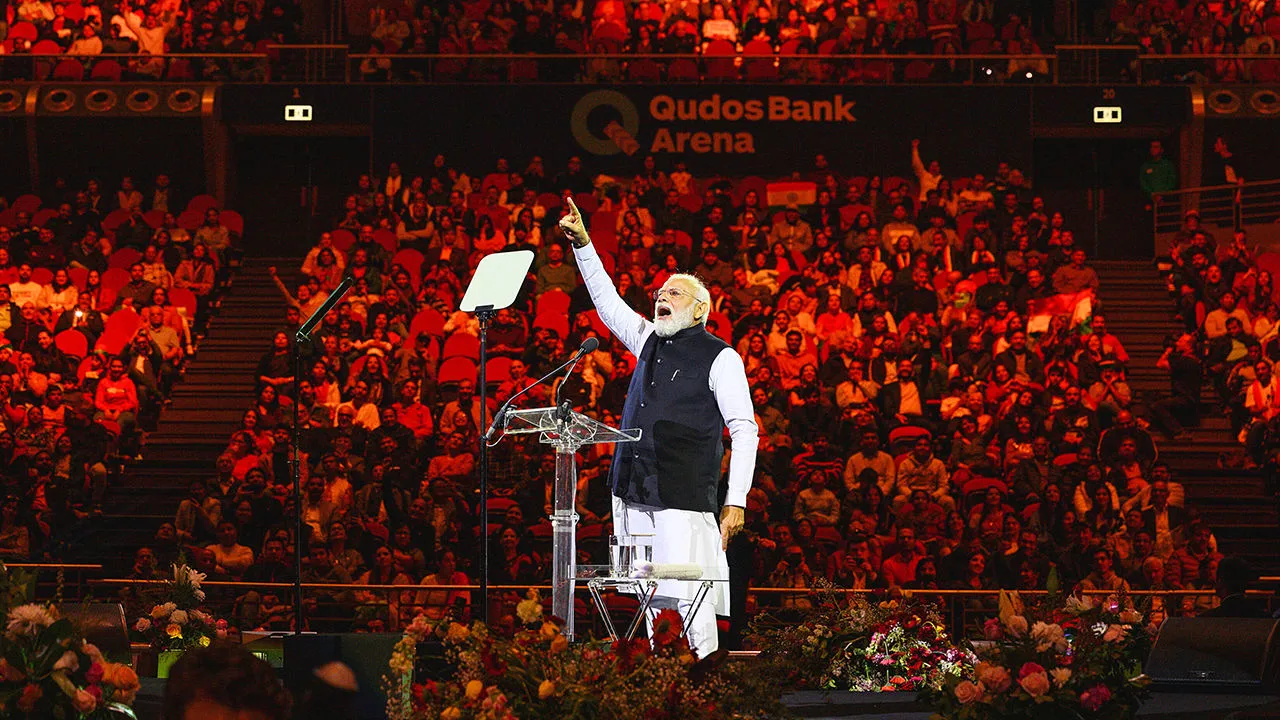
It is tempting, of course, to blame this on Narendra Modi and the muscular Hindutva that travels with him like background music in a wedding procession. But that would be lazy. Modi did not create this loudness; he merely tuned it to a higher frequency. The diaspora was always on the verge of such a reckoning. Three generations of competence without confidence, prosperity without belonging, and civility without recognition were bound to erupt one day into an awkward, noisy adolescence. The Prime Minister merely handed them the vocabulary: pride without patience, power without grace, and they have used it enthusiastically ever since.
Because this noise is not purely political. It is civilisational. The first generation of migrants worked too hard to talk; the second learnt to assimilate and keep the peace; the third has decided that peace is overrated. And what began as a murmur of self-assertion has now become a chorus of entitlement. Indians abroad, and increasingly Indians everywhere, have become, for lack of a gentler word, insufferable.
One hears it not just in stadiums and rallies but in airports, hotels, malls, and tourist destinations. It is there in the man shouting at a check-in counter because his baggage is two kilos overweight and he believes that rules are merely suggestions; in the family loudly unpacking homemade parathas mid-flight while passengers wrinkle their noses; in the woman berating a hotel receptionist because she expects late checkout as a matter of right; in the group that commandeers a buffet, piles food on plates, and leaves half of it uneaten; in the guests who pocket towels, cutlery, kettles, and bathrobes as souvenirs of conquest. There are endless stories of Indians unplugging hotel hair-dryers to take home, of stuffing breakfast fruit into handbags, of wiping down rooms with their own disinfectant but leaving bathrooms flooded.
And increasingly, it has spilled into public spaces abroad, into the very streets and rivers of cities that once humoured our rituals in the name of multiculturalism. Ganesha idols being immersed in the Thames as if London were Mumbai, neighbourhoods blanketed in smoke and firecracker debris every Diwali, pavements marked with paan stains like territorial flags, and entire phone conversations conducted on speaker in trains and restaurants, it is as if our noise has outgrown our homes and demanded international citizenship. What was once private expression has become public imposition, and the patience of host nations, once amused, is wearing thin.
Because what the Western world calls trust-based systems: self-checkout counters, minibar honesty tabs, unattended cloakrooms, exchange or return of previously bought items without questions, the assumption that guests will behave like adults, to us look like invitations to mischief. The temptation to outsmart the system runs deep in our cultural DNA, a by-product of centuries spent under rules imposed by someone else.
We mistake gaming the system for intelligence, cheating the rule for wit, getting away with it for success. It is the same instinct that makes us run red lights at home and smuggle spices abroad, a refusal to believe that fairness exists unless one has outwitted it. In fact, I have a 4-part series I wrote about this back in April 2025.
The ironic part is that all this while, we boast loudly of being from a civilisation five, ten, fifteen (depends on who you are talking to and at what time of the day) thousand years old, as if age were a substitute for maturity. We brag about our values, our hospitality, our moral fibre, and yet the moment we are abroad, we behave as if civility were someone else’s problem. We are loud where others are quiet, argumentative where others are courteous, self-righteous where others are self-aware. We mock Western food for ‘lacking flavour’, even as we refuse to taste anything that isn’t already ours. We scoff at Western liberalism while enjoying its freedoms, even insisting they be granted to us when we are on their soil. We marry within our castes but call ourselves global citizens. We romanticise the Ganga but pollute it; we worship women but silence them. The hypocrisy is not subtle; it is structural.
The Western stereotype, once condescending but flattering, that Indians are polite, spiritual, industrious, has curdled into something else: that we are loud, unhygienic, humourless, cheap, and charmless. Much of this is racist caricature, yes. But some of it is earned. We have not assimilated; we have colonised. We move abroad and recreate our hierarchies, Gujarati Societies, Tamil Sangams, Punjabi Gurdwaras, Telugu Associations, each more insular than the last. And, not to be outdone, there are the Maharashtra Mandals, peddling a parochial nostalgia for pure Marathi culture in the middle of Melbourne or New Jersey, and the Brahmin Business Networks, that most self-satisfied and exclusionary of diasporic species, trading moral superiority as social currency while congratulating themselves for maintaining standards. They are the caste system in export form, respectable, educated, and utterly convinced of their refinement even as they embody the very provincialism they claim to have outgrown.
We make friends only with other Indians, gossip about caste even at barbecues, and call it community. We enter workplaces and talk of inclusion while excluding others instinctively. We flaunt our degrees but betray our narrowness in dinner conversation.
And yet, to be fair, this sudden visibility, this cacophony, may also be partly the mathematics of scale. There are simply more of us now. More Indians travelling, settling, working, and, inevitably, misbehaving. Thirty years ago, an Indian tourist was a curiosity; now there are millions, armed with passports and disposable income, filling airports and cruise ships. Even if the percentage of ill-mannered travellers has stayed constant, the absolute numbers have exploded, and so too has the noise. What was once invisible is now unavoidable.
Add to this the second truth: Indians abroad are no longer guests. They are citizens. They pay taxes, vote, build businesses, send their children to local schools. They believe, rightly or wrongly, that they have earned the right to shape the societies they inhabit, to demand that their customs and festivals be recognised, that their food be served, that their accents be respected. This assertiveness, while natural in any maturing diaspora, is jarring to host nations accustomed to polite assimilation. The British and the Americans, who once prized Indians for fitting in, now find them unbearable for wanting to stand out.
And then there is the amplifier of our age: media. A single viral video of a loud Indian in a hotel lobby travels faster than a thousand quiet acts of courtesy. Every buffet raid, every argument at a check-in desk, every self-righteous temple rally abroad confirms what the world is already half-ready to believe. In truth, we are no worse than others. The Chinese, the Russians, the Americans, each have their share of boors and thieves. But the Indian’s fall from grace makes for a better story, because we were once the model minority, the harmless genius, the tech-savvy vegetarian neighbour who smiled too much. The stereotype’s collapse is spectacle.
What the world sees as arrogance is often just insecurity wearing designer sunglasses. We have become a people desperate to prove that we belong, yet terrified of losing what makes us different. It is why we overcompensate. By being louder, richer, flashier, prouder. And because Hindutva offers a script for this insecurity, a myth of ancient greatness, a vocabulary of grievance, a posture of defiance, the diaspora has embraced it with the enthusiasm of a child trying on his father’s shoes. They fit badly, but it feels powerful.
Of course, the liberal world is aghast. Western commentators, unable to distinguish between the Indian state and the Indian psyche, now write as though Modi’s speeches have hypnotised an entire civilisation. Liberal Indians abroad, embarrassed by the noise, perform public contrition, writing think-pieces that sound like apologies for existing. Between the triumphalism of the right and the penitence of the left, the Indian abroad has become unrecognisable, part propagandist, part caricature, part pariah.
But here is the uncomfortable truth: both sides are wrong. India has not become the Vishwaguru, the teacher of the world, and yet neither is this chaos merely Modi’s doing. The noise was always coming. It is what happens when a civilisation that has long been spoken for suddenly tries to speak for itself. The tragedy is that it does so without self-knowledge, without grace, without music.
We are, at this moment, a people caught between adolescence and adulthood, loud enough to be noticed, rich enough to be resented, and immature enough to confirm every stereotype we claim to hate. Perhaps this is what every rising people goes through before they learn to be still. But one would have hoped that a civilisation as old as ours would have learnt to grow up more elegantly.
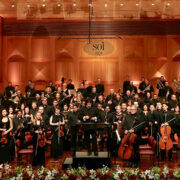
Be that as it may, I have believe, through my travels to multiple countries over the past 36 years, over my network of friends spread across the world, over my experience of conducting business and getting drunk with people from around the globe, that buried beneath the din, there is still something redeeming: the flicker of intelligence, humour, empathy, and curiosity that once defined the Indian mind before it became a megaphone. Perhaps this noise, ugly, exhausting, unmusical, is merely the tuning phase before the orchestra begins to play.
And it is that faint tuning, that hesitant alignment of instruments after so much shrieking, that we shall turn to next, the moment when the clamour begins, however tentatively, to find harmony, when the brashness softens into rhythm, when a civilisation that has spent too long shouting might finally learn to listen. We explore that possibility, if I can still muster the energy and the optimism, in the next part (whenever I write it): The Orchestra: Success Beyond Noise. Stand by.