Preamble: This is the concluding part of the three-part series that started with a promise to write, followed by the first part, where I discussed how Indians dispersed around the world, the second, where I traced the probable roots of the current image of the noisy, loud Indian that seems to reverberate round the world, and I end with the final part of the series, with where I hope we are headed. Thank you for reading.
It will sound absurd, even distasteful to some, but I confess that I am strangely pleased when I see an Indian fraudster in the news. Or an Indian ideologue who has gone full reactionary. Or an Indian loudmouth who has made himself impossible to invite to dinner. It reassures me, oddly. Because a civilisation becomes whole only when it begins to produce not just its geniuses and saints but also its charlatans, mediocrities, and moral disasters. Until then it is merely auditioning for acceptance, performing goodness to prove its right to exist.
For too long the Indian abroad has lived under that tyranny of representation, condemned to be exemplary. Every doctor had to heal the nation’s reputation, every coder carried the burden of civilisation on his lanyard, every student became an unpaid ambassador for 1.4 billion people. When one of us succeeded it was proof of Indian virtue, and when one of us failed it was proof that we had embarrassed the flag. That is not citizenship, it is hostage-taking. The day an Indian abroad can cheat, blunder, or simply be dull without representing anyone but himself will be the day the diaspora finally comes of age.
Which is why, in my darker moments of optimism, I find comfort in names that once made headlines for the wrong reasons. Rajat Gupta, Raj Rajaratnam, the Silicon Valley schemers who played fast and loose with other people’s money, the Kash Patels of the world who trade subtlety for swagger. Their existence tells me that we have stopped editing ourselves. A people who produce only Nadellas and Pichais are still insecure. A people who also produce their share of fools, frauds, and fanatics have become real.
That, to me, is the true test of assimilation: when one’s moral distribution starts to resemble the global average. Every functioning civilisation has roughly the same proportion of brilliance, boredom, and bad behaviour. We are finally approaching that equilibrium. We have become human again.
And with that humanity comes detachment. The umbilical cord that ties the diaspora to the motherland begins to stretch, to fray, to lose its urgency. Indians abroad still wire money home, still arrange marriages across time zones, still return every few years to complain about traffic and corruption, but the emotional voltage is dimming. They belong first to the societies that house them, then to the world at large, and only faintly, nostalgically, to the country that raised their grandparents. This is not betrayal; it is the biology of settlement.
History has rehearsed this melody before. The Irish, the Italians, the Germans, the Jews, all began as anxious minorities, bristling with pride and grievance, until one day they discovered that they had quietly become ordinary. No one introduces Donald Trump as a German-American or Joe Biden as an Irish-American. Their ancestries are recorded, not recited. Someday the same will happen to us. The next Nobel laureate, astronaut, or con-artist with an Indian name will not be asked to explain India. They will simply be what they are: part of the furniture of the world.
Yet both sides still resist this ordinariness. India insists on claiming every global success as national glory, as though Satya Nadella were a cultural export. The West, meanwhile, continues to prefix our names with “Indian-origin,” the polite cousin of exotic. Both betray insecurity, one unable to let go, the other unable to accept that we have already arrived.
But scale is a relentless equaliser. There are simply too many of us now, scattered across too many professions and moral coordinates, for the label to hold. We are everywhere and therefore no longer remarkable. Sundar Pichai runs Google, Rishi Sunak runs (or at least used to, until recetnly) Britain, Leo Varadkar ditto Ireland, Kamala Harris runs the world’s imagination. Ajay Banga at the World Bank, Arvind Krishna at IBM, Jayshree Ullal at Arista, Leena Nair at Chanel. Rushdie, Lahiri, Ghosh, and Kaur in letters; Dev Patel, Riz Ahmed, Kal Penn, Meera Syal on screen; Anoushka Shankar in concert (not to forget apro Freddie); Gita Gopinath and Raghuram Rajan in policy; Raja Chari in orbit. And somewhere in Dubai a Malayali nurse ends their shift, and somewhere in Toronto a Punjabi plumber fixes a leak, somewhere in Hong Kong a Gujarati shopkeeper shuts their shutters for the night, somewhere in Geneve, a Marathi scientist frowns over their screen, and somewhere in Brisbane, a Bengali swimming coach clicks ‘Start’ on his stopwatch. This, finally, is what civilisation looks like when it matures, not a mural of heroes but a collage of lives.
To be truly integrated is not to be admired but to be unnoticed. To succeed without applause and fail without apology. When our grandchildren are spoken of not as symbols of multicultural triumph but as unremarkable citizens whose ancestry is incidental, that will be the day we stop being immigrants and start being people.
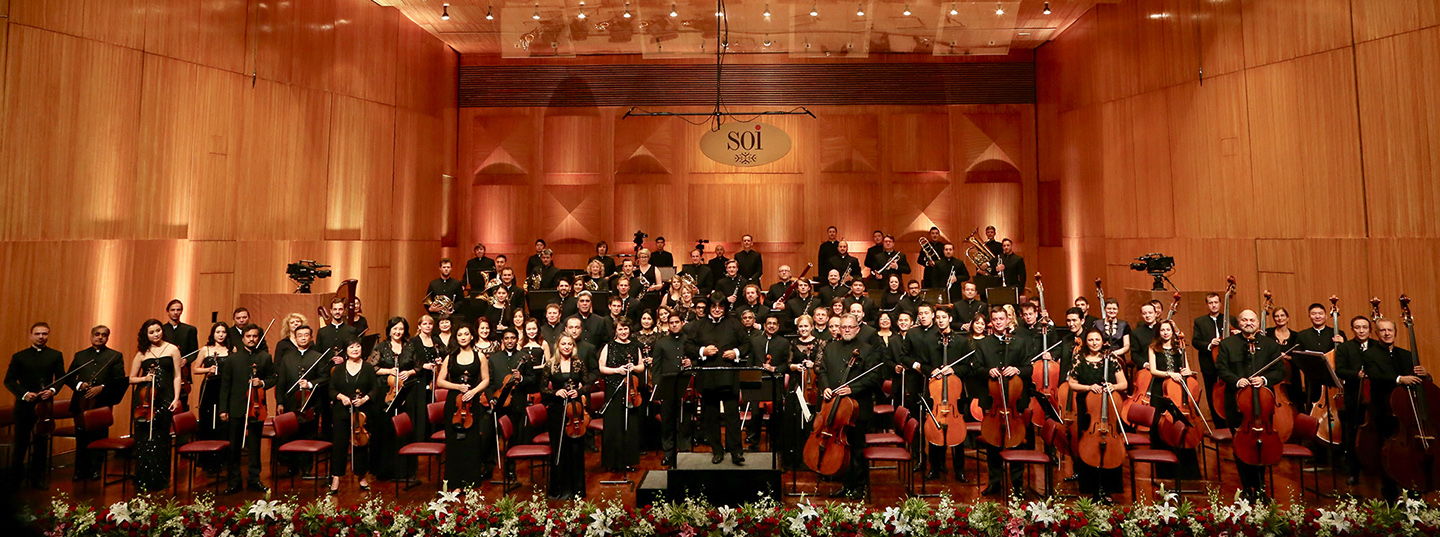
Which brings me back to the music. The decades of noise, pride, defensiveness, and flag-waving were perhaps inevitable. Every orchestra must tune before it can play. The instruments clash, the violins shriek, the trumpets test their breath, the percussionists thump impatiently. It sounds like chaos until, quite suddenly, it doesn’t. Then, almost unknowingly, the melody begins to form.
And when it does, it will not be an Indian symphony or a Western one, but something gentler and larger, a sound without adjectives. Our names will still be there, our accents too, but they will no longer need translation. The music will belong to everyone who can hear it.
And perhaps then, when an Indian name in a headline provokes neither pride nor prejudice, neither embarrassment nor applause, we will have at last grown up as a civilisation. We will have learnt the most difficult rhythm of all, the rhythm of being beautifully, peacefully, magnificently ordinary.