I have a theory.
It begins with Vinayak Damodar Savarkar’s 1923 book Hindutva: Who Is a Hindu?, which I recently reread. In it, he presents a verse in Sanskrit that is often treated as self-evident wisdom:
आसिंधु सिंधु पर्यन्ता, यस्य भारतभूमिका।
पितृभू: पुण्यभूश्चैव स वै हिंदुरिति स्मृत:॥
Roughly translated, it defines a Hindu as one who regards the land from the Indus to the seas as both Fatherland (pitrubhu) and Holyland (punyabhu).
That verse is the seed from which my theory grows.
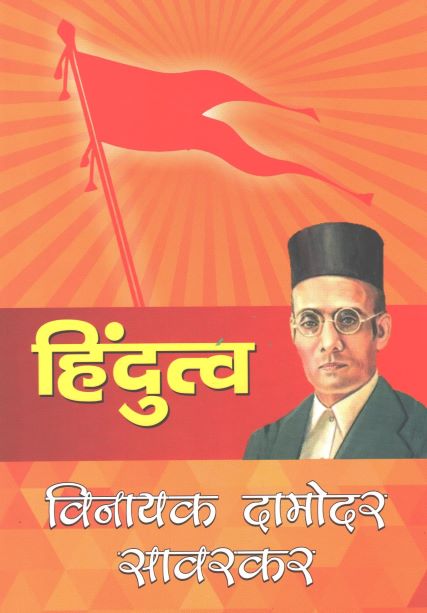
Savarkar, writing just over a century ago, was careful to distinguish Hindutva from Hinduism. Hinduness or Hindutva, he argued, was not a religion but a quality, a civilisational identity, rather like Englishness. Strip it down far enough, and his definition becomes deceptively simple: those who consider India both their Fatherland and their Holyland are Hindus. By extension, those who truly consider themselves Indian are Hindus.
This formulation has long held a particular appeal for educated, well-read, well-travelled Brahmins, especially Maharashtrian Brahmins. Many of them are rational, non-ritualistic, even mildly contemptuous of overt religiosity in the Savarkarite sense. They admire Savarkar precisely because he seems to offer a casteless, region-agnostic, modern definition of belonging. He becomes the idealised figure they want to see themselves as: culturally Hindu, politically sharp, intellectually superior, but not bound by temple bells or priestly excess.
It sounds clever. In Marathi, one might even say it sounds गोंडस (cute).
It is anything but. It is simplistic, and it is toxic.
Because at its heart lies an old obsession dressed up in modern clothes: purity.
The purity here is not ritual alone but civilisational. Accept the land as sacred in the prescribed way, and you are inside the circle. Reject it, or relate to it differently, and some part of your psyche is deemed foreign. Your Indianness becomes suspect.
And here is where the sleight of hand occurs.
Savarkar’s argument quietly invokes the symmetric property of equality that we all learned in school mathematics. If A equals B, then B must equal A. If accepting India as both Fatherland and Holyland makes you Hindu, then, logically, not being Hindu implies that you are not, or are at least less, Indian. Once that implication is accepted, everything else follows naturally. Equal citizenship becomes conditional. Full belonging becomes negotiable. Muslims, Christians, Sikhs, Jains, Buddhists, Parsis, and Jews slide, by definition and by default, into the category of lesser citizens, permanent guests, tolerated outsiders.
But at this point, a reasonable person might ask: if this idea circulates largely among Brahmins, and more narrowly among Maharashtrian Brahmins who have actually read or absorbed Savarkar, why is it so dangerous?
Because ideas do not need to be universally read to be universally absorbed.
The cowherd in Asmoli, the bangle seller in Jodhpur, the tea garden worker in Coonoor, the boatman in Chandannagar have never heard of this verse, this book, or this definition. But they do not need to. For over a century, Brahmins have disproportionately shaped Indian civilisation’s intellectual scaffolding: its politics, its education, its cultural norms, its moral language. And within that class, Maharashtrian Brahmins have played an outsized role in formulating, institutionalising, and sustaining extremist right-wing thought.
When such a group internalises the equation “Hindu equals Indian equals Hindu” as axiomatic, it does not remain confined to seminar rooms or bookshelves. It trickles down as received wisdom. Farmers, traders, labourers, soldiers absorb it not as ideology but as common sense. Questioning it then feels like questioning the ground beneath one’s feet, or worse, questioning the moral legitimacy of one’s own life.
Once embedded, it becomes the foundation stone of an entire political imagination. And foundations, by design, are not meant to be questioned.
This is where the contrast with Jawaharlal Nehru becomes instructive. Nehru’s Bharat Mata was never just rivers and mountains and soil. It was people, unruly, diverse, argumentative people. Savarkar’s imagination demands rigid boundaries, sacred geography, and civilisational cleanliness. Nehru’s celebrates openness, diversity, and movement. This is not merely a political disagreement. It is a civilisational struggle between discipline and freedom, between purity and plurality, that has been playing out in the Indian mind for well over a century.
B.R. Ambedkar understood this danger with terrifying clarity. That is why the Constitution does not romanticise unity. It restrains it. Article 14 insists on equality before the law precisely because society is unequal. Article 15 forbids discrimination against cultural and religious defaults. Articles 25 to 28 protect freedom of conscience, not as a courtesy but as a defence against coercive purity. Articles 29 and 30 safeguard minority cultures not as indulgences, but as democratic necessities.
The Constitution is not a hymn to national oneness. It is a braking system designed to slow our ancient urge to homogenise.
Which finally brings me to Long Island Iced Tea (LIIT).
It is a drink notorious for one specific reason. Unscrupulous men use it to get dates drunk quickly. Five different alcohols are masked as a sweet, harmless iced tea. It is tall, cool, refreshing, and dangerously effective. You drink it easily, your senses dull without warning, your capacity to reason quietly erodes, and you wake up later unsure of what exactly happened, only that something went very wrong.
Savarkar’s equation of Indianness with Hinduness, his insistence on geographical purity, his centring of land over people, is the LIIT of Indianness.
It seduces with simplicity. It flatters with history and etymology. It feels especially convincing when consumed from a privileged Savarna perch. The alcohol is carefully concealed. We chug it down willingly, our critical faculties blur, and we mistake intoxication for clarity.
And one day, India will wake up, slap her forehead, and exclaim, “Oh fuck!”
I only hope it is not too late to reach for a Plan B.