
6 December 2025
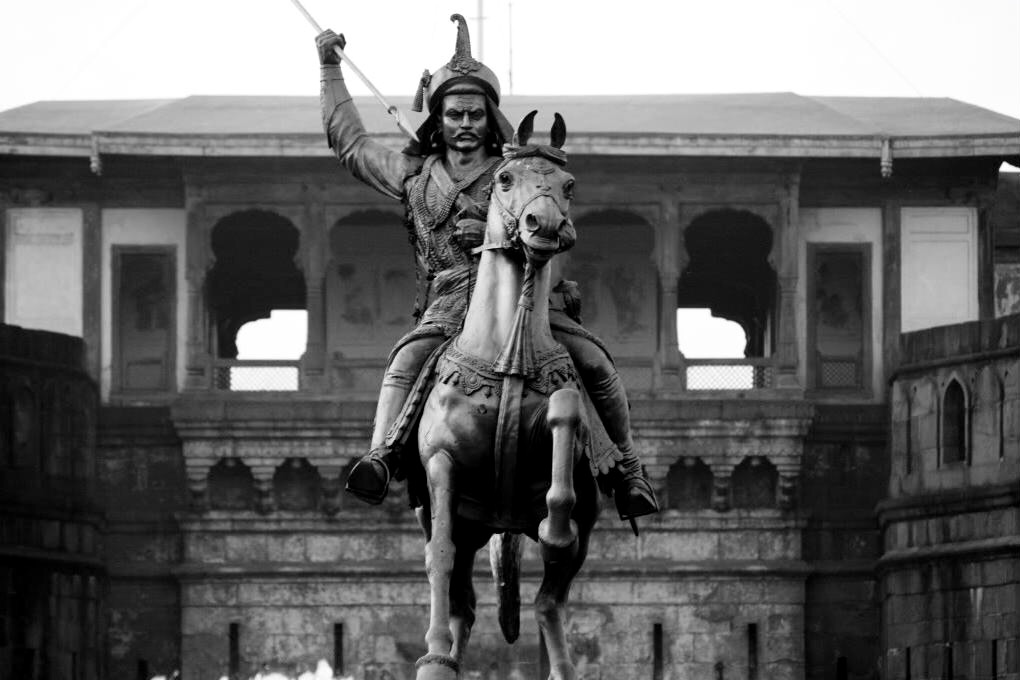
Pune, India
My dear fellow Brahmins,
I hope this letter finds you well. I would like to address you all regarding a rather uncomfortable subject: caste. I know this is an especially touchy issue to Brahmins, And especially to my Puneri brethren. But hear me out. You might come out a better human at the end of it, at best. Or, at worst, you might come out a little better informed. Whichever way, this one is a win. Even before you start.
To begin with, the reason I insist on calling myself a Brahmin in a letter that is, if you know absolutely anything about me, clearly a critique of caste, is something I promise to come to later (and it is important; just bear with me). For now, allow me to speak to you as the community that raised me, shaped me, and furnished my world with its habits, assumptions, and unspoken hierarchies long before I had the language to recognise them.
Today is 6 December. It sits strangely in my mind for two reasons. On this date in 1956, Dr Babasaheb Ambedkar achieved Mahaparinirvana, and for millions of people an entire age seemed to end with him. On this same date in 1992, the Babri Masjid was brought down, and for many of us savarnas a comfortable story about who “we” are as Hindus fell with those domes. This letter is being written with both those memories in the background, one as a source of language for justice, the other as the night my own illusions about “our culture” finally broke.
Over the past couple of weeks, I wrote three posts about caste. I did not plan them as a series, but your responses turned them into one. The first was satire, about meeting a Dalit friend with an iPhone, turning the mirror lightly towards savarna discomfort. The second reflected on how deeply many educated savarnas misunderstand caste. The third was a kind of dermatographia test, simply tracing the word “caste” across social media and watching the welts rise in the comments.
Some of you wrote thoughtfully. Some defensively. Some with the baffled politeness of people who have never really had to think about caste at all. A few wrote with (misplaced) confidence that caste is now irrelevant in the lives of modern, educated Indians like us.
One particular comment has stayed with me. It was sincere, not hostile. It said that people choose their battles, and that not everyone needs to engage with caste. It was polite, composed, and confident in its belief that it lay with the truth. It was revealing. It told me I needed to write this letter, not out of anger, but out of responsibility, because I have lived inside the same blind spots for most of my life.
This letter is my attempt to trace how those blind spots were formed, how they persisted, and how they slowly, then decisively, began to dissolve.
I grew up in cantonments (Indian Air Force stations) around the country, a world that is disciplined, diverse, and, in its own way, secular. My childhood was shaped by friends named Khan and Dhillon and Karbhary and D’Souza and Chhetri and Iyer. Religious festivals were shared, cuisines were exchanged, languages moved easily across playgrounds and terraces. It felt like a miniature India where identity was about food and festivals rather than hierarchy and exclusion.
In that environment, caste never appeared. Not because caste did not exist, but because the cantonment filtered it out. Officers’ children largely came from similar class locations, caste hierarchy rarely showed itself. I saw diversity, but it was a diversity without caste.
The first time I heard caste coded vocabulary was in Pune, during summer holidays. Marathi suddenly sounded different. Certain caste names were used casually to describe someone unkempt or unpleasant. In stories narrated by elders, ugly women sometimes bore those names. As children, we did not register this as caste. We simply assumed those were normal Marathi words for “dirty” or “ugly”.
At home, my parents never used such language, and I am grateful for that. But the split between a caste neutral home and a caste laden extended environment created an illusion, that caste was an occasional linguistic quirk, not a structural force. I grew up thinking I was open minded because I had seen the country in all its colours, without realising that one foundational colour had been missing.
In my teens, my world expanded in another direction. I fell in love with astronomy. I attended lectures at Nehru Planetarium, collected sky charts, waited for Halley’s Comet, and spent nights on our terrace letting the night sky rearrange itself above me. I had a small notebook of celestial observations, I built and bought simple tools to track the stars, and I followed every popular science programme I could find. I even went and met Professor Jayant Narlikar (who came to see me off all the way to the front gate in his pajamas!) to explore, rather nervously, whether there was a future for me as an astronomer or astrophysicist.
One evening, on the sloping part of our building terrace, I realised that two stars that appeared adjacent could in reality be separated by unimaginable distances and differ wildly in size and age. That small insight became, in hindsight, my pale blue dot moment, when perspective opened up and humility took root.
Around the same time, I read The Selfish Gene, and something clicked. Evolution, which I had known in school book terms, revealed itself as the elegant organising principle of life. It removed the need for a divine author. At some point in that reading, not at a marked page but as a kind of mental spark, I suddenly “got” evolution as a complete explanatory frame. God fell away without any ceremony.
Interestingly, religion did not.
Even after losing belief in god, I became a “Hindu atheist”, that peculiar category many urban Brahmins inhabit. I rejected divine power but retained cultural pride. I dismissed Brahma, Vishnu, and Mahesh intellectually, yet continued to identify with “our culture” and “our civilisation” with the unexamined ease of someone who assumes these identities are harmless.
By the time the Mandal agitation began, I was in engineering college, convinced I understood fairness and merit. Like many young Brahmin men, I believed reservations were unjust. I protested passionately. I marched, argued, wrote, shouted. I spent a night in a police lock up, fully convinced I was defending the nation’s moral fabric against an unfair policy.
Around the same period, I attended L. K. Advani’s Ram Rath Yatra speech at Shaniwar Wada and even donated the little money I had to the Ram temple cause. I called myself an atheist, yet supported a religious movement because I still clung to cultural Hindu identity. I was that familiar creature, the “rational” Hindu who believes the gods are symbolic, but the culture is somehow sacred and under threat.
Then came 6 December 1992.
A few of us were listening to the BBC, arguing earnestly about what would or would not happen in Ayodhya. I remember saying, with complete conviction, that we tolerant, gentle Hindus (who had “never ever invaded another country in history”) could never vandalise an ancient structure, that this was all political pressure, that once Muslims conceded the “birthspot”, we would preserve the mosque respectfully and build a beautiful temple next to it.
When the dome fell, something inside me collapsed with it.
The next morning was our Mechanical Design of Machine Elements (MDME) paper. We had stayed awake much of the night, listening, arguing, trying to make sense of what had just happened to the country and to our own certainties. Somehow, most of us passed that exam, some with marks to spare, some just about. I still do not quite know how. What I remember is walking into that hall stripped of the story I had told myself about who “we” were. My cultural Hindu identity dissolved that night. I lost the religion I had carried for years after losing god.
Caste, however, remained untouched, invisible, unexamined, still protecting me even as everything else in my worldview was being questioned.
What followed was not a sudden conversion, but a slow erosion. The lock up during Mandal had only proved my sincerity at the time, it had not changed my mind. The people who did were mostly strangers on online forums I barely remember now. I argued with them often, disagreed with them on many things, but some of their questions refused to leave my head. Like Hemingway’s line about bankruptcy, my unlearning happened gradually, then suddenly.
Someone pointed me to Ambedkar’s “Annihilation of Caste.” Reading it was the first time I encountered Hindu society from the bottom rather than the top. It was not difficult because he was angry. It was difficult because he was correct.
Later, in 1998, my marriage into an Ambedkarite family deepened this unlearning. Dinner table conversations were not academic; they were lived. My former spouse’s family had seen caste not as theory but as biography. Activism was not a pastime, it was inheritance. This family had played a part in the foundation of the Dalit Panthers movement, on the cutting edge of resistance. I had the front row seat. I watched and listened, and over years my earlier certainties thinned out.
For a long time, I believed I had “given up my caste”. I had rejected rituals and religious identity, read Ambedkar, married across caste, and engaged in debates about reservations and history. I thought that once I had declared myself free of caste, I was free.
I was wrong. I mistook the absence of obstacle for the absence of structure.
Caste had never denied me anything. It had only smoothed my path. My surname, my accent, my food choices, my choices, my clothes, my perspectove travelled ahead of me. All the time. My networks reflected me. My confidence in institutions, my comfort in certain spaces, my instinctive expectation that I would be treated fairly, all of it was caste at work.
You see, Dalits cannot declare themselves casteless even if they try. Their caste follows them into documents, neighbourhoods, job applications, hospitals, schools, marriages, rumours, and daily interactions. Their caste is a presence. Ours is an advantage.
For Brahmins, caste usually works invisibly and in our favour.
For Dalits, caste usually works visibly and against them.
“I do not see caste” is not evidence of equality. It is evidence of insulation.
I once believed I had escaped caste. I now understand that what I could not escape something that was not a prison, but a crown. Then only thing I had discarded was the need to see it.
This brings me to something many of us struggle with. Caste does not depend on our belief in it. It does not require us to perform rituals. It does not require us to be religious. It does not require us to practise discrimination consciously. It does not even require us to be bad or evil people.
Caste is not a faith that collapses when you stop believing. It is not a superstition that disappears when you embrace science. It is not a ritual that vanishes when you take off a sacred thread.
Caste persists because caste is not in the mind.
Caste is in the structure.
The privileges of caste operate without our consent. They do not wait for our approval. They do not ask for our ideological alignment. They are built into the world long before we arrive and continue to work on our behalf long after we stop acknowledging them.
We grew up believing that caste is mainly a set of personal prejudices. That if we individually cleanse our minds and individually treat everyone equally, caste will fade away. But caste is not simply prejudice. Prejudice is only one of its symptoms. Caste is an architecture of power. It is the map of who gets heard, believed, hired, promoted, invited, trusted, platformed, forgiven, and who does not.
This is why an upper caste man can believe, sincerely, that caste is irrelevant in his own life, because it is relevant for him mostly through its apparent absence. It is the air he breathes, the default setting.
For a Dalit, caste remains relevant precisely because it refuses to disappear from daily experience, even when that person succeeds, rises, becomes wealthy, educated, visible, or powerful.
For them, caste is a recurring reminder. It works by showing up everywhere and every time. It is the door that seems locked every time they approach it.
For us, caste is a continuous erasure. It works by disappearing and leaving us alone. It is the key that mysteriously appears.
If religion falls away, caste remains. If rituals fall away, caste remains. If you reject doctrine, caste remains. Even if you oppose caste, caste remains. Caste does not leave you simply because you walk away from it. It will leave only when society stops recognising it, and we are nowhere near that point.
जात नाही ती ‘जात’!
Understanding this is not an accusation. It is an invitation. An invitation to recognise the truth of the structure we have inherited, and the responsibility that flows from being born at its highest rung. Not guilt, but responsibility. Not shame, but clarity. Not self loathing, but self awareness.
If there is one inheritance Maharashtra gives us (because I need to return to where I started: the Maharashtrian Brahmin), it is a long and complex tradition of people who tried, in different ways, to loosen the grip of hierarchy. They were not perfect. They were individuals who recognised that inequality corrodes any society that claims to be civilised.
Some of these reformers were Brahmins. Yet their presence matters because they show that the burden of equality was never meant to fall only on the oppressed. It has always required participation from those who hold privilege.
Within the Marathi Brahmin tradition, several figures understood, far earlier than most of us today, that caste was not just unjust, but corrosive.
Agarkar insisted that social reform must precede political freedom, even when that stance isolated him. Gokhale placed moral courage above applause. Karve devoted his life to women whom society had cast aside and built institutions that survive him. Sane Guruji insisted on the equality of all children. Senapati Bapat fought fiercely for freedom yet remained committed to the idea that dignity must be shared, not hoarded. Acharya Vinoba Bhave, seen as the spiritual successor to the Mahatma, got landowners to literally gift away their large landholdings to the landless by the power of his moral authority. Baba Amte placed his life in service of those whom society had discarded and showed what compassion looks like when it becomes action. Dabholkar confronted superstition and bigotry with the logic of science. Jayant Narlikar, whose work I first knew as a star struck schoolboy, has long advocated rationality and humility.
These names do not absolve Brahmins of the structure we built and enforced. They simply demonstrate that within the most privileged class, recognition was always possible. They show that the presence of privilege does not forbid conscience. It only makes conscience more necessary.
Of course, there were others too. But before I turn to those who were not Brahmins, I want to acknowledge a small and often forgotten group of Brahmin allies who stood beside Ambedkar at different moments, not as architects of his movement, but as individuals who chose integrity over comfort. They were tiny tributaries to a river carved almost entirely by the oppressed. They did not shape its direction. They simply refused to obstruct it. Their presence does not elevate the Brahmin community. If anything, it exposes how few of us had the courage to step out of the structure that benefited us.
There was G. N. Sahasrabuddhe, who helped organise the 1927 Manusmriti Dahan and paid for it with hostility from his own community. At a time when orthodox Brahmins treated Ambedkar with open contempt, Sahasrabuddhe placed principle above caste loyalty. His role was modest, but it mattered, because it showed that dissent was possible even inside the citadel.
There was Pandit Hosakere Nagappa Shastri, a Sanskrit scholar who taught Ambedkar the language when many Brahmins refused to let a so called untouchable enter their classes. Ambedkar’s later demolition of scriptural justifications for caste relied partly on this access to the texts themselves. Shastri opened a door that others tried to bolt shut.
There was Krishnaji Keshav Ambedkar, the schoolteacher who gave young Bhimrao the surname Ambedkar as an act of dignity. It did not erase the child’s caste, and it did not soften the world he would face, but it was a gesture of recognition in a society determined to deny even that.
There were others who formed this small constellation of savarna allies, each stepping out of the comfort of his own caste location in moments when it was far easier to remain silent. Deorao Naik of the Social Equality League stood firmly with Ambedkar’s early campaigns for equality. B. G. Kher participated in the Nasik Satyagraha and later, as the first Prime Minister of Bombay, maintained a respectful working relationship with him even when dominant caste politics seethed against him. Among the few who paid a real personal price was Shridhar Balwant Tilak, the youngest son of Bal Gangadhar Tilak, who not only joined Ambedkar in the cause of social justice but also acted as his legal and moral ally until his own tragic end (Dr. Ambedkar wrote – “If anyone who is worthy of the title Lokamanya, it is Shridharpant Tilak.”).
CKP reformers like M. V. Donde, who endured a three year caste boycott for inter-caste dining, as well as K. V. Chitre, A. V. Chitre, M. B. Samarth, and D. V. Pradhan, offered solidarity in ways that were quiet but courageous, lending their names, labour, or public standing in times when such choices carried real consequences.
Alongside them was an even more eclectic circle of savarna supporters whose interventions, scattered across decades, helped shape parts of Ambedkar’s intellectual, political, and personal journey. Krishnaji Arjun Keluskar mentored the young Bhimrao, introduced him to progressive circles, and gifted him the Buddha biography that widened his early moral imagination. Justice K. T. Telang’s liberal scholarship provided one of the few caste Hindu frameworks that treated equality as a principle rather than condescension. In public life, he found allies like G. V. Ketkar, Lokmanya Tilak’s grandson and the editor of Kesari, who, despite being a staunch Hindutva proponent, defended him in the fiercest debates around separate electorates; socialists like S. R. Date and Nanasaheb Tipnis, who worked with him in the Independent Labour Party and the Samata Sainik Dal; Acharya Pralhad Keshav Atre, whose ferocious pen in Maratha and Navayug shielded Ambedkar against orthodox backlash; and scholars like D. D. Kosambi, who took his turn to Buddhism seriously as a political and philosophical act. In the Constituent Assembly, Brahmin members such as Alladi Krishnaswamy Iyer, K. M. Munshi, and T. T. Krishnamachari recognised his leadership and collaborated with him in drafting the Constitution. These figures acted individually, never as emissaries of their caste, and their presence stands as a reminder that while caste privilege is pervasive, caste conscience has never been entirely absent.
And there was Dr Savita “Maisaheb” Ambedkar, a Saraswat Brahmin who became Ambedkar’s partner in his last years, cared for him through illness, travelled with him as he embraced Buddhism, and ensured he lived long enough to complete “The Buddha and His Dhamma”. Her presence is a reminder that solidarity is not always loud. Sometimes it is simply the labour of companionship that enables a thinker to continue working.
Although not a Brahmin himself, the one towering savarna figure whose support altered the trajectory of Ambedkar’s early life was Maharaja Sayajirao Gaekwad III of Baroda. A Maratha ruler in a deeply caste-stratified princely landscape, he recognised Ambedkar’s brilliance long before the colonial state or caste society was willing to acknowledge it. Sayajirao not only sponsored Ambedkar’s education abroad but did so with an insistence that talent must not be imprisoned by birth. His patronage did not erase the humiliations Ambedkar later suffered in Baroda, but without the Maharaja’s intervention there would have been no Columbia, no LSE, and perhaps no architect of the Constitution as we know him. Sayajirao stands as a reminder that the imagination required to challenge caste hierarchy did not always emerge from its oppressors; sometimes it came from those who simply refused to accept that a civilisation could call itself great while denying dignity to its own people.
These individuals were exceptions, not examples. They do not cleanse the community. They do not dilute its historical role in enforcing caste. They do not grant us the right to claim Ambedkar. What they do is remove the excuse that Brahmins were incapable of conscience or that caste location makes responsibility optional. If a handful chose clarity in a time of open hostility, then educated Brahmins in 2025, with every resource at our disposal, cannot pretend that moral imagination is beyond us.
That brings us to the non-Brahmins who have elevated Maharashtra and put trust back into humanity: Chokhamela, Namdev, Tukaram, Phule (both Savitribai and Jotirao), Ambedkar (but of course!), Shahu Maharaj, Sathe, and many, many others. I will not claim them as part of my caste’s lineage. Their battles were rooted in histories we have never had to endure. Their achievements belong to them and to the communities they uplifted. Yet without them, there would be no usable language for justice in India.
And then there is the one and only Chhatrapati Shivaji Maharaj. I do not include him to appropriate him (though dog alone knows he is as much my king as any other Maharashtrian’s, or indeed Indian’s). I include him because he recognised something that many educated Brahmins in 2025 still refuse to grasp. He understood that the strength of Maharashtra, indeed of the entire Hindavi (meaning Indian and not Hindu) subcontinent, lay in the unity of its castes and communities. The “athra pagad jaati” he brought and bound together in kinship to strive for “Hindavi Swaraj,” an idea ahead of its time, meaning self rule for all the people of this land, not a narrow identity.
If we claim to respect Shivaji Maharaj, then we must respect what he valued. If we claim to admire our own reformers, then we must remember what they fought. If we claim lineage or pride or heritage, then the only honest way to honour it is to continue the work they began.
This is why I turn to my fellow Brahmins with a simple appeal. Not a demand, not an accusation. An appeal.
We come from a community that has produced individuals who tried to expand our moral horizon. We also come from a structure that has given us every advantage. But with great power comes great responsibility. So, the question is whether we will use that advantage responsibly, or whether we will hide behind the comfort of pretending caste no longer matters.
Many of us believe that caste is irrelevant because it does not obstruct our own lives. We rarely see it because we rarely encounter situations where our caste becomes a barrier. When the world does not remind you of something, it is easy to assume that it does not exist. That is why so many of us say, quite sincerely, that we do not believe in caste, that caste does not matter, that we are caste blind.
I understand that mindset because I lived inside it for years. I know how comfortable it feels and how rational it sounds. But that comfort is not evidence of caste disappearing. It is evidence of caste working silently in our favour.
I am not writing as an activist or a moral judge. I am writing as someone who walked through the same fog and eventually found his way out of it. I am asking you to consider that perhaps the world looks different to those who do not share our position in it. I am asking you to recognise that empathy begins with imagination and that imagination begins with listening.
We do not need to be defensive. We do not need to feel ashamed. We do not need to perform guilt. What we need is awareness. Privilege is not a crime. It is a condition. It becomes immoral only when it refuses to acknowledge itself.
Look at the society around us. Look at the buildings where surnames cluster in predictable patterns. Look at institutions where our names dominate, often without our noticing. Look at workplaces where leadership reflects one narrow slice of India. This is not because Brahmins are inherently superior. It is because history has built systems that continue to benefit us.
If we truly believe that we are rational, educated, liberal, and fair minded, then we cannot ignore the structure that places us at the top. We cannot remain indifferent to the experience of those who struggle against it every day. We cannot claim pride in Maharashtra’s reformist history while refusing to continue the work our reformers began.
This letter is not asking you to renounce your identity. It is asking you to interrogate it. To ask how it was formed. To ask what it grants you. To ask what it denies others. To ask how you can carry it with responsibility rather than blindness.
I know Puneri Brahmins. I grew up among us. We are proud of our intellect, our education, our refinement, our rationality, our fairness. Let us live up to those values rather than merely claim them. Let us be the people we believe ourselves to be.
If you are still reading, and if you are willing to go beyond my story, here is a small, deliberate, carefully chosen syllabus. It is not comprehensive. It is not authoritative. It is a doorway. Each of these works helped me see something I had been unable to see before. They may do the same for you.
Read slowly. Watch without defensiveness. Let any discomfort you feel become a guide, not a wall.
Books
- Annihilation of Caste by B. R. Ambedkar
Still the sharpest, clearest dismantling of the caste order in modern India. Radical, reasoned, uncompromising. - Ants Among Elephants by Sujatha Gidla
A family memoir that shows how caste shapes the Indian middle class from the inside. - Coming Out as Dalit by Yashica Dutt
A contemporary account of passing, shame, silence, and the courage of naming oneself. - Baluta by Daya Pawar
A landmark Marathi Dalit autobiography. Stark, painful, and historically important. - The Weave of My Life by Urmila Pawar
A Dalit woman’s memoir that weaves labour, family, gender, and activism into a vivid narrative. - India’s Silent Revolution by Christophe Jaffrelot
A detailed scholarly study of caste and democratic politics in contemporary India. - Dalits and the Democratic Revolution by Gail Omvedt
Explores anti caste movements and their role in shaping modern India. - Poisoned Bread edited by Arjun Dangle
A foundational anthology of Dalit literature that captures a century of voices and forms. - Dalit Kitchens of Marathwada by Shahu Patole
A intimate collection of culinary memories and community narratives that reveal how caste shapes daily life, dignity, labour, and food in Dalit households across Marathwada.
Documentaries
- India Untouched: Stories of a People Apart by Stalin K
A comprehensive documentary on untouchability across religions, regions, and communities in India. - Acting Like A Thief by Shashwati Talukdar
A project on the Criminal Tribes Act and the continuing stigma faced by de notified tribes. - Death of Merit, a four-part documentary (Part I, Part II, Part III, Part IV) that chronicles caste discrimination in higher education and the tragic deaths of Dalit students.
Films
- Fandry by Nagraj Manjule
A portrait of humiliation and aspiration in rural Maharashtra through the eyes of a Dalit boy. - Sairat by Nagraj Manjule
A contemporary love story that reveals how deadly caste can be even in a modern, outwardly liberal world. - Pariyerum Perumal by Mari Selvaraj
A Tamil film that follows a Dalit law student confronting discrimination and violence with dignity and resolve. - Court by Chaitanya Tamhane
A careful, meticulous film about a folk singer’s trial that exposes how caste shapes law, labour, and justice. - Masaan directed by Neeraj Ghaywan
A film about shame, love, class, and caste, handled with restraint and honesty. - Homebound directed by Neeraj Ghaywan
A story of return, rupture, and reckoning, where family, memory, and caste shadow every homecoming with quiet, unspoken force.
Poetry and Performances
- The Reserved Compartment, a contemporary Ambedkarite poetry collective featuring performances on caste, joy, grief, love, and resistance.
- Shivaji Underground in Bhimnagar Mohalla, a sharp, musical (with songs written and music composed by the revolutionary balladeer, Sambhaji Bhagat) Marathi play that reclaims Shivaji Maharaj from casteist and communal narratives and presents him as a ruler committed to justice, equality, and the dignity of the oppressed.
(You’ll need to find out when this plays in your city and make sure you see it)
How you approach these matters as much as the list itself.
Most of us who grew up savarna, and especially as Brahmins, have been told a very particular story. We have been told that reservations are unfair, that “they” are taking away our seats, jobs, and promotions. We have been told that merit is ours and quota is theirs. We have been told that “these people” use political muscle while we, the sober and sattvic ones, refuse to indulge in such things and therefore get pushed out.
If that story has sat in your mind for decades, it will not vanish in an evening. So take a moment to acknowledge it. Name it. Say to yourself, honestly, that this is the script you were given.
Then, when you read these books and watch these films and documentaries, try to place that script gently to one side. Do not throw it away. Just keep it aside for a while. Think of what you are about to encounter as fresh data. New information. Other people’s primary experience, not your inherited opinion.
You do not have to agree with everything you read. You do not have to believe every frame unquestioningly. In fact, you should not. What you can do, and what I am inviting you to do, is to allow these works to enter your mind before your defences rise. Let them speak in their own language. Let them show you what your childhood, your schooling, your family conversations, and your media diet never showed you.
After that, use your mind. Use your intellect. Use the same analytical ability you are proud of in every other context. Synthesise, compare, verify, think. Ask whether the fear of Dalits “taking over” matches the reality you see around you when you look at who owns the land, who runs the factories, who sits on company boards, who appears in stock exchange filings, who occupies the benches of courts, who commands police stations, who fills the legislatures, who signs the transfer orders.
If you do that honestly, you may not immediately change your views on caste or reservations or anything else. That is fine. This is not a test. What will change is the quality of your doubt. You may begin to doubt the story you were handed as axiomatic truth. You may see cracks in the idea that “they” are the ones taking something away from “us”.
This is not an ideology. It is a corrective lens. You owe it to your own intelligence to at least try it on.
Some of you may still be wondering why, after all this, I insist on calling myself a Brahmin at all. Why not drop the surname, reject the label, declare myself something more neutral, and be done with it.
I understand the impulse. I felt it myself. There is a certain relief in saying,
“I am not that anymore.”
It creates a sense of moral distance from the history that produced you. It allows you to imagine that you have stepped outside the structure and now stand on clean ground, looking in.
The problem is that the world does not recognise that declaration.
My school records, college friendships, work networks, housing societies, family connections, introductions, recommendations, assumptions, all of them have already carried my caste ahead of me for decades. People who matter in my life already know who I am and where I am located in this hierarchy. If I remove my surname today, they will not forget. The world will not forget. My own advantages will not vanish.
To pretend otherwise would be comforting, but not honest. It would be virtue signalling. Mere performance.
So I choose to keep the Brahmin surname, and the identity, inside me, not as a badge, but as a disclosure. It is a label I did not choose, but it is a location I must acknowledge. If I pretend to float above it, I become less trustworthy, not more. I would rather say clearly,
“This is where I stand in the structure, this is the ladder that lifted me, and this is the ladder I am criticising.”
If I said, “I am no longer a Brahmin”, it would also become easier to scold you. I could speak as an outsider, a reformed soul, someone who has left the village and now shakes his head at those who stayed behind. That posture might be easier on my conscience, but it would be false. I would be pretending. Virtue signalling. You see, I am not outside. I am not above. I am of you.
My criticism, if it has any legitimacy at all, comes from that fact.
So when I say “my fellow Brahmins”, I am not indulging in nostalgia. I am reminding myself that I belong to the very community I am asking to change. When I write as a Puneri Brahmin, I am not claiming special status. I am acknowledging a special debt.
I cannot become casteless by proclamation. What I can become, if I work at it, is more honest about the caste that continues to work in my favour. And I can use whatever reach or respect that caste has given me to say to my own people what they may refuse to hear from others.
That is why I still call myself a Brahmin.
Not out of pride. Most certainly not.
But out of the unfortunate inevitability of caste.
Out of responsibility.
So, when my friend wrote that comment about choosing one’s battles, I understood exactly where it came from. Many of us have built lives in which caste is not a daily emergency. We have children to raise, work to do, parents to care for, loans to pay, deadlines to meet. The world feels fragile enough already. Why pick a fight with something that does not appear to trouble us directly.
The answer is simple, though not easy.
We are able to treat caste as optional because caste has already done its work for us.
We can choose not to see caste because caste has cleared our paths and tightened our safety nets. We can decide that it is “not our battle” because it is not our body that gets searched, not our surname that gets questioned, not our community that gets blamed, not our children who carry that invisible target on their backs in classrooms, offices, and streets.
Dalits do not get to choose whether caste is their battle.
We do.
That is precisely why we cannot, in good conscience, always walk away.
I am not asking you to become full time activists. I am not asking you to spend every waking moment reading about atrocity and injustice. I am certainly not asking you to perform guilt on social media. All I am asking is that you accept that caste is real, that it is harmful, that it benefits us, and that a small part of our duty as beneficiaries is to stop pretending it has gone away.
Read one book from that list.
Watch one film with your defensiveness left outside the room.
Attend one poetry reading where you are not the centre of the story.
Have one conversation in which you listen more than you speak.
Question one casteist joke the next time it appears at a family gathering or WhatsApp group message.
Offer one gentle correction when someone repeats the myths we were all raised on.
None of these acts will change the world by themselves.
All of them will change you, even if only a little. Even if slowly.
Once you change, even a little, you will begin to notice things you never saw before. You will see how often our names appear at the top of lists. You will see how seldom Dalit names appear there. You will see the distance between our fear of being “replaced” and the reality of who actually holds power.
That shift in perception will not be dramatic. No one will applaud you for it. But it is the beginning of integrity.
I cannot promise that this journey will be comfortable. Dog alone knows it was not comfortable for me. I can only say that on the other side of that discomfort lies a kind of clarity that is hard to relinquish. It is the clarity of knowing that you have stopped lying to yourself about the world you live in.
If we truly believe that we are thinkers, readers, rationalists, progressives, heirs to a reformist tradition, then this is the least we can do. Not out of charity. Not out of noblesse oblige. Simply out of respect for the intelligence we pride ourselves on.
So this is where I will leave you.
With a letter from one Puneri Brahmin to others.
With a story of how I unlearnt parts of the world I inherited.
With a small syllabus that might help you begin your own unlearning.
With a request that you do not treat caste as someone else’s problem.
You may still disagree with me.
You may still defend reservations or oppose them, still argue about policy, still hold on to some of your old beliefs.
All I ask is that whatever view you finally settle on is informed by more than the air of your housing society, the jokes of your relatives, and the WhatsApp forwards of your peer group.
We did not choose the caste we were born into.
But we can choose what we do with its advantages.
If there is any battle that is truly ours, it is that one.
And when the penny finally drops, when you finally see the light, you will know what I was trying to show you. On that note, let me leave you with the words of a song that is close to my heart, for more reasons than one:
आँधियों से झगड़ रही है लौ मेरी
अब मशालों सी बढ़ रही है लौ मेरी
नामो निशाँ, रहे ना रहे
ये कारवाँ, रहे ना रहे
उजाले मैं, पी गया
रौशन हुआ, जी गया
क्यूँ सहते रहे
रूबरू, रौशनी…
With the warmest regards,
Kedar Anil Gadgil






Wonderfully written with steady slow pace. No rush. With reason. Even i am a Puneri Brahmin, passed out from COEP, perhaps the same college where you passed out from and completely share the same thoughts.