I put up that post the other day on Facebook, half in jest, because sometimes the only way to force people to look up from their polite certainties is to say something outrageous enough to pierce their calm. I suggested, just to provoke the headache of conversation, that perhaps the most effective way to stop the steady colonisation of the Republic by a handful of private empires was simply to nationalise them: fold Adani Enterprises Ltd into NTPC Limited and Coal India Limited and the Airports Authority of India, fold Jio Platforms Ltd into BSNL, make Zoho Corporation part of the National Informatics Centre, and keep doing this exercise every now and then so that no family, no consortium, no foreign sovereign fund ends up owning what was built from the public purse. I signed it with a postscript: I know this is half in jest, but not a bad idea overall.
Someone, predictably earnest, asked what I meant.
Nationalising means what? Will you take away shares from private investors without compensation? Or pay market value?
The tone was that practised politeness that hides a small, sharp hostility. It was sealioning dressed as civility, but I will humour it because the question is revealing. It reveals that even many of the well read, the credentialled, the people who teach in universities and sit on boards, imagine that the bulk of these corporate towers belongs to the nation, to the retail saver, to the modest SIP folio. They do not. Not really. The ownership is concentrated, intimate, oligarchic. The “public” is largely an audience, and sometimes a taxpayer.
I want to be blunt. And precise. So, here are the salient ownership facts, the sort you might take for granted but which, if you understood them, would change the conversation in one short breath.
Adani Enterprises Ltd
(shareholding pattern, September 2025)
- Promoter and promoter group: approximately 73.97% (NSE shareholding pattern, September 2025)
- FIIs and FPIs: approximately 11.72%
- Mutual funds: approximately 2.45%
- Other domestic institutions: approximately 4.39%
- Retail and others: approximately 7.47%
Adani Ports & Special Economic Zone Ltd
(shareholding pattern, September 2025)
- Promoter and promoter group: approximately 65.89% (NSE shareholding pattern, September 2025)
- FIIs and FPIs: approximately 13.61%
- Mutual funds: approximately 5.57%
- Other domestic institutions: approximately 9.46%
- Retail and others: approximately 5.47%
Jio Platforms Ltd
(unlisted; cap table from RIL disclosures and 2020 fundraise)
- Reliance Industries Limited (RIL): approximately 67.03% (Wikipedia)
- Meta Platforms Inc. (Facebook): 9.99%
- Alphabet Inc. (Google): 7.73%
- Private equity firms including Silver Lake, Vista, KKR, TPG, General Atlantic: approximately 9.4% aggregate
- Sovereign wealth funds including ADIA, PIF, and Mubadala: approximately 5.3% aggregate
And yes, before someone jumps in with their well-rehearsed objection, “but Reliance Industries has lakhs of public shareholders,” let me clarify. It is true that RIL, the parent company, is listed and widely held. But those retail investors do not own Jio in any real or direct way. They own tradable paper in a conglomerate controlled by the Ambani family, where the family’s stake still exceeds forty-nine percent, and the strategic direction of every subsidiary is determined by them. Owning a few Reliance shares does not make one a partner in Jio’s profits or decisions any more than owning an SBI savings account makes one part of the Reserve Bank of India. The locus of control remains private, hereditary, and absolute, and it is that control, not the token liquidity of retail shareholders, that defines ownership in practice.
Zoho Corporation
(privately held; founder and shareholder structure reported by media)
- Radha Vembu: approximately 47.8% (Inc42, 2023)
- Sekar Vembu: approximately 35.2%
- Tony Thomas (co-founder): approximately 8%
- Sridhar Vembu: approximately 5%
- No IPO. No public float.
Read those numbers slowly. See how thin the retail slice is, how vast the promoter columns are, how much of what we collectively imagine as “the market” is in fact the private coffer of named families, foreign funds, and concentrated institutional owners. See too how much of the infrastructure these corporations now monetise was originally built out of public capital, public policy, and public labour: ports leased from sovereign authority, spectrum auctioned under contested circumstances, land acquired with state power, power plants built on concessional finance, airports developed with public guarantees. The private few did not build all of this from the ground up. They appropriated, they occupied, they extracted.
This is where the argument departs from polite liberal discomfort and moves into elemental fairness. When private actors accumulate vast swathes of national capacity by riding on public investment, subsidies, implicit guarantees, and regulatory favour, they do not acquire an unassailable moral claim. They have taken advantage. They have benefited from public risk and public sacrifice. They have turned commons into toll booths. To suggest, as many do, that the rightful response to any proposal for corrective action is
But what about the little retail investor?
is to accept the fundamental lie that the nation’s wealth has been evenly distributed. It has not. The little retail investor is not the primary beneficiary here. The promoter is. The PE fund is. The foreign sovereign investor is.
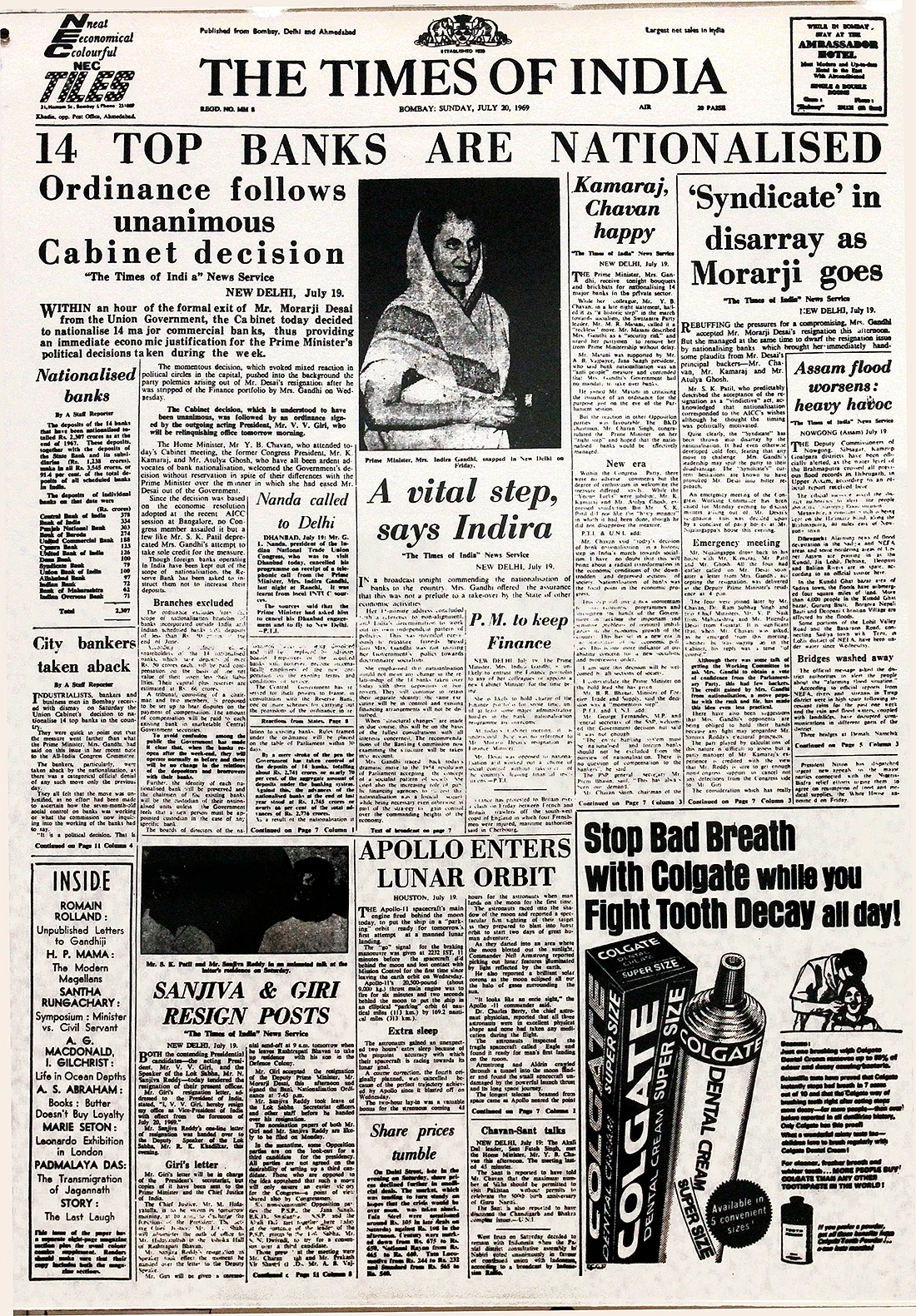
And so let us be explicit about what I said in jest but now say without hedging. The remedy I proposed is not a courteous purchase. It is not the British form of buying back with a cheque and a bow. It is not “compensate at market value” and proceed to wave a ceremonial hand. No. The remedy, were a government to choose it, would be a ruthless reclaiming of public assets. Recalibrated valuation would be the state’s prerogative. The price would be determined not by the artful manipulations of a present market, which itself has been shaped by the very capture we decry, but by an assessment of fair value as determined by law, by commission, by public authority. If that assessment concludes that the private owner has profited illegitimately from a structure built with public resources, then the state may, as historical precedent demonstrates, seize and transfer ownership without a full market recompense. Indira Gandhi did such things. We can read that history with horror, or we can read it as a blunt instrument that was used when political will and public feeling demanded it.
You will immediately hear the chorus:
That is confiscation. That is tyranny. That will scare away investment.
I have heard that chorus for three decades. It is the same chorus that greets every suggestion that the public interest should have teeth. It is phrased with many virtues, but it is often a cover for inaction. There are two responses to this. First, historical precedent is not vacant; expropriation without full compensation has been used in many countries, often as part of larger programmes of redistribution, transition, or public interest realignment. Second, the claim that all investment will flee in the face of restitution is either naive or disingenuous. What flees is predatory capital that relies on the permissive state. What remains should be capital that invests with a covenant to the public good.
Make no mistake:
I do not argue for wanton theft. I argue for political morality.
If a corporation has captured value that was created collectively, if it has been aided by policy bias, by regulatory capture, by sweetheart contracts, by opaque transfers, then it must not be allowed to convert public wealth into private dynastic wealth with impunity. Compensation, if any, can and should reflect legitimacy. If the ledger shows expropriation, then restitution need not be measured in glittering market sums. The sovereign is allowed, in its judgement, to prioritise restitution over reward.
Let me also be frank about what this will mean in political terms. To nationalise without a theatrical cheque is to pick a fight, and fights reshape institutions. They expose the networks of power. They unmask the cosy arrangements between private money and political protection. They force an accounting. If you are inclined to fear instability, consider this other fear: the slow institutional capture where a plutocracy becomes permanent because no one has the courage to name it and reclaim what was public.
Finally, to the sensible interlocutor who asked, in what I once thought was mock concern, whether I would pay retail investors if we nationalised, the answer remains simple and now blunt. The retail investor will rarely be the party from whom we seize. The people from whom we seize are the promoters, the funds, the foreign investors who have benefited from an architecture of capture. They will not, by definition, be the gentle small investor. They will be powerful, well represented by legions of counsel, and loud in their indignation. Let them be loud. Let them argue. That sound is the sound of power being challenged. Better the clamour of outrage than the silent, perpetual plunder of a republic.
In jest, to start. But not in jest in the end. If the nation is to remain ours, if the public weal is to outrank private aggrandisement, then law, politics, and the moral imagination must be ready to do what is necessary. If that requires ruthless, unapologetic nationalisation, then let the claim be made out loud, and let us have the argument in full view of history.