This morning, Misbahji made Sabudana Khichdi.
Now, let me tell you, the Sabudana Khichdi is no joke in my family. My mother’s recipe is legendary, spoken of in hushed, reverent tones like it was a royal feast. Naturally, at 11 pm last night, we did the only rational thing: we woke Ma up to beg for the recipe. She answered, bleary-eyed, half annoyed, half amused, and then obligingly whispered it to us.
When it comes to food, I cannot just say “delicious”. That is Baba’s fault. He had this beautiful, mischievous habit of praising whatever Ma cooked by pulling history itself into the kitchen. He would spin tales of emperors and queens, of battles won and palaces feasted in, until Ma blushed and we children watched in awe. It was never just dal or pulao; it was a royal banquet served at a turning point in civilisation. To this day, I can still see her smile as she half believed and half protested.
I have picked up that habit from Baba. This was not the first time I paid such a compliment to Misbahji, and each time I do, she reacts with the same wide-eyed wonder, like a child hearing a fairytale for the first time. She never tires of it, and neither do I. In fact, I love doing it, because her laughter in response is worth more than the finest compliment in return.
So, this morning, when Misbahji plated the khichdi and as I took one large spoonful of the steaming dish into my eager mouth, I felt Baba’s spirit tug at me, and I slipped once again into the same habit.
I told her,
“On 17 April 1720, when Balaji Vishwanath’s son, Balaji Baji Rao, whom we now know as Bajirao I, was formally appointed as Peshwa in Shaniwar Wada, the air in Pune must have been thick with both pride and anxiety. The Maratha Empire was still recovering from Aurangzeb’s long campaigns, the Mughals were watching every move, and here was this twenty-year-old about to shoulder the burden of an empire.
At home, Kashibai must have been waiting, pacing perhaps, her anklets echoing in the quiet corridors. In her pantry, she discovered a small bag of strange, white, pearl-like, starchy balls that her father-in-law, Balaji Vishwanath, had recently received from a Portuguese trader in the Konkan. They called it sago. It looked nothing like rice, and yet it glistened with promise.
So what did she do? She decided to experiment. She roasted it lightly, tossed it with ghee, peanuts, some boiled and roasted potato (another interesting tuber that had just started arriving in the royal markets), a hint of green chilli, and salt, and placed it before her husband when he returned. That, my dear, was the first Sabudana Khichdi in recorded history. It fuelled Bajirao as he went on to conquer Malwa, Bundelkhand, and even challenge the Mughals on their own ground. Ek wo din tha aur ek aaj ka din hai.”
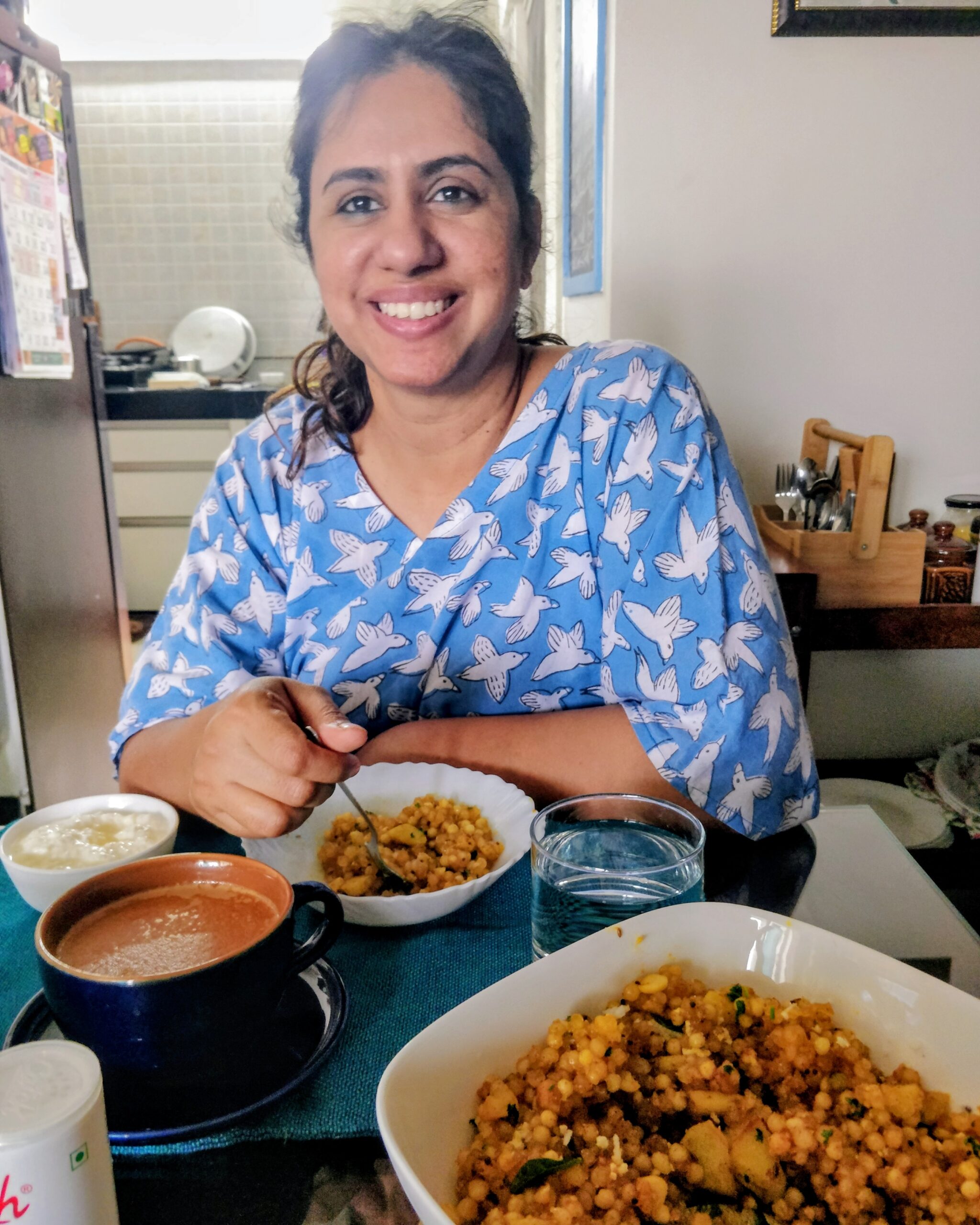
She burst into laughter so bright and joyous that I swear it could have come straight out of a black & white film, like that unforgettable moment in Chalti Ka Naam Gaadi when, seeing Kishore Kumar’s boyish pranks, Madhubala’s laughter lights up the screen and everything else disappears.
She teased me, asking if I was secretly a vampire who had lived through centuries, or at least enough to witness Peshwas, Portuguese traders, and epic khichdi traditions.
And there, in that moment, with her laughter echoing and the khichdi perfect on the plate, I realised something. Baba was right. History is not out there in books or monuments. It is in the way someone you love smiles at you across a table. It is in the small rituals that bind generations.
This is not just a good life. It is the best one. And I am the luckiest man alive.