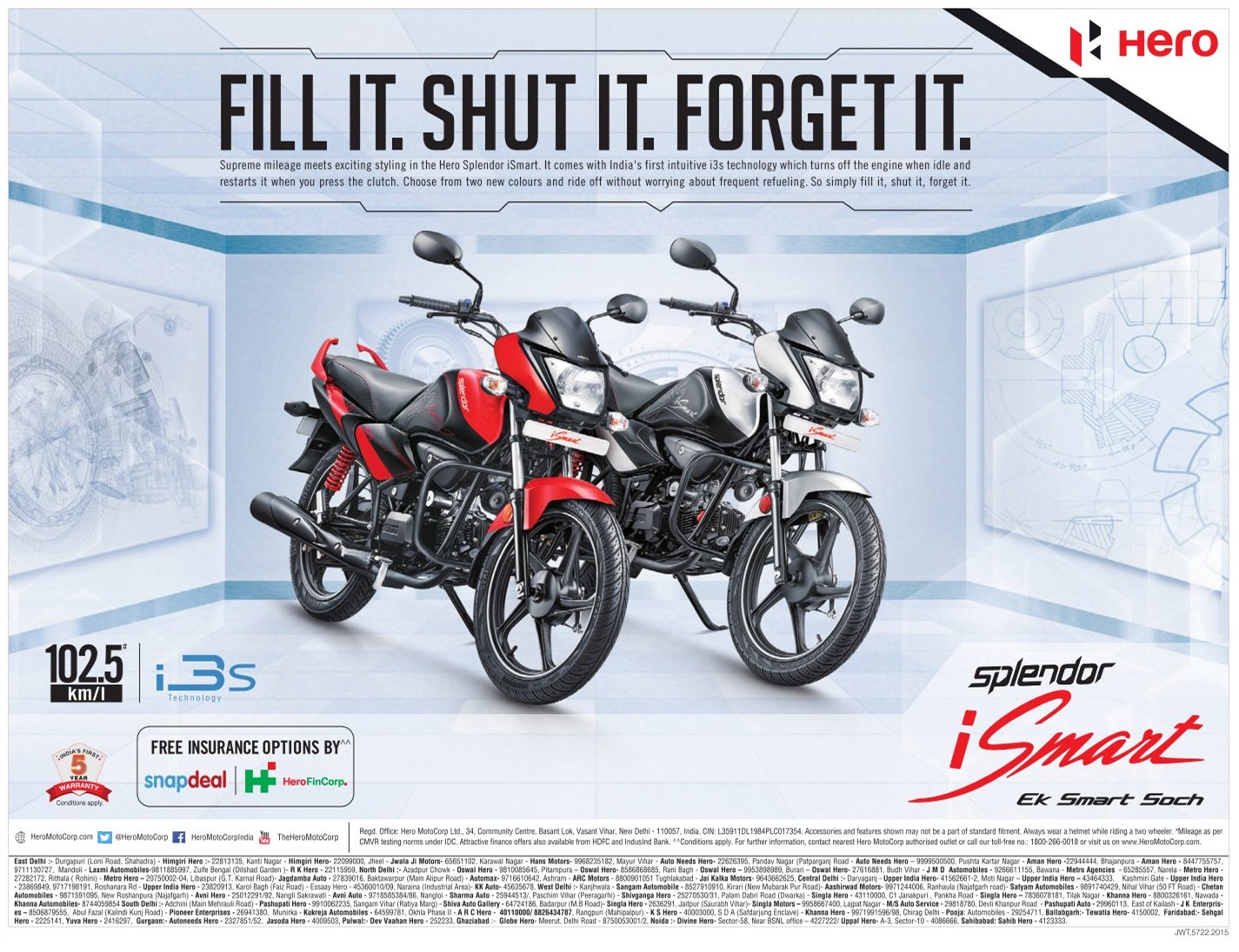
Is it just me, or are there others, silently, perhaps even secretly, who, like me, feel a small thrill of irritation every time someone tries to sell them something using that whole “benefits over features” formula, as if it’s universally accepted that the average buyer is too dull, too rushed, or too emotional to care about the damn specs?
Look, I get it. I’ve been doing sales and marketing for three and a half decades now. I’ve done the song and dance. I’ve written the taglines, pushed the benefits, hidden the ugly truths behind a nice story, sold the sizzle and not the steak, quoted Kotler and Ogilvy (and occasionally Padamsee and Pandey), said the thing about drills and holes more times than I care to admit. But here’s the part that trips me up. When I am the one buying, when the shoe is on the other foot, when I am the target of the sales pitch instead of its creator, I find myself wanting something very different. I find myself craving not the promise, not the lifestyle, not the vague uplift of emotional fulfilment, but just some damn data.
And not just any data. Reliable data. Numbers, specs, tables, charts, test conditions, tolerances, real use-case performance. I want to know how something actually behaves, not how it is supposed to make me feel. I want to understand the edge cases, the what-if scenarios, the things that don’t fit neatly into a slogan. And most of all, I want you, the salesperson or copywriter or marketing guru or ad director, to trust me (and my intelligence) enough to not reduce me to a bundle of emotions waiting to be manipulated. I want you to assume that I have a brain, and that I want to use it.
So, my little ritual, when I’m buying something, anything really, from a pair of headphones to a vacuum cleaner to a new laptop, is this. I go straight to Amazon, straight to the reviews, and immediately filter out the noise. The five-star gushers and the one-star haters are both too loud and too shallow. I go to the three-star reviews. That’s where the real action is. That’s where the truth hides, in the hands of people who neither love nor loathe the product, but who have actually used it, bumped up against its design limitations, discovered what works and what doesn’t, and written it all down with just enough disappointment to be honest and just enough satisfaction to be fair.
Only after that do I click on the “Product Specifications” tab. That’s my dessert. The specs. The numbers. The material types. The interface compatibility. The battery life under average and peak load. The resolution, the frame rate, the damn thread count. Whatever it is, I want to know exactly what I’m buying. And yes, I read every line. Sometimes I copy them into a spreadsheet. Don’t judge.
But here’s the part that even I find slightly surprising. Once I’ve done all of that, filtered for fairness, checked for function, I pause for beauty.
Not the artificial kind. Not the lipstick-on-a-pig kind. Not the glossed-over, airbrushed, influencer-approved aesthetic. I mean real beauty. The kind that emerges when someone has thought deeply about form and function and ergonomics and human interaction. The kind of design that is elegant not because someone tried to make it pretty but because someone took the time to make it work well. I believe, fervently, perhaps unfashionably, that beauty is a natural consequence of functional integrity. If you build something honestly and intelligently, it ends up looking beautiful, even if you didn’t try to make it so.
That, for me, is the holy trinity of buying:
- Reviews, three-star, balanced, thoughtful
- Specs, clear, complete, unvarnished
- Design, functional, sincere, beautiful
Now, I’m not trying to dunk on branding or storytelling or emotional resonance. I’ve used all three in my own career, and I know how powerful they can be. But when someone tries to sell me something with a line like “Fill it, shut it, forget it,” my brain goes into overdrive. What am I filling? Why am I shutting it? Should I really be forgetting it? Is this a promise, or a warning? What are you hoping I won’t ask?
See, the moment you refuse to give me detail, I start suspecting you’re hiding something. The moment you oversimplify, I start sniffing for complexity. The moment you try to sell me a feeling before earning my trust with facts, I take a step back. Not because I’m a cynic, but because I’m paying attention.
So let me ask you, how do you buy?
- Are you swayed by the promise of a better life?
- Convinced by a voiceover that sounds like Morgan Freeman and Attenborough’s love child?
- Do you, too, dig through the three-star swamp hoping to find dry ground?
- Do you check specs? Run spreadsheets? Zoom into product photos?
- Do you, like me, believe that real beauty can’t be faked?
Because at the end of the day, no one’s coming back for your clever tagline or the lifestyle you promised them in a 30-second reel. They’re coming back because the bloody thing did what it said it would.
It. Just. Worked.
It didn’t leak, didn’t lag, didn’t fall apart in week three. It charged when it was supposed to, fit where it claimed to, sounded like it said it would, and looked better the longer you lived with it.
That’s it. That’s the secret.
Everything else is set dressing.
Masala. Not murgi.
Nice to have.
But won’t save you when it fails.