Preamble
This essay is part of a three-part perspective I have been building ever since the so-called revolution, or riots, or uprising (whatever you prefer to call it) in Bangladesh. I have been meaning to put my thoughts down for some time, and now I intend to share them in sequence as my own reaction to the recent happenings in our north-eastern neighbour, Nepal. All three parts are ready, but I will publish them one after the other, as and when I feel free to write them out. Some may appear tomorrow, others maybe later, but together they form one continuous reflection.
Part One: Violence. And Me.
Let me take you back, because without context, the rest of what I have to say may sound like a privileged sermon from a man who has never felt the lash of oppression, which in many ways is true, and I would rather admit to it upfront than cloak it in false humility. In 1991–92, when I was in engineering college, I was part of a right-wing student organisation, full of the righteous fire that young men are so prone to, convinced that what I stood for was both ancient and inevitable, and so naturally I ran for elections, won some, marched in the Mandal agitation, and even though I refused to raise a hand in violence (trust me, the leadership tried, they gave explicit instructions for it), I still found myself briefly in police custody, only to be released because in those days students were not considered criminals simply for protesting.
And then came 6 December 1992, the night the Babri Masjid fell. I remember it vividly, the BBC crackling on the radio in our hostel room, me insisting to my five friends that we would not destroy an ASI-protected structure, that we were civilised Indians (the words ‘Bharatiya’ and ‘Sanatani’ had not yet made their entry into the right-wing vocabulary), custodians of an ancient culture, not vandals. The next morning was my MDME exam, Mechanical Design of Machine Elements, and I passed, but that night I learned that my conviction in the civility of our politics was misplaced. More importantly, it was the first real crack in my own ideological foundation, which, like the structure in Ayodhya, looked strong but collapsed so quickly that it was a revelation to me. It was the beginning of a slow shift from right-wing activism towards the centre, and later an overshoot into the left, until, once again, I recoiled at the casual way in which communists and their sympathisers condoned, and even wished for, violence and the revolutionary overthrow of democratically elected governments, whether in the name of class struggle or Naxalism. It was abhorrent to my sensibilities, so I walked back towards the centre, a little older, a little more disenchanted, but still clinging to the conviction that violence was never the answer. That is all water under the bridge now. It has been at least twenty years since I have deliberately, and with much deliberation, distanced myself from both ideological extremes, chiefly because of the way they perceived violence.
Perhaps my instincts are shaped by the way I have always known violence: either as sport or as duty. I was an amateur boxer in college, and for me, violence meant consensual, controlled aggression inside a ring, under clear rules, with a referee to enforce them, and with handshakes after the bell. The other kind of violence I knew was the state-sanctioned, rule-bound kind, legitimate in its own frame. My father went to war more than once in the Indian Air Force. My brother flew fighter jets, trained to kill if called upon. But that is not remotely similar to the sort of mob violence I have always been appalled by. It was war under a flag, bound by conventions, subject to the chain of command. Not a crowd deciding in anger who should live and who should die.
Later, sometime in the early 1990s, at Pune’s Alka Theatre, I watched Rambo III, unsettled by its cheerleading of the Afghan Mujahideen against the Soviets. At the time, it was presented as a noble struggle, yet we now know that those same fighters, once hailed as freedom warriors and armed by the West, later turned on their patrons, morphed into the Taliban, and brought untold misery not only to Afghanistan but far beyond its borders. Even then, as the film thundered on with its explosions and heroics, I found myself wondering how such struggles really end. And sure enough, a few years later, in September 1996, when Najibullah, the former Afghan president, and his brother were tortured, killed, and strung up on a lamppost in Kabul by the Taliban, those photographs seared themselves into my memory and hardened the unease I had always felt about crowds delivering verdict and sentence in the same breath.
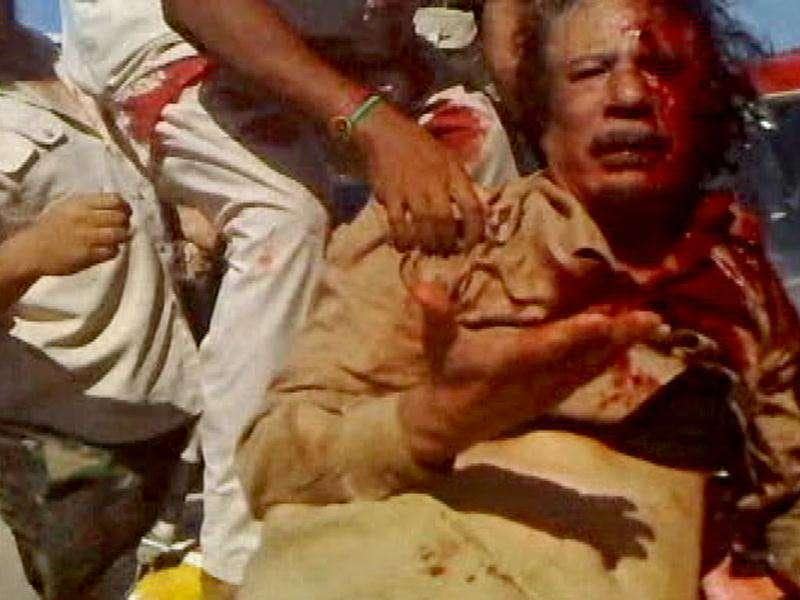
My reading of history only confirmed the feeling. The vivid descriptions of public guillotining in Paris in 1793, the merciless execution of the Romanovs in Yekaterinburg in 1918, grainy photographs of Mussolini and his lover’s disfigured bodies strung up in Milan in 1945, and videos, in my own living memory, of despots like Nicolae and Elena Ceaușescu shot in Târgoviște in 1989, Colonel Gaddafi dragged through the streets of Sirte in 2011, all evil rulers in their own right, all visited with mob justice, and all somehow left a moral stain on my conscience. Even Tiger Prabhakaran, the LTTE supremo, killed in 2009 as Sri Lankan forces closed in, and with him his 12-year-old son Balachandran, executed in cold blood after surrender, left me shaken.
It was the same unease when I read of Veerappan, painted as a Robin Hood by some, or Phoolan Devi, lionised as the Bandit Queen and later elected to Parliament, or the Naxalbari uprising of 1967 that began as a rebellion against exploitative landlords, held aloft by leftists as a just cause. My liberal friends saw in them symbols of justice, vengeance, even emancipation, but I, shielded as I was by caste, class, and privilege, still found myself rankled by the violence, however justified it was claimed to be. And yet, it is important for me to state clearly that I do not dismiss the merit in what Phoolan Devi did, or in what countless others like her have done. If I had been born into their place, with their lack of privilege, with their daily fear of violence or worse, I might have done the same. If someone in my own family were harmed, I might have picked up a weapon myself, or lashed out in any way I could. I can understand why someone straps a bomb onto themselves for a cause they believe to be higher, why someone assassinates an oppressor, why someone stabs a rapist who will never be punished by the system. I can understand why the powerless, denied justice in every avenue, sometimes resort to the gun or the bomb as their last defence.
And because I understand, I cannot condemn them. But neither can I condone. My discomfort is not born of moral superiority but of limitation. My caste, my class, my gender, my education, all of these protect me from their lived experience, and so my moral compass cannot claim to be universal. I admit as much. But I still insist that I have the right to articulate my own unease, to say that vigilante justice, lynchings, and mob killings disgust me.
Now, I must state this plainly. People like Najibullah, like Gaddafi, like Prabhakaran, like Ceaușescu, like Mussolini, probably, and in some cases most certainly, deserved to die. Indeed, what they suffered at the hands of mobs was, in many ways, far less than what they had inflicted on those they ruled. I understand this. I do not deny it. And I also admit that perhaps if I had lost a family member to one of these despots, I too would have demanded vengeance of the bloodiest kind.
But even so, I cannot bring myself to find joy in their deaths. I cannot cheer the spectacle of lynching, dragging, stringing up bodies, or shooting a child, even if the child of the enemy. I am torn inside. I accept the justice of their death, yet I recoil from the manner of it. And this is not me claiming the right to decide for others, nor is it a prescriptive moral argument. I place my own limitations on the record, my privilege, my distance, my reading, my discussions, my narrow universe. All I am stating here, and this is important to emphasise, is that from where I stand, I cannot bring myself to condone, leave alone support, violence of such kind, even if directed against the worst despot in the world.
And so, whether I was a young right-wing student, a drifting liberal leftist, or a weary centrist, whether I saw violence as sport in a ring or as duty in uniform, whether I could imagine myself picking up a weapon in another life or not, I could never bring myself to cheer violence in the streets. I have always seen violence in the same way. Something I cannot celebrate, something I cannot condone, something that leaves me queasy and restless even when directed at those who, by all accounts, may well have deserved it.
And this, really, is where I must pause. Because while this first part has been about my own history and the way I have always struggled with the idea of violence, the second part will turn outward, to our neighbourhood. To Sri Lanka, to Bangladesh, to Nepal, where the so-called people’s movements of the last few years have been greeted with glee by many of my liberal friends, even as I have watched them with unease. That is where we will go next.