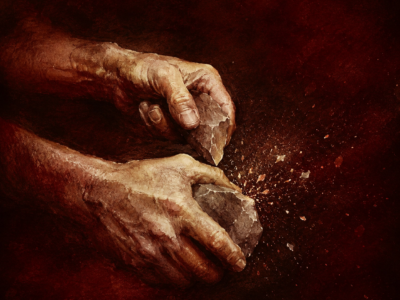
History is painfully consistent on one point: extremist ideologies do not die, least of all of embarrassment. All they do is go into deep sleep, that too only when they are crushed ruthlessly. And kept there through the violence that only the state possesses. Lest they awaken. Every time a victorious state on its way to civilisational progress forgets this, the future arrives carrying a knife. And a lesson in history.
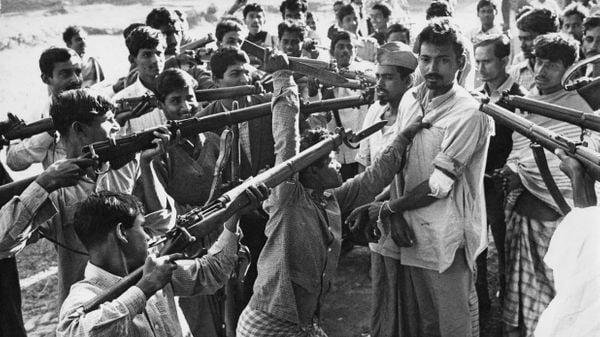
After 1971, Bangladesh had both moral legitimacy and popular mandate to permanently dismantle the forces that committed genocide during the Liberation War. Sheikh Mujibur Rahman did begin war-crimes tribunals, but they were incomplete and politically fragile. After his assassination, Ziaur Rahman went further in the opposite direction, releasing collaborators, rehabilitating Islamist actors, and inviting them back into public life in the name of reconciliation. The result was not healing but rot. The ideology that should have been dismantled was merely put on pause. What we are seeing today is not resurgence. It is unfinished business returning with interest.
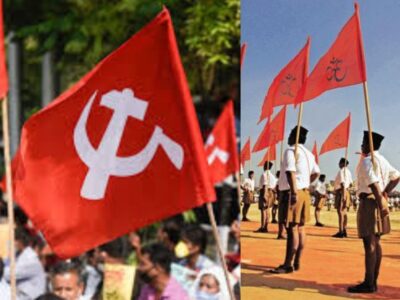
India committed a parallel mistake. Vallabhbhai Patel banned the Rashtriya Swayamsevak Sangh after Gandhi’s assassination because he understood, correctly, that ideological violence cannot be placated. But the ban was lifted far too early, without structural dismantling or long-term exclusion from power. Courtesy was mistaken for control. Civilisation was confused with safety. We chose to be generous when we should have been ruthless. And now we pretend to be surprised.
Contrast this with leaders who did not blink. Mustafa Kemal Atatürk did not negotiate with theocratic reactionaries. He broke them institutionally, dismantled religious power in the state, and made secularism non-negotiable. For decades, it held. Gamal Abdel Nasser did the same with the Muslim Brotherhood, jailing, banning, and politically annihilating them. Egypt remained stable as long as that pressure remained absolute. The moment it softened, the Islamists came roaring back.
Germany did not politely coexist with Nazis after 1945. It fucking erased them from public life. Spain, by contrast, chose “forgetting” after Franco, and fascist nostalgia never fully left. History is not subtle about this pattern.
Extremism interprets mercy as weakness. It treats civility as a tactical pause. If you do not break its organisational spine when you have the chance, it waits. And then it comes back louder, meaner, and better funded.
India is now living inside the consequences. A Bangladesh drifting back toward Pakistani alignment, a Pakistan still obsessed with undoing 1971, and a China eager to bankroll, arm, and encircle through proxies across South Asia. This is not crossfire. This is self-inflicted exposure, earned through decades of restraint fetishised as virtue.
We already know two iron laws of history:
- Do not fuck with the Afghans.
- Do not invade Russia in winter.
We should add a third, written in blood across multiple continents and timelines:
Never pass up the chance to completely crush extremist ideologies. And keep them crushed.
Future governments should keep this in mind.