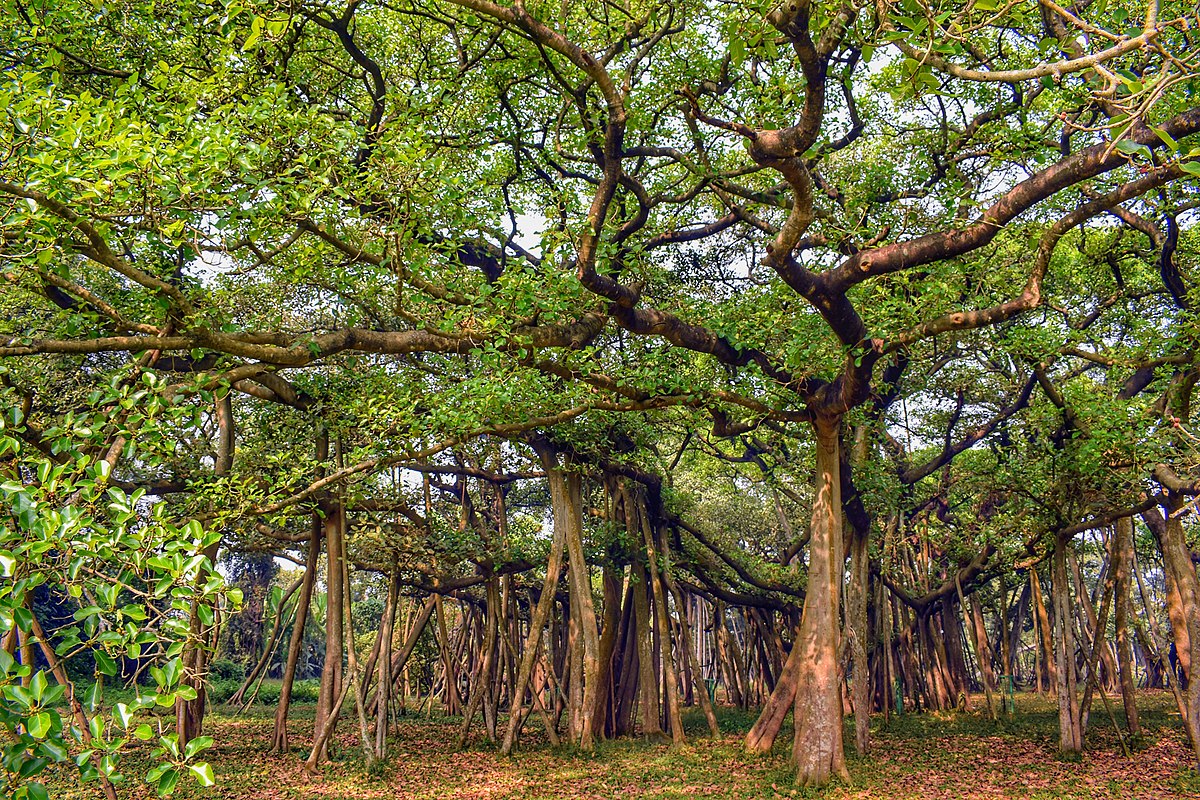
When I first said that democracy in India is both possible and absent, what I meant was that we have already built the scaffolding but not yet mixed the mortar. We have a Parliament, a Constitution, a procedural rhythm of elections, a moral vocabulary of rights and duties, but the ground beneath all this remains uneven. Democracy, after all, is not a miracle of paperwork; it is a crop that grows only in certain kinds of soil. And our soil, though rich in civilisation, has never been properly tilled for equality.
We won our freedom through immense sacrifice, and we framed a Constitution of remarkable wisdom. But the freedom struggle gave us independence, not necessarily democracy. The Constitution gave us a map, but not always the road. For democracy to take hold, it requires more than political will; it requires a social ecosystem that has already learned, however imperfectly, the habit of equality.
That is why democracy feels natural in certain parts of the Western world, not because the people there are inherently freer or wiser, but because the environment that sustains equality was prepared long before constitutions were written. Their soil had been churned for centuries by trade, war, heresy, plague, and philosophy. Power had already leaked downward before anyone thought to call it “the will of the people.”
The journey began in 1215, when King John of England, besieged by his barons, signed the Magna Carta at Runnymede. It was hardly a charter of liberty; it was an insurance policy for the nobility. Yet it planted a subversive seed: that authority could be negotiated, that even kings could be made to keep promises.
The Hundred Years’ War (1337–1453) that followed between England and France transformed loyalty from feudal to national. Peasants began to fight for crowns, not just for lords. The Black Death (1347–1351), which killed nearly half of Europe’s population, raised the value of labour and lowered the pride of aristocracy. Serfs demanded wages; lords were forced to concede; feudalism began to decay.
Out of this exhaustion came the Renaissance, born in 15th-century Italy. Wealth from the Mediterranean trade funded a flowering of humanism. Petrarch (1304–1374) reclaimed classical reason; Leonardo da Vinci (1452–1519) and Michelangelo (1475–1564) exalted human anatomy; Erasmus mocked dogma with wit. The human being, once considered dust before God, began to imagine himself as a legitimate subject of study, perhaps even of destiny.
Then came the Reformation. In 1517, a monk named Martin Luther nailed his Ninety-Five Theses to a church door in Wittenberg, and Europe discovered that faith could rebel. The next hundred years bled red with conviction: the Peasants’ War (1524–1525) in Germany, the French Wars of Religion (1562–1598), the Eighty Years’ War (1568–1648) in the Netherlands, and finally the Thirty Years’ War (1618–1648) that depopulated much of Central Europe. When the Treaty of Westphalia was signed in 1648, the continent was too tired to keep dying for God. Princes were allowed to choose their own religion; popes were told to stay out of politics. The idea of sovereignty, that every realm governs itself, was born.
Meanwhile, ships were crossing oceans. Columbus’s voyage in 1492 had opened a new world; Vasco da Gama’s arrival in India in 1498 had opened an old one. Commerce replaced crusade. The Dutch East India Company (1602) and British East India Company (1600) turned trade into empire. Money began to move faster than monarchs. The Bank of England (1694) formalised credit, and with it a new species of citizen: the investor. Birth mattered less than balance.
Technology amplified this change. Gutenberg’s press (c. 1440) multiplied ideas. Without it, Luther’s protest would have remained a local quarrel; with it, Europe became a debating society. By the 17th century, print culture had given rise to a new kind of thinker: pamphleteers like John Milton, philosophers like John Locke, skeptics like Voltaire, all questioning who had the right to rule. Locke’s “Two Treatises of Government” (1689) proposed that power derives from consent. Montesquieu’s “Spirit of the Laws” (1748) and Rousseau’s “Social Contract” (1762) translated moral outrage into political principle.
The revolutions that followed were almost mathematical. In 1776, the American colonies rebelled against monarchy; in 1789, France guillotined its own. By 1848, insurrections flared across Europe; by 1865, even the United States fought a civil war to reconcile liberty with slavery. The Industrial Revolution (1760–1840), churning behind all this, made cities, unions, and mass literacy the new engines of society.
It was not virtue that made Europe democratic; it was fatigue. After centuries of blood and bargaining, men had simply grown too intelligent, too literate, and too interdependent to remain subjects. The soil had been loosened by suffering, fertilised by thought, and watered by money. Equality had become imaginable, and once imaginable, it was unstoppable.
This, then, is what democracy requires before it can exist: an ecosystem of equality. A population that has experienced parity in daily life finds it natural to demand it in politics. A society that has never known equality must legislate it in vain. Wealth must circulate, art must belong to the street, education must escape the monastery, and humour must reach the throne. Only when the baker can read, when the weaver’s daughter can question scripture, and when the blacksmith can mock his master without fear, does democracy begin to live.
That is how the Western world arrived at it, not through benevolent rulers but through battered citizens, not through enlightenment from above but through self-respect from below. And this is where India’s story diverges. Our civilisation, older and deeper in many ways, never went through such flattening. We have wisdom in abundance, but equality in deficit. Our soil is rich, yet compacted. The seed has been sown, but it waits for rain.
And so, as we turn from Europe’s long apprenticeship in equality to our own inheritance of hierarchy, we begin to see why democracy here feels both triumphant and fragile. The West arrived at freedom by eroding its feudal past; we arrived by leaping over ours. Their democracies grew from the patient decay of privilege; ours was declared upon it. Theirs was a culmination; ours, a beginning. The next question, then, belongs to Part II – The Fault in Our Foundations: not how democracy was born, but why, in India, it still struggles to breathe.