In Part I, I wrote about what should have been a routine renewal of my daughter’s passport, and how that simple act spiralled into a day-long circus of counters, signatures, and shrugs, where nobody refused outright but everyone ensured nothing moved. That episode, comic in the way only Indian absurdities can be comic, set off this reflection that the system is not broken at all; it is functioning exactly as it was meant to. It distrusts the citizen, delays the service, and defends itself with the language of procedure. This essay is about that disease of design, about how the Indian state, even in a democracy, still sees its people as subjects to be verified and nuisances to be controlled, not as citizens to be served or humans to be protected.
Let us start with the obvious. The government already knows everything about us. Between Aadhaar, PAN, GST, FASTag, income-tax portals, and face-recognition cameras in airports, malls, and clubs, the CCTVs on roads and red lights, there is not a sneeze in this country that is not registered somewhere. My delivery app knows what and when I eat, my bank knows when I am broke or flush (and by how much), my telecom provider knows where I sleep (and who I sleep with), my Uber and Digiyatra apps know when and where I travel to (and from), and so much more.
The government, as of date, with its web of data, could reconstruct my entire life from breakfast to bedtime, including what I eat for breakfast or how much I snore in bed, and not break into a sweat. Yet every time I approach it, to renew a passport, to register a business, to update a driver’s licence, or even to claim a benefit, I must once again prove that I exist. Every interaction begins with doubt. Indeed, I’d go so far as to say that even before every interaction begins, doubt is already there.
And this is the point: it is not inefficiency; it is ideology. The state is not so incompetent as to not know of my existence. It is being deliberately malicious. Because it needs me to feel small and keep me busy so that I cannot have any thoughts the state does not wish me to have, nor do with them what the state does not wish me to do. The state does not seek information from me to establish any kind of truth. It needs it to exercise control. Not just over my immediate being, but over my time, my energy, and even my thoughts.
You see, if the state already knows the truth but still demands proof, it is not seeking clarity; it is exercising power. It wants the act of proof itself, the queues, the affidavits, the notarisations, the attestations, and the forms to remind you that you are small, temporary, and replaceable. The logic is colonial, and it has never been exorcised. In empire, the governed were presumed guilty until they could demonstrate obedience. In free India, the principle remains; only the colour of the skin of those in power has changed.
Look at how we file taxes. The government already has every number, every transaction, every bill, yet it insists that you calculate your own liability and then defend it. Why? Because the moment you file, the burden of error shifts to you. If you overpay, they keep it till they get around to refunding it. If you underpay, they fine you. The rule is simple: the citizen must sweat so the state can sit. The same rule applies to trade licences, to vehicle registration, to import-export codes that lapse if unused, as though inactivity itself were a crime. The Indian state does not presume trust automatically; it automates harassment. By design.
And then, beyond the paperwork of business or taxation, there is the paperwork of existence. To draw your pension, you must prove you are alive. To keep your bank account, you must prove you are you. To hold your phone number, you must prove you still live where you once lived. To continue as a citizen, you must endlessly verify that you are one. The government that can track every movement of your car through GPS and road cameras, every transaction through UPI, and every click through Aadhaar still needs you to line up for KYC every few months, as if reincarnation were a bureaucratic risk. The burden of proof never shifts. You are presumed guilty of lying, or dead, or missing, until proven otherwise, and even then, only until the next proof is required. It is exhausting, demeaning, and fundamentally contrary to what a democracy ought to be.
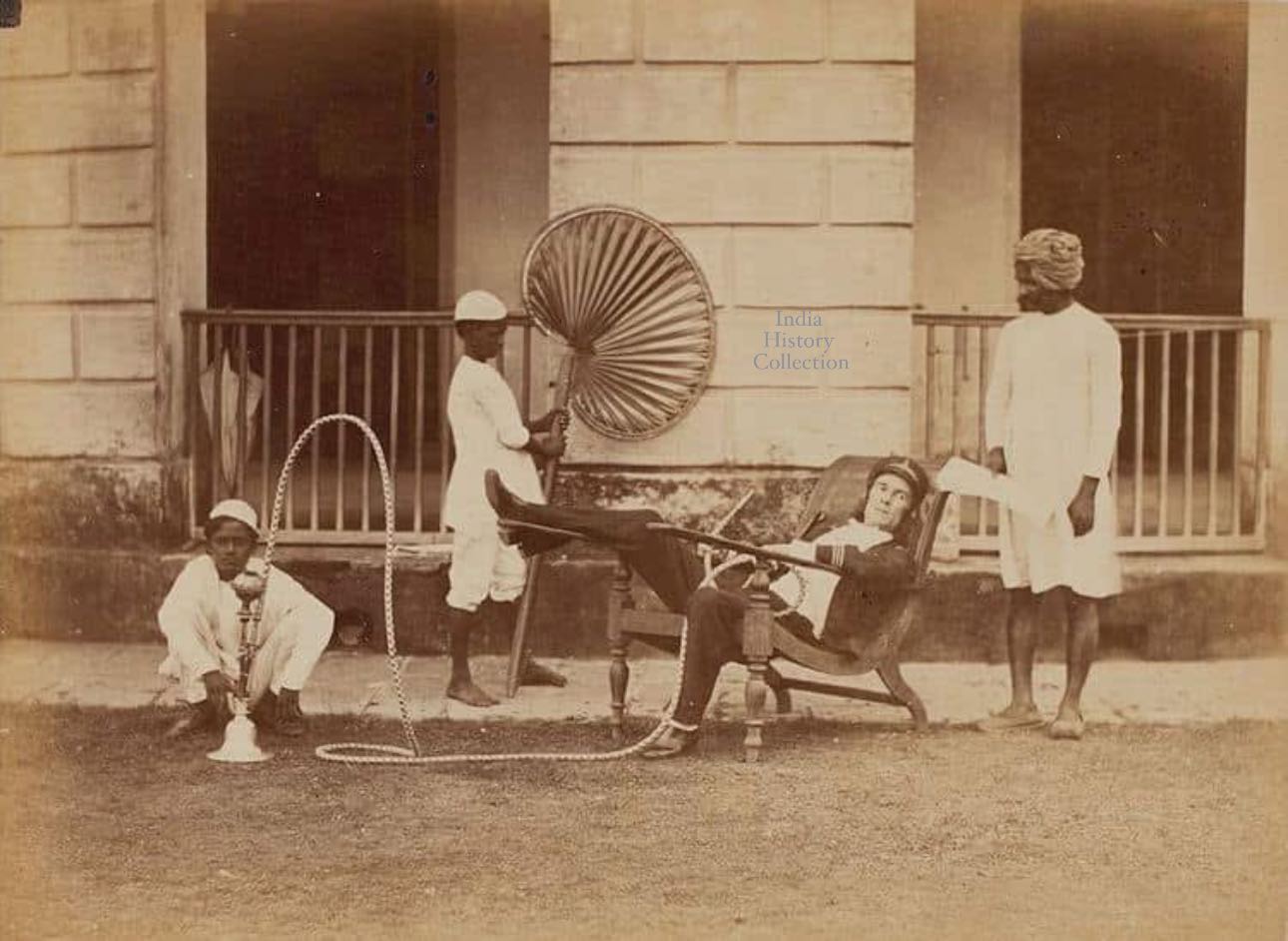
This comes from a much older inheritance, the feudal patron-client world where authority was a favour, not a right. You did not ask; you pleaded. You did not question; you obeyed. Up until my father was in school, back in the 1960s, our official letters crawled with residues of servitude: “I remain your most obedient servant.” And even today, official correspondence is full of the sort of obsequiousness that would make a court eunuch blush.
The way we address judges, the way we write names of even minor politicians on billboards and invitation cards, the way we call every small official ‘saheb’ and ‘anna’ and ‘bhau’ and ‘dada’ in a nauseating display of bootlicking shows who we are and how we see ourselves, intrinsically. Indeed, try calling a senior actor or cricketer by their name without an honorific, and you will see the backlash. Why, we have even knighted people without their knowledge, case in point being even the educated writing “Sir Ratan Tata” when referring not to the actual, knighted son of Jamshetji Tata who lived from 1871 to 1918, but to Ratan Naval Tata, who passed away recently, just to appear “respectful”.
You might say we are simply polite. I disagree. That is not politeness; that is submission. Independence gave us new rulers but not new perspectives.
The result is a republic of suspicion. A place where every citizen is treated as a potential cheat, where every form begins with the assumption that you are lying, and every interaction with the state feels like an apology for existing. We whisper in police stations, we lower our eyes before clerks, we carry files thicker than the Constitution to prove that we are not frauds. We confuse compliance for citizenship and paperwork for patriotism.
And while the state never trusts us, it demands that we trust it absolutely. We must accept every policy, every portal, every new tax or penalty at face value. We must believe its errors are temporary, its corruption accidental, its authority divine. That one-way trust is the most dangerous inversion of all, because democracy was meant to work the other way around. The citizen was supposed to doubt power. The government was supposed to explain itself. But in India, explanation flows upward and punishment downward. The rulers are accountable only to their paperwork.
This constant proving has moral consequences. It creates a population that is permanently afraid of being wrong, whether or not they are actually wrong. We do not argue with officials because they can delay us. We do not demand reform because we are busy complying. We do not protest injustice because we have no time left after filling out forms. The bureaucracy does not need to beat us into silence; it simply buries us under procedure.
What began, for me, as a morning at a passport office ended as a lesson in political anthropology. I realised that the Indian state has perfected a form of power that no longer needs ideology or violence. It rules through exhaustion. It wins by paperwork.
We have built a democracy where the government believes nothing its citizens say but expects to be believed in return. I do not call it governance. I call it feudalism with Wi-Fi.
And maybe, when I get around to writing again, I will stop asking why the system is so broken and start asking the harder question: why we still call it freedom. And maybe what we can, as citizens, do about it. But till then, I think this is all I have in me today. Maybe I will write the next part; maybe someone who reads this might be inspired to. Regardless of who does it, let us hope we are still free enough to write it.