17 December 2025
Pune, India
To:
The Appropriate Officer
Prime Minister’s Office
New Delhi, India
Subject: Appreciation. And a modest proposal.
Dear Sir/Madam,
I write to place on record my appreciation of (and, I dare say, pride in) how far you have come.
It is easy, from the outside, to forget the distance travelled by someone who now operates at the very centre of national decision-making, but your trajectory deserves acknowledgement. Years of preparation, the long and narrowing funnel of the Union Public Service Commission, the careful accumulation of rank, trust, and institutional fluency, and the slow ascent through postings where one learns, above all else, how to think safely and act decisively, have brought you to a point that very few ever reach. This is no small achievement, and it would be ungenerous not to recognise the calibre required to arrive here.
There would have been a time, after all, when your ambitions were more modest, when success meant clearing prelims, surviving mains, and performing adequately at interview. In my time, aspirants read Competition Success Review with devotional seriousness, mining its pages for strategies, board behaviour, and reassurance that suffering, if sufficiently organised, would eventually convert into rank. I am told today’s candidates rely on more intense coaching classes, sleeker digests, compressed Indias, cliff-note civilisations optimised for recall rather than disturbance. The format has evolved. The discipline has not.
Needless to say, behind this lie familiar arrangements: parents who deferred their own lives, families who reorganised budgets and expectations around coaching schedules and additional attempts, or, in other cases, the quieter heroism of public libraries, borrowed books, shared rooms, and long nights under unreliable lighting, sustained by the belief that merit, when expressed in the correct format, would ultimately be rewarded.
And rewarded it was.
You became IAS.
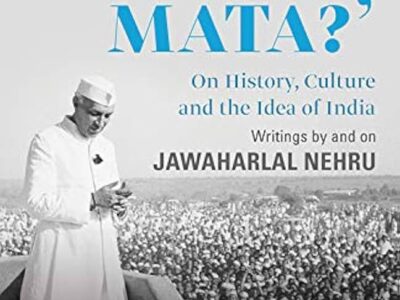
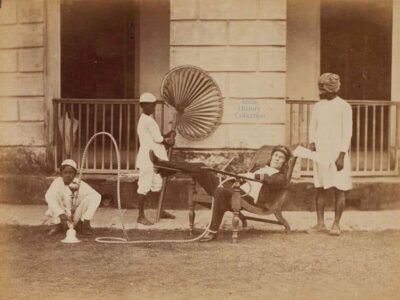
From there, the steel frame took over, an inheritance with its own history and habits. Once populated by men educated at Eton and Harrow, running this country with admirable efficiency for the benefit of an empire elsewhere, it was later moralised, briefly, under Jawaharlal Nehru, who is said to have personally interviewed officers, asking what India meant to them, how they understood Bharat Mata, whether Gandhi’s talisman accompanied them into service, and whether power frightened them enough to keep them honest. These questions, reflective and inconvenient, now read like artefacts from a more distracted age.
It is fair to say that we have, like this country, come a long way and have, along the way, let us say, refined the process.
Today, the questions are probably cleaner. I do not know whether the current Prime Minister personally interviews officers, given that he already works 27 hours a day, but since he has clarified that he is not truly biological in the conventional sense, it seems reasonable to assume that time is available to him in forms inaccessible to the rest of us. One imagines the interviews, when they occur, are correspondingly focused: concerned less with conscience and more with alignment, less with interpretation and more with correction, less with doubt and more with certainty, less with courage and more with pride. But that is understandable. After all, as I have already noted, we have come a long way. A rather long way.
It is at this point in your journey that one realises how exalted your present position truly is.
For you are no longer merely administering the Republic. You are now engaged in the far more consequential task of writing its destiny, not only by shaping its future, but by reimagining and reshaping its past. This is an extraordinary responsibility, demanding not just intelligence, but immunity to embarrassment.
I have followed with admiration the recent flowering of this craft. Over time, the Prime Minister’s fondness for acronymic governance has matured into a coherent philosophy of statecraft, one that recognises, with admirable clarity, that history, like infrastructure, benefits from periodic replacement, provided the replacement sounds sufficiently forward-looking.
AMRUT, for instance, marked a decisive advance in this direction. Formally titled the Atal Mission for Rejuvenation and Urban Transformation, it efficiently relieved urban renewal of its earlier incarnation, the Jawaharlal Nehru National Urban Renewal Mission. This substitution was, on reflection, inspired. Nehru, after all, belonged to an older India, distracted by constitutionalism, parliamentary democracy, scientific temper, and the laborious business of institution-building. It was only fitting that he make way for something more contemporary.
That the replacement happened to be Atal Bihari Vajpayee only deepens the elegance of the gesture. Vajpayee, a man who went on record repeatedly to express his admiration, affection, and deep respect for Nehru, would surely have been startled to discover that history had recruited him into this exercise. But such sensitivities must not be allowed to interfere with administrative clarity. Besides, Atalji now enjoys the considerable advantage of being unavailable for comment, correction, or embarrassment. History, after all, is most comfortable when rearranged using figures it can no longer offend.
Of course, if Nehru truly had to be replaced, intellectual honesty would suggest that the task properly belonged to the Prime Minister himself. No one has worked harder to reinterpret Nehru’s legacy, correct his intentions, and relieve the Republic of his lingering influence. Regrettably, this would have required the nation to accommodate the acronym MAHA MURKH (Mission for Administrative Hegemony and Aggregation under Modiji’s Urban Reform through Kalyankari Harmonisation), and acronyms, for all their flexibility, must be protected from unintended candour. Under these circumstances, Atal was an understandable compromise, chosen not for ideological accuracy but for phonetic safety.
The same logic animates other inspired exercises. UDAN, or Ude Desh ka Aam Nagrik, demonstrated remarkable creativity in forcing Hindi into aviation, a domain historically cluttered with inconvenient English and global practice. This was, of course, not an imposition, merely an affectionate suggestion from our ‘national’ language, which absolutely no one in their right mind claims is being imposed. That the scheme struggled to take off, crashed early, and required repeated recalibration only strengthens the case for its naming. Failure, when properly titled, acquires dignity.
This precision now extends to the broader grammar of greatness. When the Prime Minister, addressing an audience in the United States, revealed that MAGA + MIGA = MEGA, one sensed the emergence of a new civilisational mathematics. Make America Great Again combined with Make India Great Again does not merely signal bilateral warmth; it produces greatness amplified, greatness squared, greatness rendered self-evident through arithmetic rather than logical argument, practical diplomacy, or objective truth.
The Prime Minister has long demonstrated similar confidence in algebra as governance. When he reminded us that (a + b)^2 = a^2 + b^2 + 2ab, and remarked, with authority, that nobody knows where the 2ab comes from, he was not confessing ignorance so much as establishing hierarchy. Everyone knows where the 2ab comes from. The point is that it no longer matters. Understanding is optional if it interferes with wordplay. Assertion is sufficient. I am sure you and your esteemed office were behind this brilliant turn of phrase too, though you’d confess that modesty forbids you from taking credit.
This habit of compression, of reducing history, economics, diplomacy, and social reality into manageable clusters of initials and formulae, has become a defining feature of governance. Dividends are neatly divided into three Ds, even while the less important Ds in inconvenient acronyms like GDP, CAD, FDI, HDI, SDG, DBT, PDS, UIDAI, and ICDS, not to mention those that, entirely ufortunately, contain no Ds at all, such as AQI, ECI, SCI, SEBI, and RBI, are rightly ignored (as are some words that do indeed contain Ds, like Indigo and Adani, as also democracy, development, and so on, not to put too fine a point on it). Entire ideas and philosophies, communities and societies, nations and cultures are rendered into slogans. Complexity is flattened into syllables. Meaning is purified, streamlined, and made portable. Just as it should be. Especially for a civilisation as great as ours.
All of this has been inspired in its own way. It reflects a refined understanding of a fundamental truth: that nations respond less to explanation than to reassurance, less to reasoning than to rhythm, and less to evidence than to algebra confidently (mis-)applied.
And yet, your recent work, VB-G RAM G, stands apart.
It is not merely an acronym for Viksit Bharat—Guarantee for Rozgar and Ajeevika Mission (Gramin). It is a masterpiece of compression. In a single gesture, it accomplishes two difficult tasks at once. It inserts, with elegant inevitability, the name of our national obsession, our preferred divinity, into the heart of a welfare scheme, ensuring immediate emotional resonance. At the same time, it removes, just as deftly, the name of a mere mortal, Mahatma Gandhi (as the Mahatma Gandhi National Rural Employment Guarantee Act 2005), thereby relieving the programme of the inconvenience of historical specificity. God replaces man. Eternity replaces biography. Memory is streamlined. All is well in the world.
It also, though this part is easily overlooked (though I am 100% sure you did not mean to), shifts responsibility for implementation to the states while quietly centralising power at the Union level, a manoeuvre executed with such smoothness that it would have made Sir Humphrey blush.
In this one fell stroke of renaming, you have achieved what would otherwise have required hours, if not days, of parliamentary debate, wide-ranging consultations, white papers, expert committees, perhaps even a JPC, and a long-winded consultative process. All of that has been compressed into an acronym that draws attention away from substance with the efficiency of a strategically placed decoy. Development, guarantee, livelihood, rurality, nationhood, all folded into an incantation that resists explanation while demanding reverence. This is not branding. This is doctrine. This is merit (my Brahmin friends will understand this instantaneously), finally liberated from outcomes.
I could not help, therefore, but write to you with a small and entirely constructive suggestion. Given that you are now engaged not merely in shaping policy, but in reconstructing memory and aligning destiny, the intellectual labour involved may be considerable, even for an officer of your calibre. It may be unreasonable to expect a single individual, however accomplished, to carry this responsibility alone.
It seems only logical that such work be institutionalised (much like the our most successful, UNSECO-certified, NASA-honoured Prime Minister, Modiji, and I say this with absolutely no pun intended, lest the anti-national intellectuals construe this with malice).
I therefore propose the creation of a dedicated body to support you in this endeavour, operating under your secretarial guidance and, where appropriate, under the watchful supervision of the Honourable (or indeed Most Honoured) Home Minister.
Possible designations suggest themselves:
- MANTRA — Ministry for Acronyms, Nomenclature, Terminology, and Retrospective Alignment
- SHABD — Strategic Harmonisation And Branding Directorate
- SANSKAR — Systematic Alignment of Nomenclature with SansKar And Rashtriyata
A short compulsory module could be introduced at LBSNAA, sparing future officers the burden of unsynchronised judgement. Maybe some practicals in creating acronyms on the fly. And perhaps a 10-mark question in the finals. Yes, that ought to suffice. After all, nothing beats learning on the job.
You need not, of course, credit me for this suggestion. I offer it merely as my small contribution to the larger project of nation-building in which you are now so visibly engaged.
One cannot help, at this stage, but reflect on what this moment must mean beyond the office itself. How proud your parents must be, looking back on the long evenings, the deferred comforts, and the quiet encouragement, and recognising that it has all culminated here, in this rare and exalted responsibility. Your community, too, must take satisfaction in knowing that someone from among them now participates in decisions that determine how the nation speaks, remembers, and understands itself. Neighbours who once watched you leave with books under your arm now know that you have arrived at the centre of things.
It is, in every sense, a vindication. Of effort. Of obedience. Of alignment. A confirmation that the system works, that perseverance is rewarded, and that the highest forms of public service now involve the careful calibration of symbols rather than the messy uncertainties of outcomes.
Few reach this point. Fewer still are permitted to shape the vocabulary through which the Republic narrates itself. You have done both. You have risen, not merely within the (now stainless) steel frame, but into the realm where history is adjusted gently enough to appear inevitable.
I remain,
Kedar Anil Gadgil
A Participant in Aligned Governance and Acquiescent Language