It began with a question I hadn’t anticipated.
Not from a policy paper or a political debate, but from a teenager sitting cross-legged on the floor, looking up at me in the middle of a Marathi lesson. We were reading Abhalachi Amhi Lekare, a well-known poem by Vasant Bapat, taught in the 8th-grade ICSE syllabus in Maharashtra. Halfway through, Maryam, my partner Misbah’s 13-year-old, raised as a Muslim, raised her hand and asked,
“Why Ganga?”
That stopped me in my tracks.
I’d read the poem before. Shram Ganga, it says, the sacred river of honest labour, of sweat, of effort. Like many before me, I had accepted it unquestioningly as metaphor. I didn’t think to ask why it had to be the Ganga. It just made sense. Of course it was the Ganga. Everyone knows the Ganga. It’s mentioned in scriptures. It’s the lifeline of the country. It’s the national river of India, right?
Maryam knew some of this. But not really. She knew it as a river, not as metaphor, not as symbol. She had never seen it referenced that way in her world. For her, it was just a name, a river someone else had decided was sacred, a metaphor someone else had been told would be universal.
And that’s when it hit me. I had never stopped to ask whether every Indian child would know what Bapat meant. Or worse, whether they should have to.
Because Ganga is not just a river. It is a holy river. And not just holy, but specifically Hindu-holy. It belongs to a religious-cultural worldview, rich and deep, yes, but not universal, not neutral, and certainly not unmarked. It has meaning to some, but not to all. And yet, here it is, in a poem about the dignity of labour and the universality of effort, standing in for everyone, without explanation, without translation, without pause.
And then, a few lines later, it got worse.
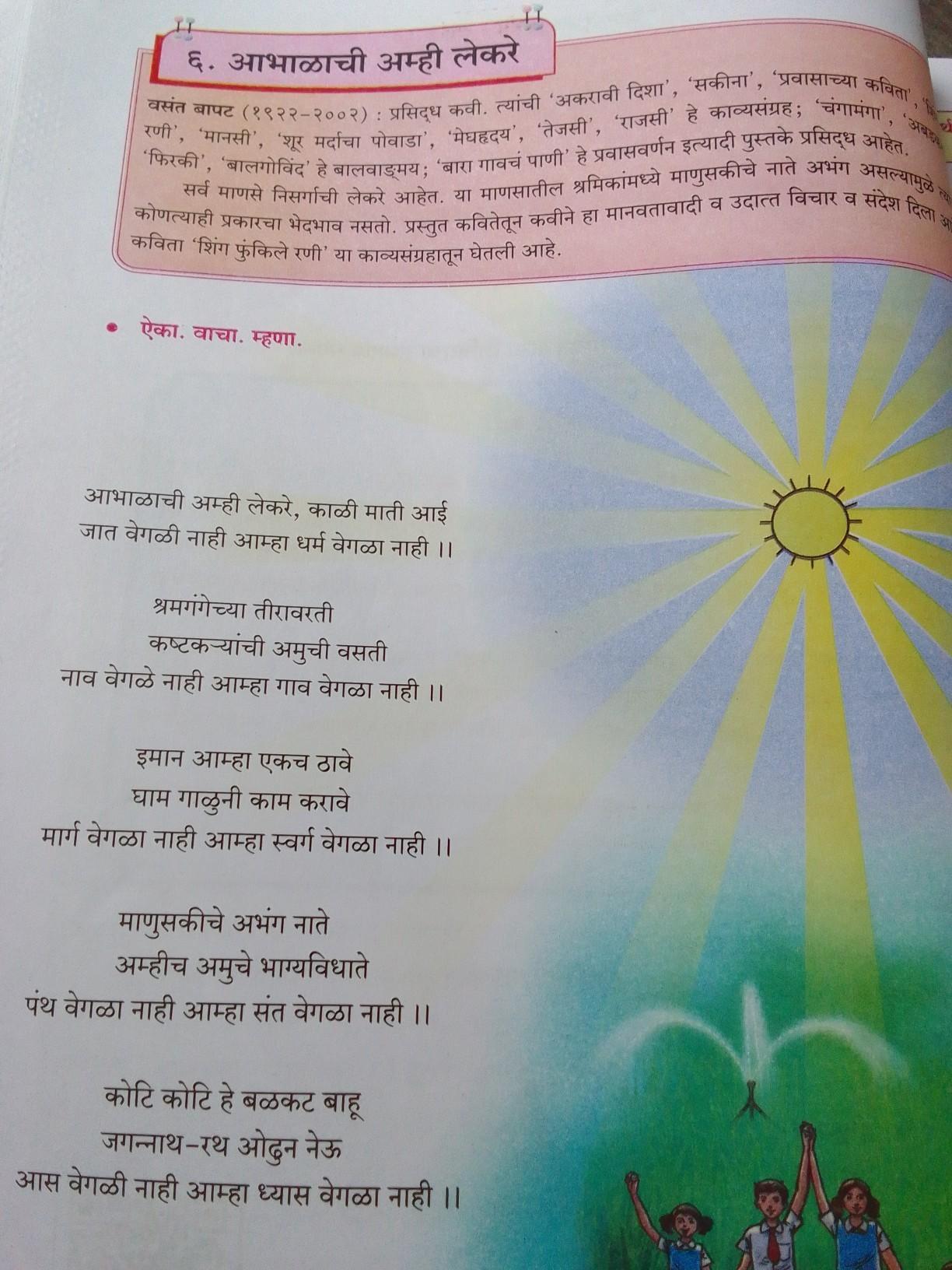
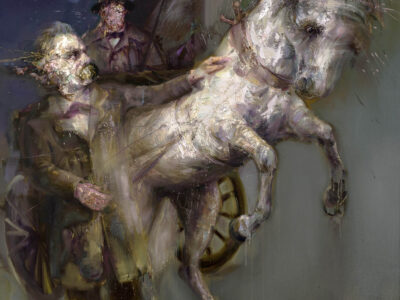
Jagannath Rath odhun nevu. The hard-working children who live under the open sky, Abhalachi lekare, will become so strong they’ll pull Lord Jagannath’s massive chariot. The reference is to the Rath Yatra, a grand chariot festival in Odisha, deeply embedded in Hindu devotional imagination. And yet here too, in a poem ostensibly about humanism and the working class, the final image of triumph is pulling a Hindu god’s chariot.
To Maryam, this wasn’t a metaphor. It was a mystery. She had no frame for it. No Rath Yatra. No Jagannath. No chariot-pulling as spiritual strength. It was just another reminder that this story, though printed in her textbook, wasn’t written with her in mind.
And if this can happen in a poem by Vasant Bapat, freedom fighter, socialist, lifelong egalitarian, then what chance do we have elsewhere in the curriculum?
Because this isn’t a one-off.
I’ve seen it in Hindi poetry, where chandan becomes shorthand for virtue and calm. In moral stories referencing the pooja thal, the moorthi, or the guru–shishya parampara. In art assignments that assume every child knows how to draw a rangoli, decorate a kalash, or light a diya on Diwali. In stories where touching someone’s feet equals respect, with no mention that these are caste-marked, religiously specific practices. Poems invoke asheerwad, gangajal, tilak, vibhuti, prasad, and mantra, not as cultural colour, but as the default language of reverence.
These aren’t just metaphors. They are signals. They tell children who belongs here and who does not. Who is represented, and who is merely tolerated.
And this is not just about religion. It is about class, caste, and control. Over what is civilised, what is sacred, what is refined, what is vulgar, what is cultured, and what is crass.
Pierre Bourdieu, the French sociologist, wrote in Distinction that good taste is not universal. It is what the elite define it to be. The upper classes use language, art, education, and aesthetic judgement to reproduce their own dominance, by making their preferences seem natural and everyone else’s seem inferior.
In India, that distinction cuts deeper. Our upper class is almost always also upper caste. And this caste–class complex decides what music is sophisticated, what accent is correct, what food is hygienic, what faith is “tolerant,” what clothes are professional, and what language is pure.
They decide what is Praman Bhasha, the canonical language, and what is just boli, a dialect. They strip literature of voice and replace it with grammar. They erase dialects and call it refinement. They erase histories and call it curriculum. And families like mine, elite minorities within the majority, not only fail to notice this, we believe it to be the natural order of things. We believe that what we want is what everyone should aspire to.
Of course, this isn’t a uniquely Indian failure.
It happens everywhere. In Britain, Christian symbols like the Bible, the cross, the chalice, Jesus, or the Nativity are seen as “general,” while Dhamma, kirpan, or Ahura-Mazda are flagged as “specific” or “religious.” In America, Protestant values shape stories, heroes, holidays. In France, Catholic motifs pervade literature and thought, even as the state loudly and, often, arrogantly proclaims itself secular.
So no, this is not just our problem. But yes, it is still our fight.
Because what separates us from other species is not instinct. It is refusal. It is our ability to say no to what evolution has wired us for. Every time we stay faithful, or build a ramp for a wheelchair, or save an endangered species, or regulate childbirth, or handicap ourselves with empathy, we become more civilised.
We are not here to defend what has always been done, or what others do too, or how the world is just wired this way. We humans are better than that.
We are here to do what ought to be done.
Because science may explain how gravity works, but not why we bother. Dogs don’t wonder about rain. Elephants don’t care about inertia. The need to understand, not just functionally, but meaningfully, comes from stories, symbols, struggle, and song.
It comes from philosophy and spirituality. From language and art. From storytelling and history. From culture.
And if the only culture we teach, the only metaphors we use, the only symbols we respect, and the only gods we normalise all come from one group’s imagination, then we are not building national identity. We are building majoritarian memory, and calling it literature.
That is not the dream our Constitution gave us.
The Preamble did not descend from the heavens. It wasn’t chanted in a yagna. It was written, deliberately, by flawed humans, for other flawed humans, as a vision for who we wanted to become. A bar we set for ourselves. A promise we made. To ourselves.
A promise that this land belongs equally to all, from the chandan-adorned Brahmin, to the hijab-wearing Muslim, to the tribal forest-dweller, to the Dalit bride dressed in white, to the Christian in the hills, to the Buddhist in Ladakh, to the Malayali labourer in Dubai, to the Bihari migrant in Mumbai. And beyond.
We gave ourselves that promise.
And if our children must translate every sentence, decode every metaphor, reinterpret every ritual, and rewrite every margin just to feel seen, then that promise is not being delayed.
It is being denied. And that, my friend, is on us.