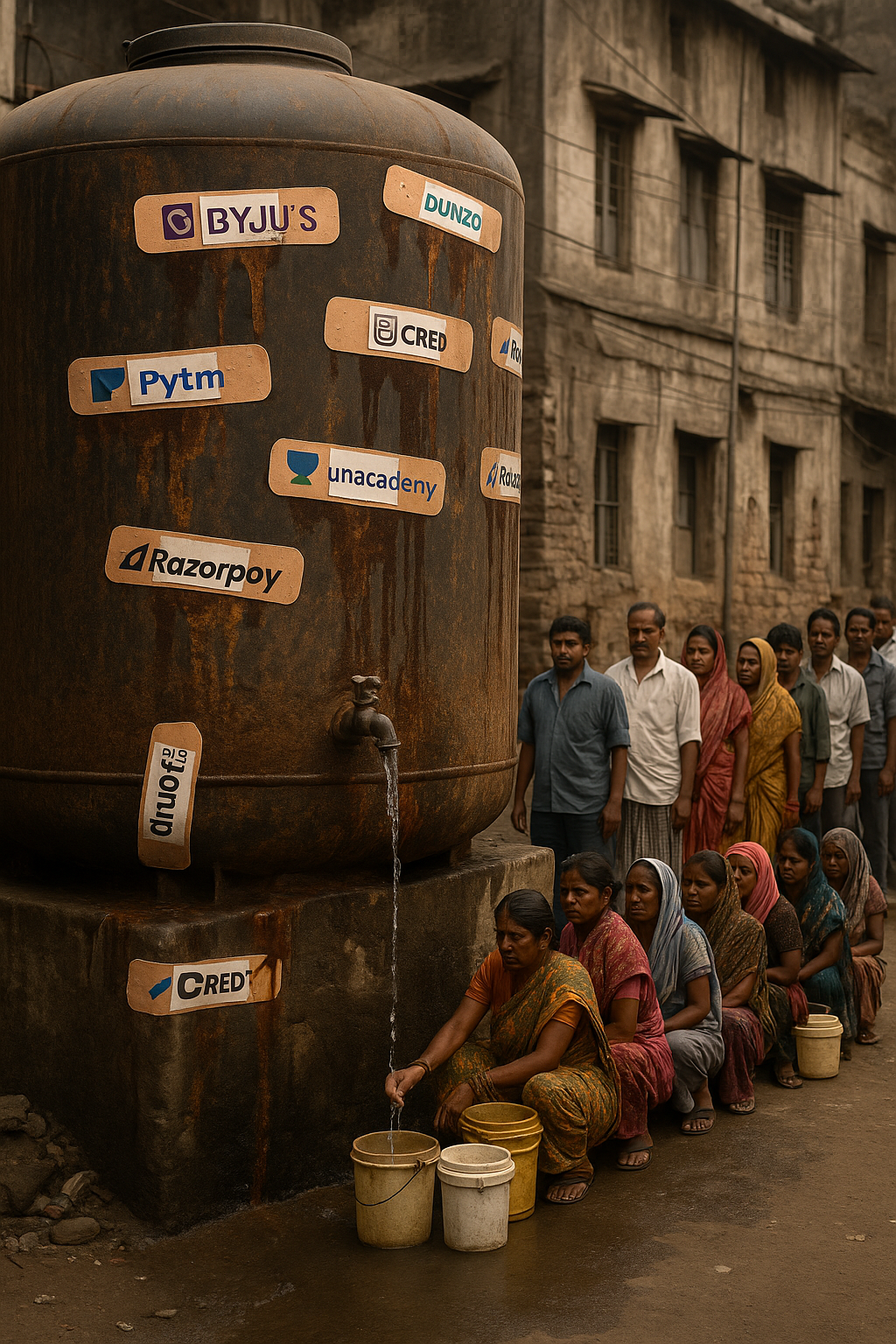
If the Indian state were even moderately competent at delivering public services, over 80% of our startups wouldn’t exist because their markets wouldn’t. Most Indian startups are less about creating new frontiers and more about plugging old, persistent holes. They monetise dysfunction.
Byju’s and Unacademy didn’t rise on pedagogical brilliance. They grew because our public education system is crumbling, and millions of parents are forced to outsource what government schools should guarantee. Ola, Rapido, and Bounce are not just mobility innovations; they are responses to unreliable buses, poor last-mile infrastructure, and unsafe public transport.
1mg, PharmEasy, and Practo offer basic healthcare access where the state has failed, whether it’s medicine delivery, diagnostics, or doctor consultations. Dunzo, Zepto, and Blinkit don’t just represent quick commerce; they make up for chaotic urban planning, traffic nightmares, and inefficient local markets.
NoBroker exists because housing societies and local brokers remain unregulated mafias. Meesho and Shop101 allow rural and small-town sellers to bypass broken retail infrastructure. Khatabook and OkCredit emerged to fill the vacuum of formal credit and record-keeping in the informal economy, where banks have refused to serve.
Cred gamifies bill payments because utility companies, discoms, and municipal bodies make it painful to pay them on time. Porter and Delhivery emerged not as competition to a healthy logistics backbone, but in place of one.
Even fintech unicorns like Razorpay, PhonePe, and Paytm built empires on top of UPI and Aadhaar, both government innovations, but with the actual user experience, reliability, and trust deficit filled in by the private sector.
We call this jugaad. But it’s not a compliment. It’s a euphemism for systemic collapse. These are not capitalist marvels; they are prosthetics for a limping republic. And unless we fix the underlying ailments, we will keep celebrating bandages as breakthroughs.
And worse, it’s a vicious cycle. The more these band-aid startups plug state failures, the less incentive elected leaders have to fix them. After all, someone else is doing the job, and even better, the private sector is footing the bill while the state basks in credit or escapes scrutiny. This slowly erodes both governance capacity and political will. The administration atrophies. Accountability fades. Infrastructure crumbles further. And new gaps create new markets.
Before long, what should have been universal public goods such as education, health, housing, transport, safety, and water become premium services accessible only through apps, subscriptions, and VC funding. We will have built a gleaming digital economy atop a rotting civic skeleton, with no plan to replace the bones.
If we do not arrest this spiral, the endgame is clear: a society propped up by branding, held together by convenience, and abandoned by the very state sworn to uphold it. Not a startup nation. A sellout. And ultimately, a collapse.