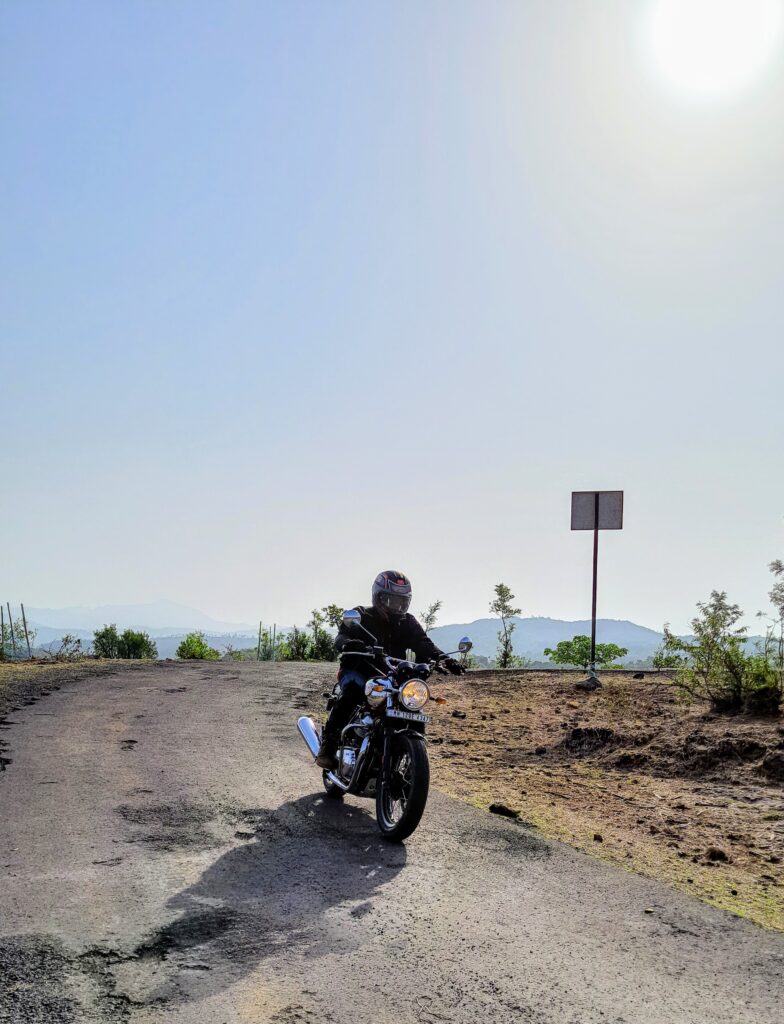
At 100kmph, the road is at the edge of a reality the human mind can fathom and appreciate, and a blur that looks like someone used an eraser haphazardly on a beautiful landscape that is whizzing past slightly off-focus from the corner of your eye. As you twist and contort your body and throw the machine left and right to take the twists and turns of the ghats, you enter into a sort of meditative trance that is enhanced by a laser-like focus if you are in a formation and have all your actions fine-tuned to get, and keep, a fix on another bike you are behind, and with which you are riding as one flexible length of twine, like an invisible snake, concentrating only on keeping the right distance and angle from it, just enough to stick to the rules of the formation and about enough to allow you to brake in an emergency, should one arise.
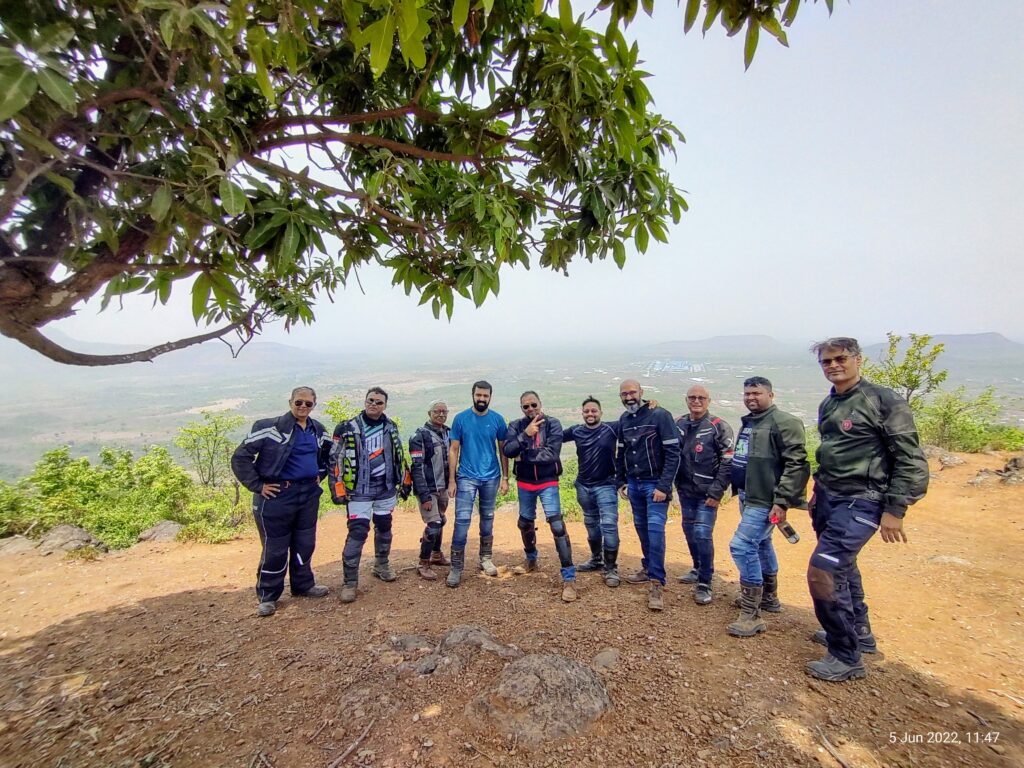
At Tamhini, on my ride with Bikers’ Creed on Sunday, the 5th of June, around half-past twelve, as I rode behind Abhay on his steed on the rare straight road stretch where we could let our machines ‘do their thing’, just such an emergency transpired.
A white Mahindra Scorpio came out of the jungles from a dirt track hidden in the bush and suddenly crossed the road, turning to occupy the entire length for a micro-second before completing the arc into the left lane and zipping away into the distance. However, what it did before it finished its entry into the left lane was that it suddenly blocked Abhay’s motorcycle. This meant he had to brake hard, and so did I behind him. However, the space I had left for an emergency only worked if there was a length of road available to me on his right, which was, unfortunately at that time, occupied by the back end of a very large white SUV. I hit the rear brakes and shifted down, released the clutch, and watched in horror as my motorcycle continued to hurtle in the path of Abhay’s bike, which was itself losing traction, beginning to skid and slide on the road, with Abhay fighting to keep control.
In a split second, I made the decision to abandon the bike and save my soul. I put my left foot down, and with the agility that would have pleased someone half my age, let go of the handlebars and moved my right leg up to let the BattleCat slide away from under me. Of course, at that speed, my body continued in the direction of motion (thanks Sir Isaac) as my legs buckled and I fell off to my left, sliding across the (fortuitously) empty roads to come to rest on the dirt shoulder without even touching my helmeted head to the ground. In short, I got lucky.
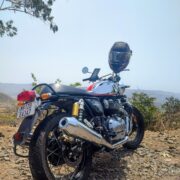
On my feet quickly, I ran to Abhay, who had also gotten back on his feet by then. We both checked if the other was all right (we were) and then ran to our respective machines. His had skid just off the road and seemed fine. The BattleCat though apparently had continued upright for about 20 meters and gracefully launched herself into the air, coming to rest in the soft mud in a ditch on the right, her wheels still spinning, with the engine ticking over in first gear. I could hear Prateek Kuhad croon in my helmet earpiece, signifying that the phone on the motorcycle hadn’t noticed that it was now attached to an unmanned projectile. I rushed to the motorcycle, switched her off, and with the help of other riders who were following, pulled her out from the rear.
Soon, the entire team arrived and enquiries were made, the motorcycles and the riders tested for damage, and our ride resumed. Apparently, the only damage to my body was a burn mark on my left flank and some dull pain in my shoulder. The armour did its job, as did, I would like to believe, the quick thinking on my part to dismount and do a ‘जा सिमरन, जी ले अपनी ज़िन्दगी।’ to the motorcycle in the nick of time. The BattleCat suffered some minor scratches and perhaps the fork would need some repairs, but overall, she escaped unscathed and worked adequately all the way home, about 100km from there.
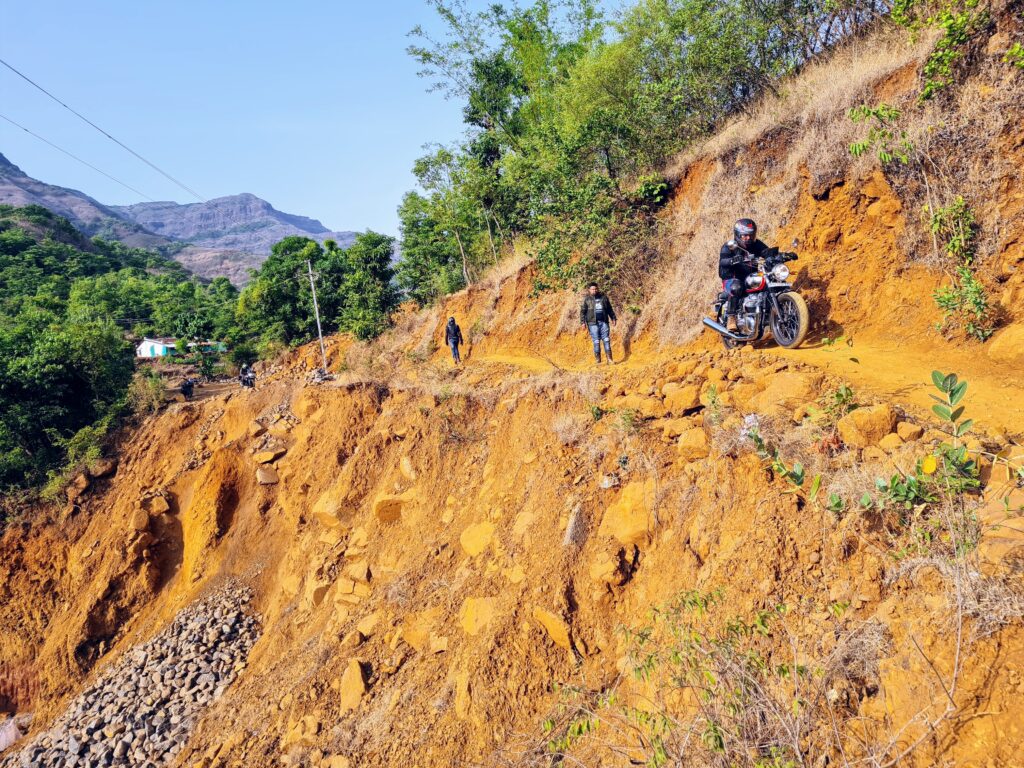
But, and this is despite the fact that I spent a good six opening paragraphs on it, this post is not about the accident from which I walked away like a Hollywood/Bollywood/Tollywood action hero with minor injuries that look good in later scenes rather than some major damage to my skeletal structure or neurological system. I may come back to it later. But what this post is about is something that happened about 4 hours before that, about a quarter of the way into the ride, at Koyna, where an entire part of the road, about 80-odd meters in length, had sunk and been washed away in a landslide, and while work was on trying to repair and reinstate it, the existing ‘road’ (if it may be called so), was about a meter (perhaps less) wide, full of rocks and gravel, hugging the cliff on one side, and with a rather steep fall of about 20 meters (ending in rocks and mud) on the other.
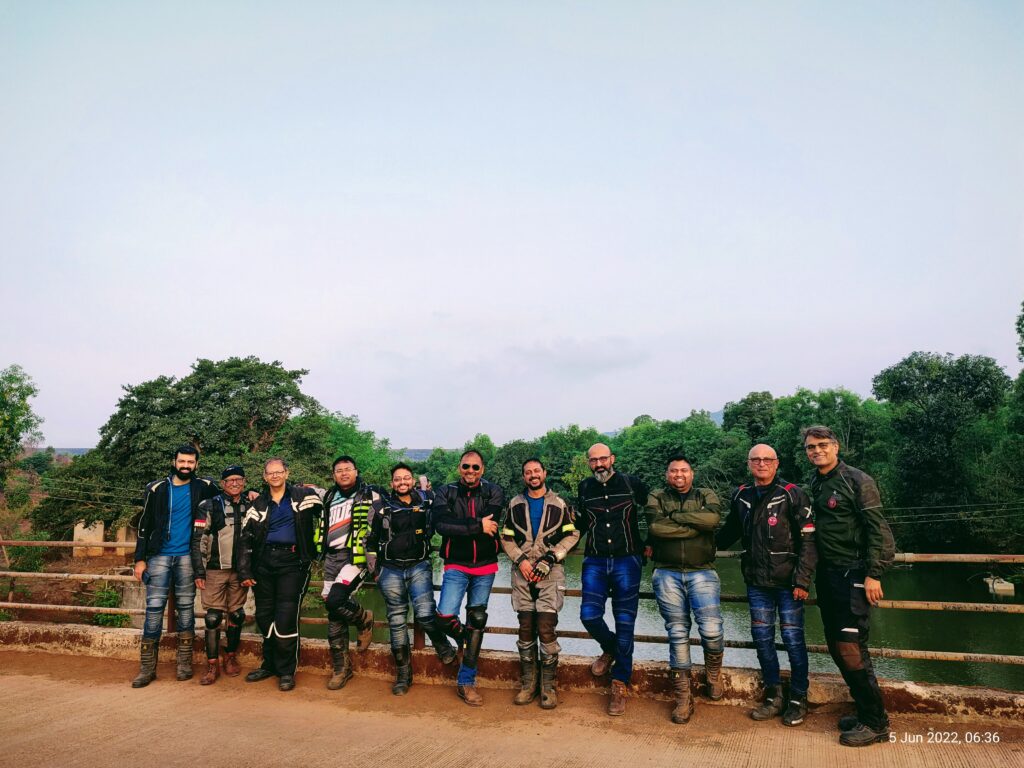
When, after 2.5 hours of hard riding, we reached that point, from which there were only two options: terminate the ride and return back home or go forward and take on the precarious (and highly risky) crossing with a bunch of amateur (as we all are) riders out for a fun ride. The ride leader (Himelda) and the ride marshal (Karan), along with a very experienced rider (Shohrat, who is also a co-founder of the club) walked the route and took their bikes across first, just to test it out. Then, they strategised about the best way to get their team across. They spoke to each of the riders and talked of their apprehensions. And then, they asked us to cross, as one of them stood at halfway point, and the other two, at the two ends each.
I refused to do it.
I saw that and it seemed a disproportionately large risk for the potential payoffs that looked minuscule. It looked like while they were prepared, and were preparing the riders, for the task as much as they could with the resources they had, they had no plan for any untoward incident. If any of us had slipped and fallen off the cliff, I am sure they’d be as lost as any one of us. So, I stood my ground and said no.
Surprisingly, Shohrat did not blink an eye at that refusal. Calm as a cucumber, he offered to take the bike himself and I was free to walk the ledge (which was a much safer option) to get to the other side. He even discussed (with Karan) if I could sit astride and they could push the bike (no, thank you). Karan also came down to give me advice. He said I should walk the path once to get a feel of what the actual width is (it always seems narrower from afar) as well as where the rocks are, where it narrows and where it opens up. They got the entire group across while I mulled on what I should do. Everyone was encouraging each other. This gave me some time to think, and while there was obvious, though unstated, pressure from my peers to undertake that risk, I think it was because of the reassuring behaviour and words of Shohrat, Karan, and Himel that I found myself on the bike and crossing the ledge, carefully balancing myself on the machine, leaning all the way left, not looking down, not making contact with the ground on the right side, and keeping a steady throttle in first gear until I passed the entire stretch.
When I made it to the other side, I was silent while everyone was cheering and relieved. People were smiling nervously and smoking, cracking jokes and slapping backs as tension melted away. Since I quit being shackled to the cancer stick about 5 years ago, this was the point I’d have forgiven myself had I slipped and relapsed. Interestingly, I was calm enough inside to resist the temptation without much ado.
But maybe I was too calm. As we started off from that point, I fell back, right back with the sweep (Abhishek), and rode the rest of the descent at 35-40kmph, thinking about the incident, mentally chewing every small action and word that happened along the way leading up to it and during and after the crossing. I wasn’t sure what it was that was troubling me. I could not put my finger on it. And then, I had an epiphany.
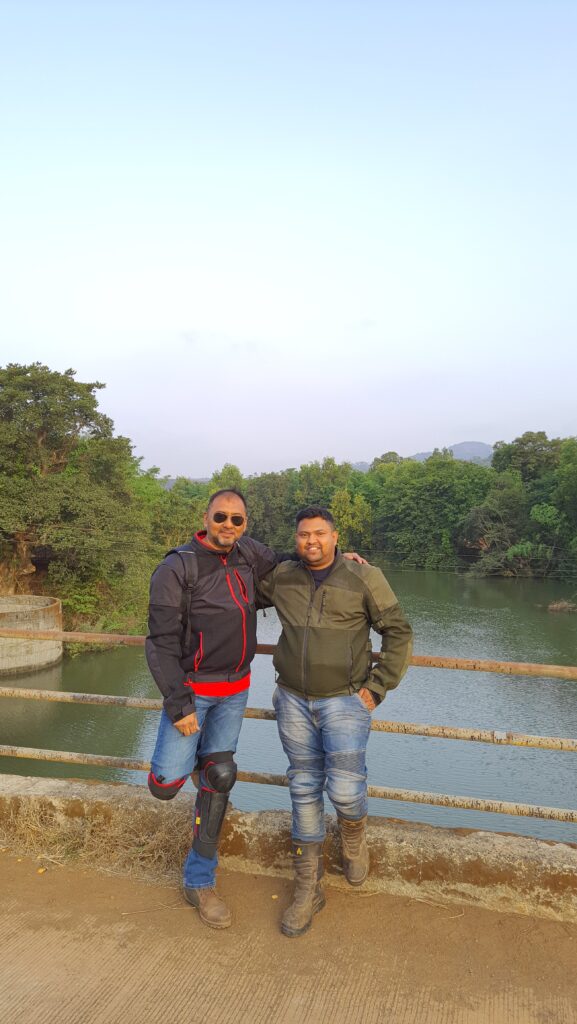
With Himelda, our awesome ride leader.
You see, to understand what happened, whether the risky crossing or the accident a few hours later, one needs to step back and consider an observation (regarding my riding style) by Shohrat who approached me right at the beginning of the ride, when we halted for the first time. He said I was riding rather aggressively and that I was constantly trying to jockey into the position behind the ride leader, even at the cost of speeding past, cutting off, and honking at my team members. That’s not just aggressive, that’s rude. What’s more, I was putting everyone at risk with my behaviour. I thought about that a lot on the way down the ghats from the ledge crossing. And then some more during the second half of the trip, when I met with the accident and then once again when mounted up and speeding to what I have started to become possessive about: the position just behind the ride leader.
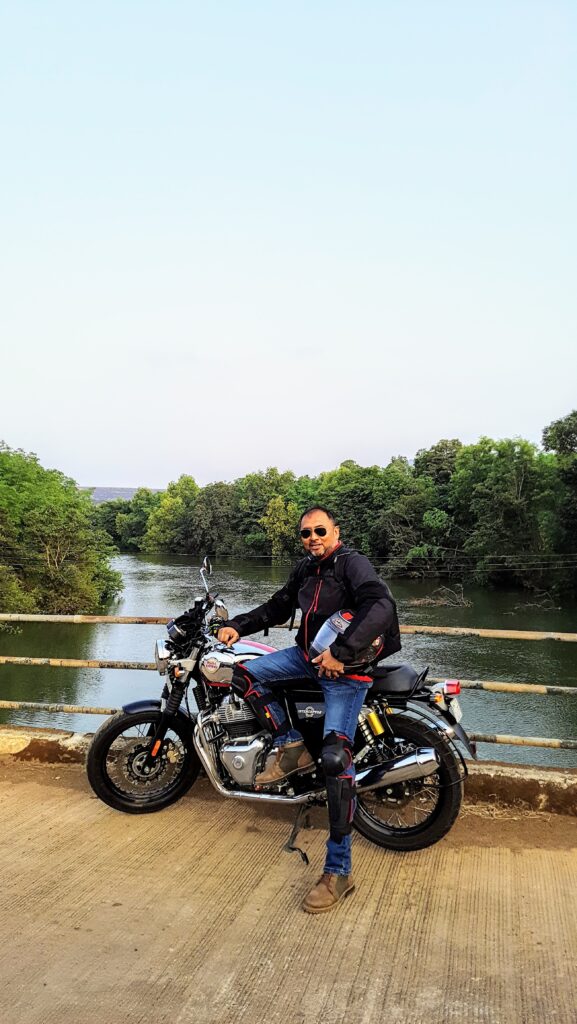
In the process, I realised something: I am not alone. All the bikers I motorcycle with are men (with the one notable exception of Saee) who have been successful in their careers and personal lives, who are healthy, strong, and tough (both mentally and physically). They are all used to getting what they want. In short, I am in a pack of alphas. And my normal, pushy, aggressive, in-your-face, listen-to-me, look-at-me, let-me-tell-you-how-it’s-done, I-am-your-leader behaviour is going to cause a great amount of strain here not because it is something my teammates haven’t seen before, but because almost everyone here, without exception, is exactly like that! All of this alpha behaviour is normal, common, and very much what everyone’s non-motorcycling lives are all about. I realised that they are all Kedars. And I am like each of them. Indeed, in any adventure sport, may it be paragliding, motorcycling, mountain biking, ultra running, or any other similar physically demanding recreations, everyone’s an alpha.
It reminded me of a story from the time my kid brother (then flying the MiG-21 for the IAF) and I would party around Mumbai when he’d be home for holidays. Invariably, we’d run into a herd of jocks that would be trying to impress the girls at the bar, and he, wearing his jacket and Raybans would introduce himself (no doubt, tongue in cheek) as ‘Hello, I fly fighter jets for a living. And what do you do?’ which always got him the attention (and the girls) he was seeking with that line. I remember asking him why he did that, apart from the fact that it was outrageously hilarious for us, like a private joke, not to say supremely deflating for the Mumbai jocks, and he explained, with a mischievous grin, ‘It only works here. In my squadron, this sentence will get me nowhere, because everybody flies fighter jets for a living there!’ I recollected this today, and the penny dropped. Indeed, it struck me: There. Are. No. Lightweights. In. Motorcycling.
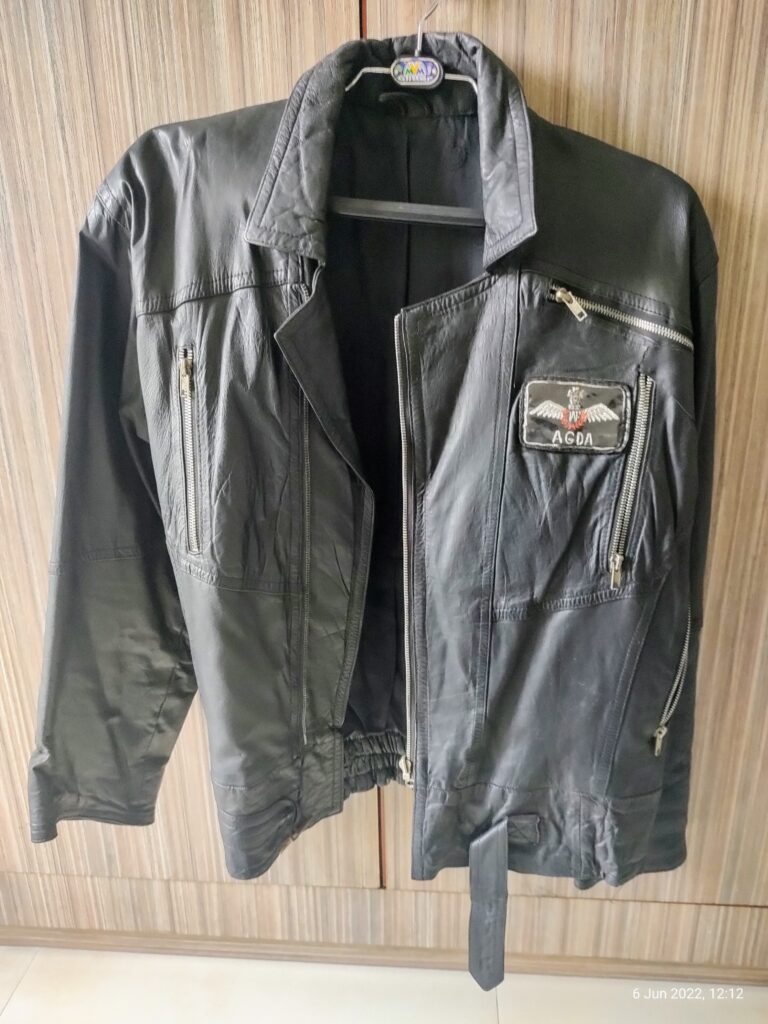
Abhi’s leather jacket, with his IAF wings and callsign.
That’s the thing. We do not like to be led. We do not like to be told what to do. None of us worries about Plan Bs. We do not always think of or arrange for reserve parachutes before we step off the plane. We are highly motivated and extremely focused risk-takers. Of course, that does not mean we are foolish and forget to pack or test our main parachutes before we jump. We do. Just that it is WE who do our own checks. The ‘we’ is very important in that sentence. We do not rely on others. We are self-sufficient and self-confident. And once we have made up our minds to do something, no one can stop us. But for that, WE have to have made up our minds. No one else can do that for us. That is both, a boon and a curse, as most of my mates in Bikers’ Creed, and other motorcycling clubs across the world, will agree with and nod their heads to.
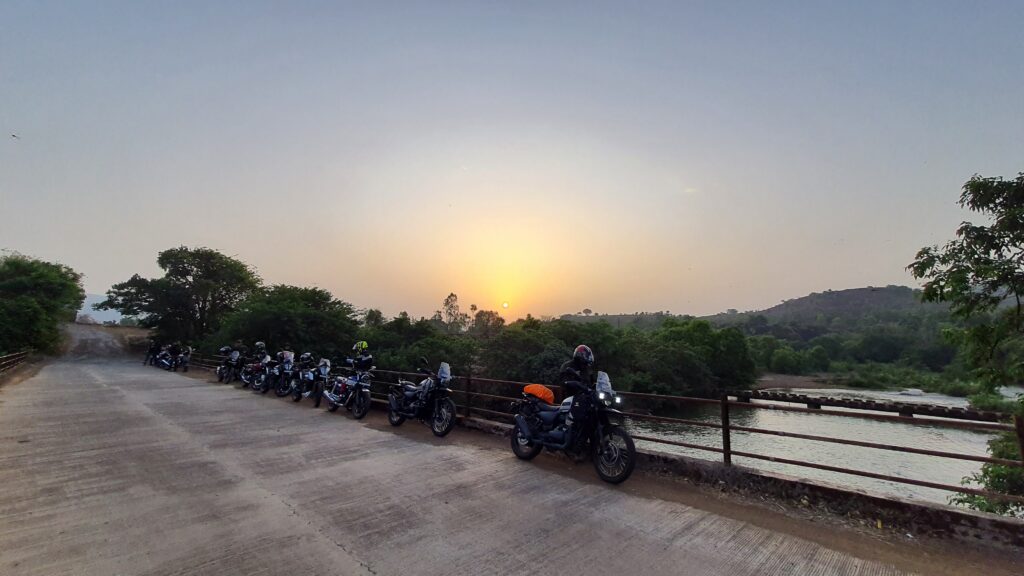
The problem, therefore, I realised, wasn’t the ledge. I’d have gone across it if I came to it while alone. The problem wasn’t the lack of a plan if something had gone horribly wrong. I’d have done it despite the absence of such a plan myself. The problem wasn’t the executive decision that was made to get the team across. If I were leading the pack, I’d do the same. The problem wasn’t that I was unwilling to take a risk. The problem was that it was someone else who was in charge of deciding whether it was worth taking! And the problem was that someone else was not me. That is all. Once I got over that and allowed myself to just let go, everything was simple. The crossing happened, the riding commenced, everyone rode at their pace, and even after the what could have been a life-changing accident for anyone but people like me, I rode hard and caught up with the front of the pack, elbowing others out to claim what I thought was MY rightful place just behind the leader, much to the consternation, as I now realise, of literally every other rider, as was made amply clear by the displeasure of Shohrat later at lunch.
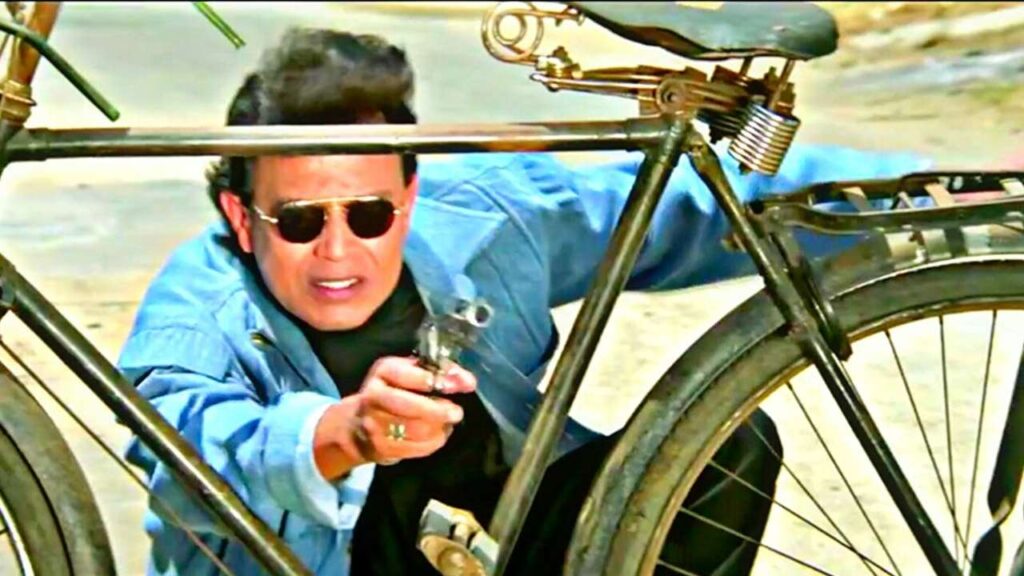
I learnt a valuable lesson today: In this new sport I have taken up, everybody is the protagonist, everybody is a leader, everybody is the chief, everybody is the boss, everybody is Mithun Chakraborty in Gunda. In fact, everybody is the gunda!
So, how does one conduct oneself in such company? Well, what comes naturally to people like us can’t possibly work in an environment where everyone is an action hero. That means aggression out, self-belief in; projection out, introspection in; brashness out, humility in; flamboyance out, quiet confidence in. Indeed, I need to go from being the Kedar that the world knows and everyone thinks I am, to the Kedar I know I am and wouldn’t give a flying fuck if anyone else knew or found out. I need to be the authentic Kedar. At least when I am astride the BattleCat with my clubmates. For I would expect nothing less from them in return.
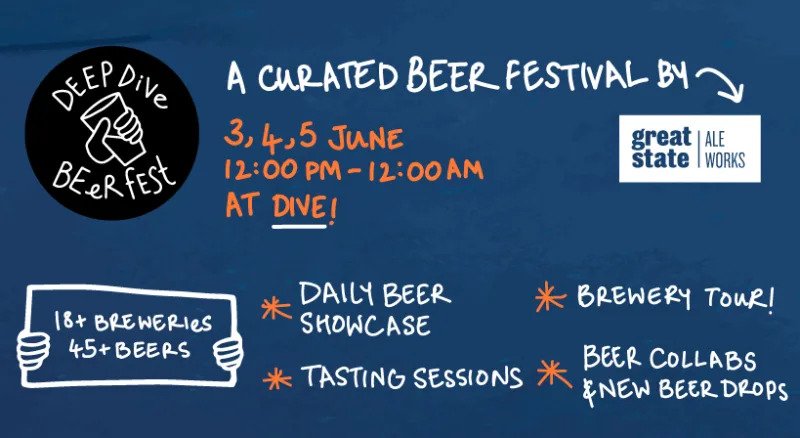
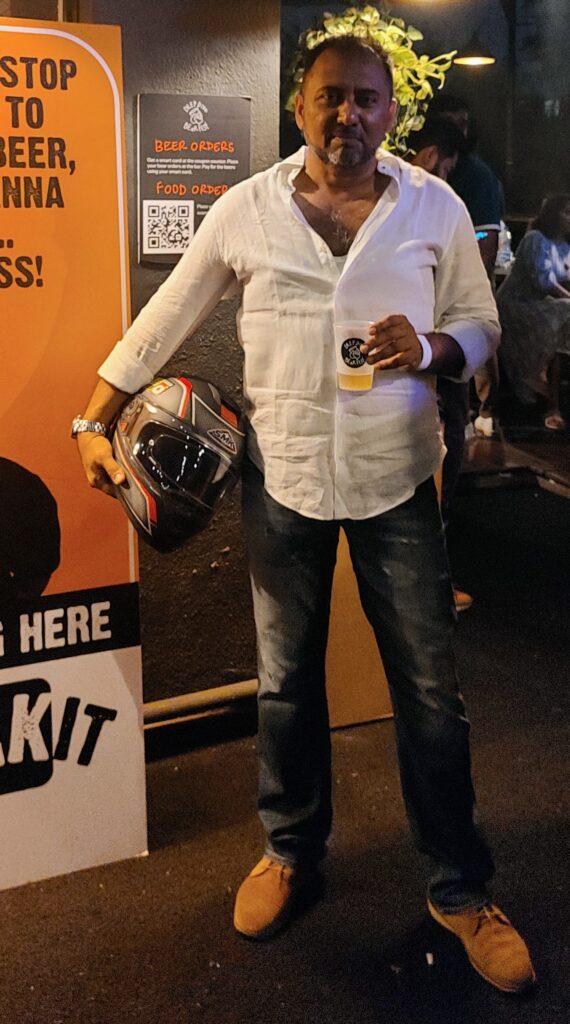
Afterword: Once I reached home, proudly showed my battle wounds to my daughter (as also her and my mother, both), iced it, had a cold water shower, I left (on the BattleCat, what else?) for a beer festival (Deep Dive 2.0 at the Great State Dive on Lane 6, Koregaon Park) I had booked in advance for and called my dear friend, Abbas to join me. For the first time since I have bought armour, I rode without it, preferring only the helmet as my safety gear. It felt…liberating.
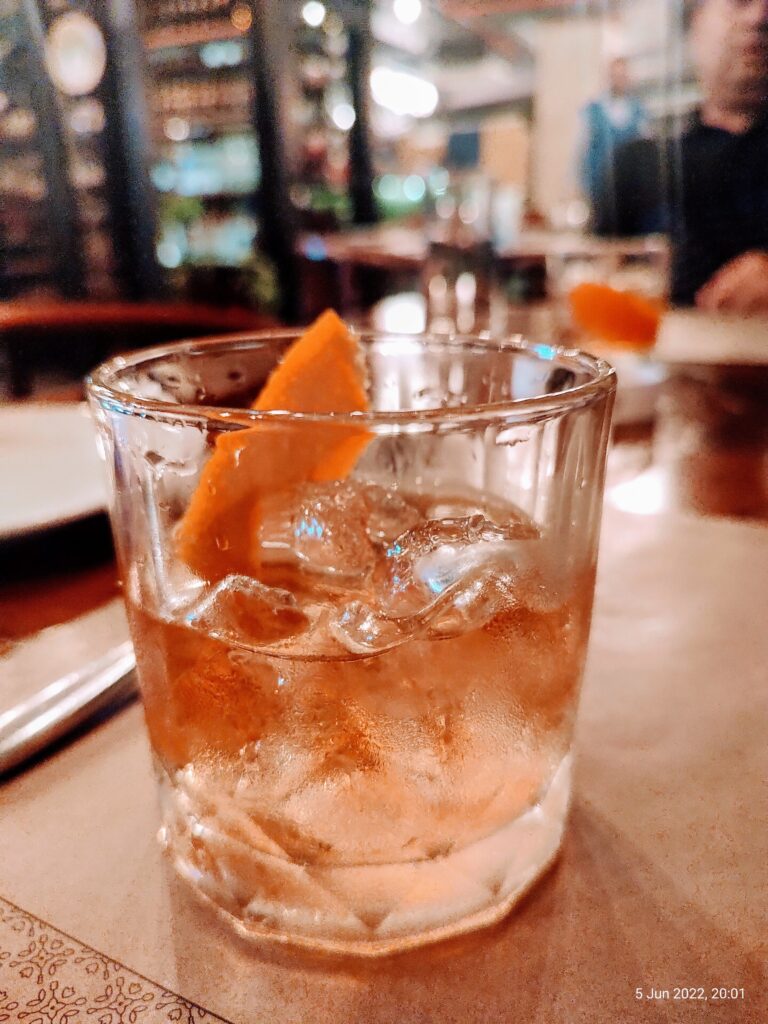
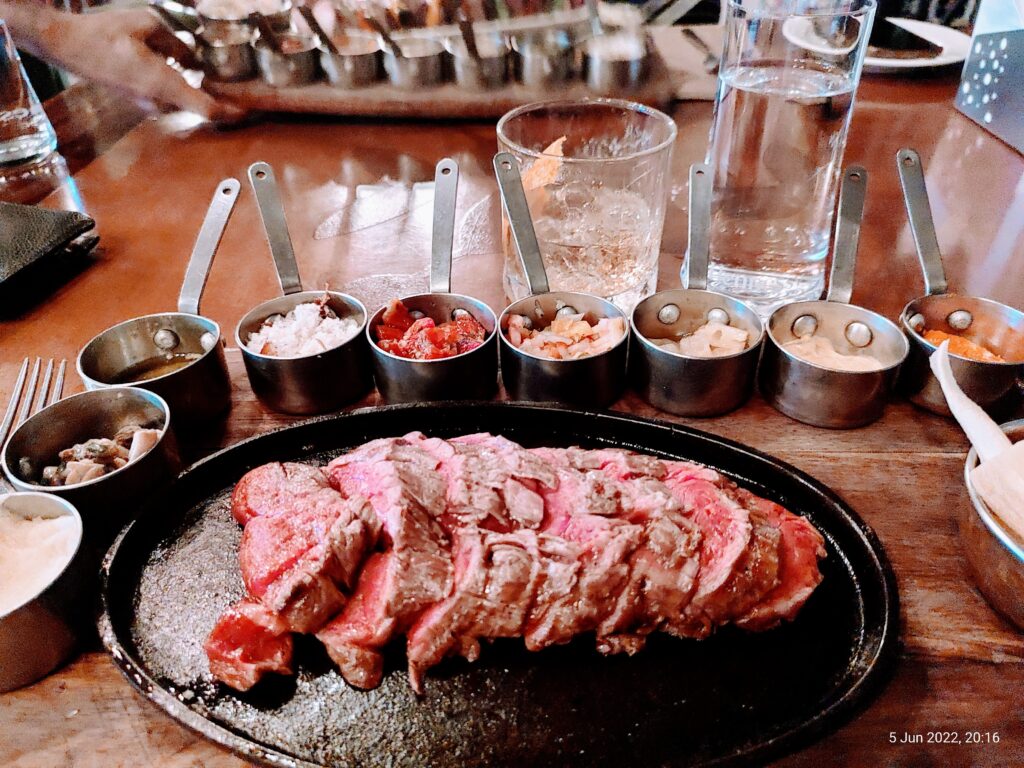
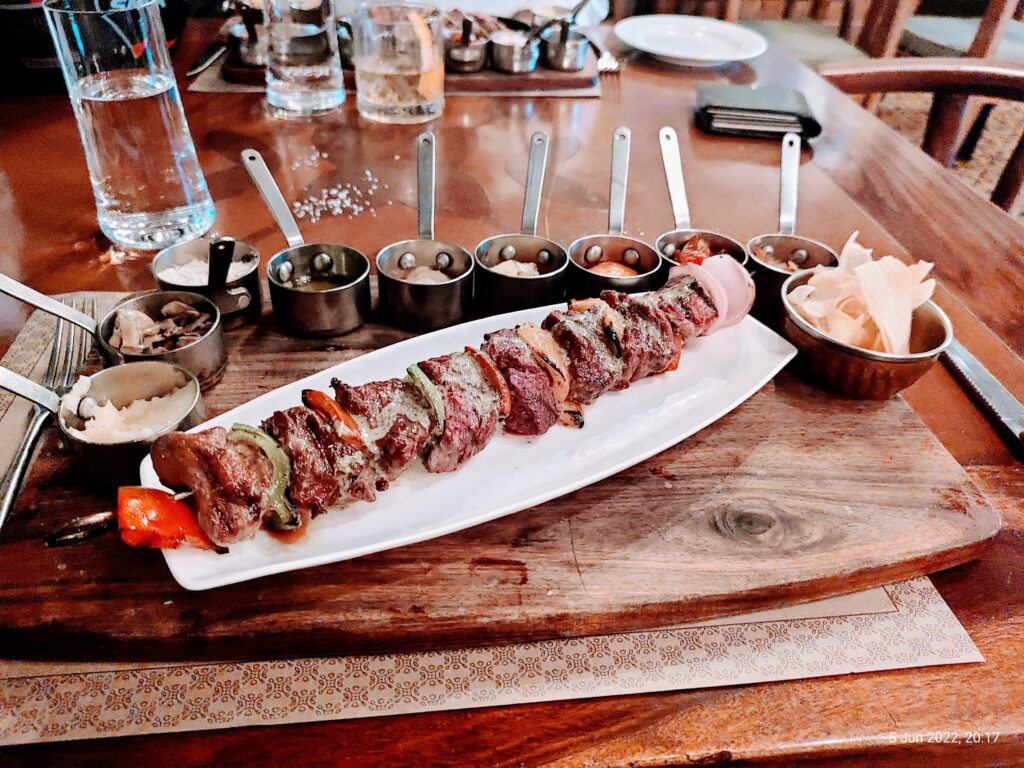
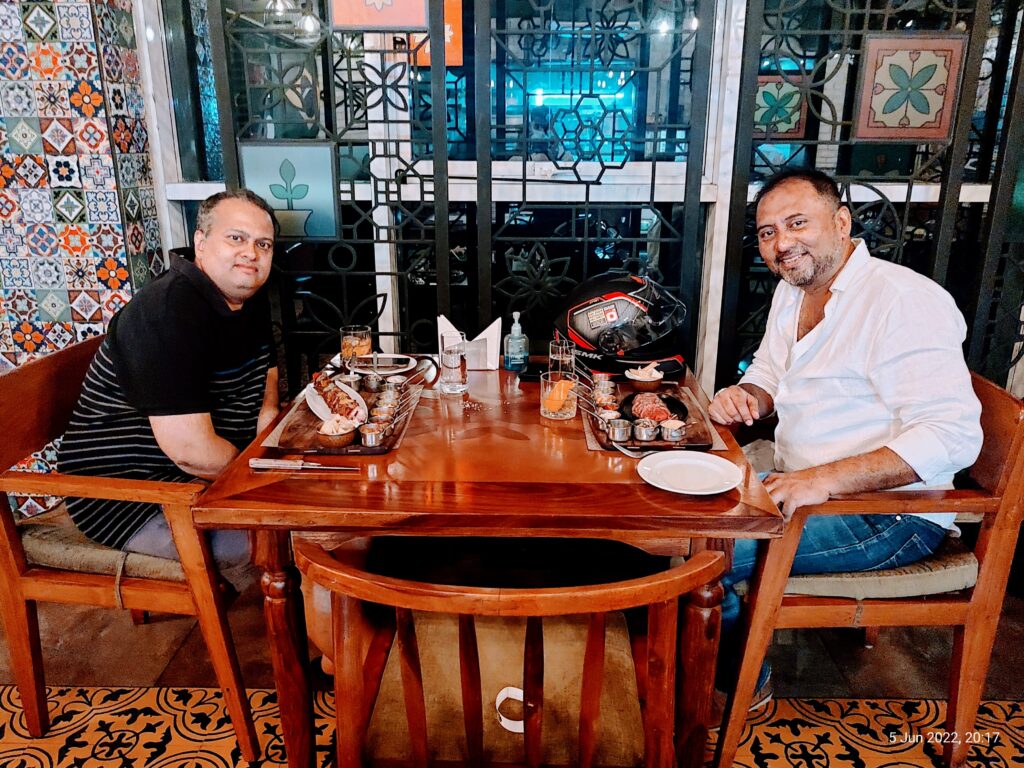
Later, we both retired to the Boteco, a Brazillian restaurant right under the Dive, where we ordered a tenderloin (do not ask me how they source this in a state that has an active beef ban in place) and a churrasco steak along with a couple of Old Fashioneds to wash it down, followed by profiteroles dripping in chocolate sauce, and a coconut-infused custard to top off a great day.
Epilogue: One of my favourite sayings is that we can only decide if we led a good life on our death beds and not even a moment sooner, and my dream is that when I close my eyes finally for the last time, the thought in my head must be, ‘it was worth it.’ Sunday would most definitely count towards that. And that’s enough for me.