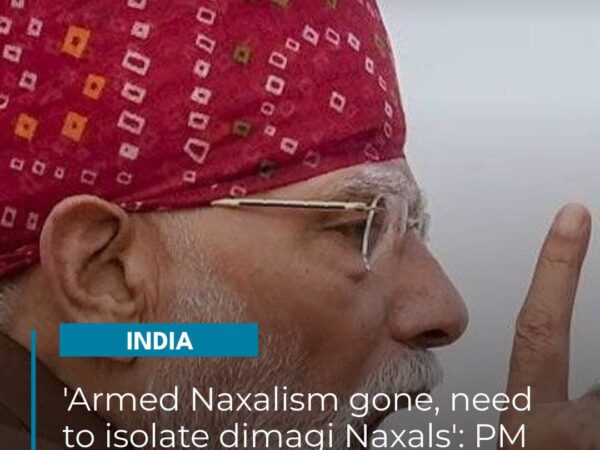
The BJP IT Cell and its WhatsApp historians have a new complaint against the people they are obsessed with: Nehru, the Congress, and, of course, the newly christened (oops, can we use that word?) “dimagi Naxals”. The complaint is that the Congress rejected Vande Mataram, that liberals have always been embarrassed by it, and that the song languished in some dusty corner of the national attic until the real and only custodians of patriotism arrived to rescue it and reinstate its honour. There is one small problem with this theory. Actual history.
Let me repeat it, for those who either choose to forget it or are simply too uneducated to know it in the first place. Bankim Chandra Chattopadhyay wrote Vande Mataram, and it appeared in Anandamath in 1882. Rabindranath Tagore sang it at the 1896 session of the Indian National Congress (yes, that Congress; yes, in 1896, one hundred and thirty years ago almost to the day). Through the agitation against the Bengal Partition, it became an inseparable part of our freedom struggle. And when a genuine controversy arose over the religious imagery in the later stanzas, the Congress did what serious institutions do with serious disagreements: it examined the matter. Thoroughly and honestly. In 1937, Subhas Chandra Bose and Jawaharlal Nehru corresponded on the question; Nehru consulted Tagore himself; and the Congress Working Committee (consisting of Jawaharlal Nehru, Vallabhbhai Patel, Subhas Chandra Bose, Rajendra Prasad, Maulana Abul Kalam Azad, J. B. Kripalani, Bhulabhai Desai, Jamnalal Bajaj, C. Rajagopalachari, Pattabhi Sitaramayya, Acharya Narendra Deva, Jayaprakash Narayan, Govind Ballabh Pant, and Sarojini Naidu, with Mahatma Gandhi present as a special invitee) unanimously decided that the first two stanzas of Vande Mataram, already inseparable from the national movement, should be sung at national gatherings.
On 24 January 1950, Rajendra Prasad, presiding over the Constituent Assembly, declared that Jana Gana Mana would be the National Anthem, and that Vande Mataram, which had played a historic part in the struggle for Indian freedom, would be honoured alongside it.
But even before that date, at half past six on the morning of 15 August 1947, Pandit Omkarnath Thakur sang Vande Mataram over All India Radio, and he did so at the invitation of Sardar Vallabhbhai Patel. Consider that scene: India wakes free for the first time in two centuries, the state broadcaster of Nehru’s brand-new government comes alive, and what goes out over it, at Patel’s request, is Omkarnath Thakur singing Vande Mataram. And from those early years onward, AIR (it would formally take the name Akashvani in 1956) began its morning transmission with its signature tune followed by the first two stanzas of Vande Mataram; day after day, year after year, decade after decade.
So, here’s my question: if you are an Indian who can sing those first two stanzas, where did you actually learn them? And, more importantly, where did you learn that tune?
I do not remember being taught Vande Mataram in school. I learnt it on Akashvani. And here’s my guess: so did you, or your parents did, or their parents did. For decades, radio was one of the principal ways in which music, news, language, and the nation itself entered Indian homes, and across those generations the number of Indians who absorbed Vande Mataram this way must plausibly run into the hundreds of millions. Nobody ordered us to memorise it. And mind you, these are no easy lyrics:
वन्दे मातरम् |
सुजलाम्, सुफलाम्, मलयज शीतलाम्,
शस्यश्यामलाम्, मातरम्!
वंदे मातरम्!
शुभ्रज्योत्सनाम् पुलकितयामिनीम्,
फुल्लकुसुमित द्रुमदल शोभिनीम्,
सुहासिनीम् सुमधुर भाषिणीम्,
सुखदाम् वरदाम्, मातरम्!
वंदे मातरम्, वंदे मातरम्॥
This song is full of complicated tongue twisters that ought to have defeated any schoolchild. And yet, somehow, we seem to know them, every last syllable, because we weren’t forced; we just sang along. The song arrived every morning with the pedigree of Bankim, Tagore, Bose, Nehru, Patel, Azad, and Rajendra Prasad, and with the blood, sweat, and tears of all our founding heroes and freedom fighters attached to and inseparable from it, through the broadcaster of the very governments now being accused by unlettered fools of suppressing it.
So once again, if you can sing Vande Mataram, where did you learn it from?
In all probability: Akashvani.
And if the Congress spent all those decades trying to erase Vande Mataram, how the hell did all of us, crores and crores of Indians, learn to sing it?