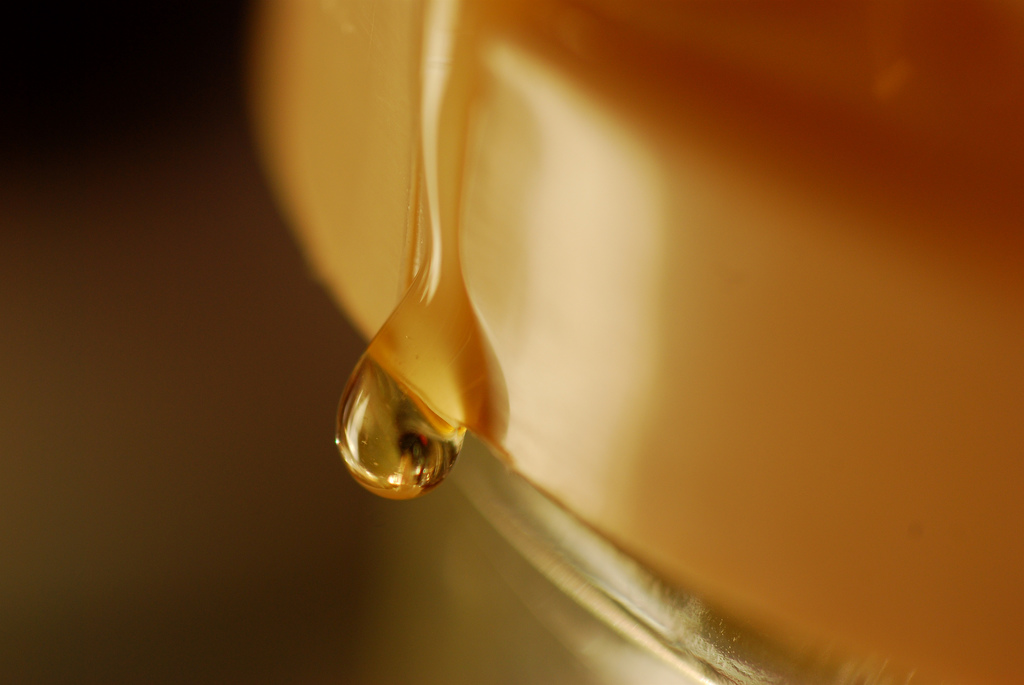
It was a crisp winter morning in Agra when a traveller from Persia arrived at Akbar’s court carrying a small earthen jar wrapped in silk. Inside it was a honey so rare that even the merchants of Isfahan whispered about it with reverence. Akbar tasted a spoonful, then another, then a third. The sweetness rose through him like incense and enveloped his senses. In that small, human moment, however, a single, shiny drop escaped his hand, and landed on the royal carpet in front of him.
Akbar glanced quickly around. He was, after all, the Emperor of Hindustan. He could conquer kingdoms, negotiate with sultans, and dispense justice for an entire subcontinent, but he could not, absolutely could not, be seen picking a drop of food off the floor like an ordinary man. Yet the honey was too precious to waste. So, after a furtive look, he bent down ever so slightly, scooped the drop with his fingertip, and placed it on his tongue.
When he looked up, there was Birbal.
Not speaking. Not judging.
Simply observing with those infuriatingly clear eyes of his.
Akbar felt the heat rise to his face. He was a king, an Emperor, yes, but also a man with a reputation more delicate than the filigree on his throne. The thought that Birbal had witnessed his lapse gnawed at him.
So the next morning, Akbar summoned the Persian traveller again, demanded the source of the honey, despatched an entire royal caravan to fetch more, and purchased such staggering quantities that the transportation expense alone could have bankrupted a few minor Khanates on the way.
When the honey arrived in great bronze cauldrons, Akbar ordered a tank to be filled. He then invited courtiers, soldiers, scholars, and stable boys alike to taste the legendary sweetness. A fountain of sweet goodness, a spectacle of abundance, a display of grandeur, wealth, and generosity that would dazzle even the most skeptical.
Birbal watched the whole performance calmly, but silently. Finally Akbar, unable to bear it, asked him,
“Well, Birbal? What say you now?”
Birbal bowed and replied,
“जहाँपनाह, जो बून्द से गयी, वह हौद से नहीं आती.”
(Your Majesty, what is lost with a single drop cannot be restored by an entire reservoir.)
————–
And as it was then…
It is curious how such old stories stay relevant in modern times, where there are guardians of public virtue who wander, even briefly, into courtyards where they ought not to have danced, arm in arm with those they spend entire careers denouncing as tyrants and pretenders seeking to destroy the entire civilisation they claim to defend. And when the last note fades, these same guardians hurry back to their chambers with freshly minted reforms and fiery orations, one promising weary citizens the right to rest and the other rising in the great hall to summon history itself as witness, as if such reservoirs of progressive intent might wash away the memory of their recent public spectacle of shamelessness, however fleeting.
But history, like Birbal, is rarely fooled.