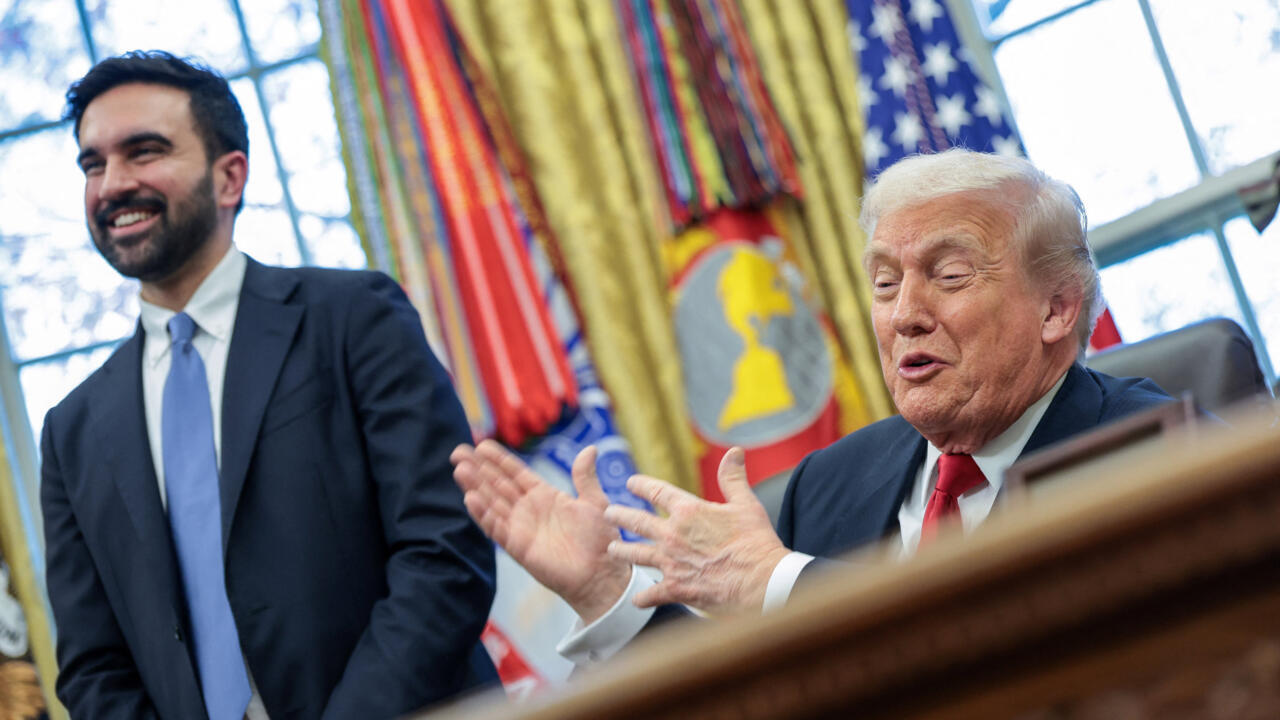
I have seen what feels like a thousand analyses of that strangely revealing Oval Office moment when Zohran Mamdani met Donald Trump, and of course I am exaggerating because I have not literally seen a thousand though the deluge feels endless in that peculiar digital way, each analysis slicing posture and tone and messaging with forensic enthusiasm, yet somehow missing the one thing that is instantly obvious to anyone who has lived the desi experience, whether born in the subcontinent and raised abroad, or born abroad to desi parents, or born in one corner of our cultural sprawl and then dispersed across continents where, upon meeting other desi kids, one recognises immediately the same instinctive choreography of politeness, resistance, humour, deference, and boundary-setting that all of us learn by osmosis long before we learn algebra, because what happened in that room was not the clash of ideologies or a tactical thaw but something far more familiar to those shaped by desi socialisation, which is that Zohran Mamdani uncle-ified Donald Trump, performing with absolute fluency the manoeuvre every desi child perfects by adolescence, the manoeuvre required when an elderly, slightly prejudiced, slightly paternalistic uncle insists on explaining something to us even though he knows what our position is, launching into his repertoire of argument from authority, fallacies of tradition, sentimental stories about how the elders did it, woolly pseudo-scientific claims, and eventually drifting into that soft, reconciliatory murmur about how doing some small irrational thing, like carrying two black beads for luck, cannot possibly harm us, and we, trained from childhood to handle this delicate ritual, nod respectfully, interject gently but never abrasively, preserve the elder’s dignity at all times, and then, once the tea is over and the performance complete, go off and do exactly what we intended to do anyway.
This is why Western commentators, with all their analytical sharpness, have somehow missed the real plot, because they do not possess the cultural grammar that desi kids breathe from birth, a grammar that explains not only Zohran’s behaviour but also the astonishing success of desis across global leadership roles, and if you look around you will see this pattern everywhere, from Parag Agrawal, the former CEO of Twitter who managed to have one of the gentlest public disagreements with Elon Musk in the entire history of Silicon Valley disputes, to Sundar Pichai at Alphabet, to Satya Nadella at Microsoft, to Arvind Krishna at IBM, to Shantanu Narayen at Adobe, to Rajesh Gopinathan at TCS before he stepped down, to Nikesh Arora at Palo Alto Networks, to Laxman Narasimhan at Starbucks, to Jayshree Ullal at Arista, to Revathi Advaithi at Flex, to Sanjay Mehrotra at Micron, to Vivek Sankaran at Albertsons, to George Kurian at NetApp, to Anirudh Devgan at Cadence, to Dev Ittycheria at MongoDB, to Dinesh Paliwal who led Harman, to Leena Nair at Chanel, to all these leaders who somehow embody that desi temperament of absorbing information without rudeness, asserting one’s stance without aggression, holding one’s ground without appearing adversarial, listening deeply without capitulating, and building authority through steadiness rather than theatrical dominance, which is why desis make such successful CEOs and such formidable senior executives because we grew up learning how to navigate elders who must be respected even when they are wrong, how to let them speak without surrendering our agency, how to keep the interpersonal temperature low even when the ideological temperature is high, how to be unshakeable without being abrasive, and how to persist in our intended course without ever declaring open rebellion.
So when Zohran sat across from Trump, he became the perfect desi foil: he did not posture, he did not bristle, he did not capitulate either, he simply placed Trump into that familiar role of the elder uncle who feels respected, heard, admired, even indulged, who believes that the youngster sitting before him, if not now then eventually, will come around to acknowledging the supposed wisdom of the elder’s worldview, and who sees in that youngster a version of his own youthful self, idealistic and brash, and therefore feels protective rather than threatened, which is why the conversation carried that odd timbre of paternal warmth rather than confrontation, because Zohran allowed Trump to patronise him but never to condescend, and that distinction is one every desi understands instinctively, since patronising is an acceptable component of the uncle-youngster relationship whereas condescension violates its emotional contract, and Zohran held that line with extraordinary competence, creating a conversational space where Trump could reminisce, moralise, and soften, while Zohran stayed anchored in his own principles without ever appearing combative.
And the most delicious part of this desi choreography, the part that every person of desi upbringing internalises by the time they are ten, is that the elder knows, at some subterranean level, that we will go and do what we want anyway, which is why the elder ends the interaction by saving face, by pretending that the intention was never to change our mind, that he was only sharing thoughts because we remind him of himself, that he was not lecturing but merely offering perspective, and it is in that final pivot that the uncle becomes fully, beautifully, inevitably uncle-ified, defanged yet dignified, cushioned yet contained, and the conversation concludes with both sides believing they have won something essential, and the world moves on, which is exactly why that Oval Office moment felt so deeply familiar to desis everywhere, from Lahore to Dhaka to Chennai to Fremont to Mississauga, because what Zohran did was not extraordinary statesmanship or youthful rebellion but simply the oldest trick in our collective cultural book, the desi art of letting the elder talk while quietly keeping the steering wheel of our own intent.
P.S.: Before anyone sharpens their pitchforks to remind me that Zohran has never lived in India, has no desi bone in his body, that Meera Nair is about as far from desi as one can get, that Mahmood Mamdani’s desi-ness is mostly external decoration, and that Zohran himself has neither birth, upbringing, nor passport connecting him to the subcontinent, let me clarify that this has nothing to do with origin stories and everything to do with cultural muscle memory, because there is a particular gene, spoken of only half in jest, that emerges in any child who grows up calling their parents’ cousins, even friends, ‘Uncle’ and ‘Aunty’ (and the one thing I can say with certainty is that Zohran 100% does that), sitting through long lectures with polite patience, and perfecting the ancient art of nodding respectfully while quietly doing what they intended to do anyway, and Zohran, whatever his passport may say, has clearly inherited that gene, which is why I am not appropriating him as Indian, or Pakistani, or Bangladeshi, or Sri Lankan, but simply recognising that he has mastered the desi craft of uncle-ifying a powerful elder without the elder ever realising what has happened. Being a desi kid has to do with your behaviour rather than your passport. And the point I was making it that that particular gene, of the desi kid, makes these people so much different to confront… or even understand. Unless you have the desi gene yourself.
P.P.S.: This is a fun, frothy, fluff piece. I am neither a professional analyst of geopolitics or a psychotherapist or body language expert. I just had a shower thought and turned it into a post where I do my usual long, run-on sentences as part of my writing practice. So, kindly do not take it seriously. In fact, not to take anything or anyone (including yourself) too seriously is a good advice generally.
(Much) Later Edit: This thing went viral, with invites from media houses to be interviewed and cultural influencers sharing it, others copying or parodying it, and many just filching the entire premise. Like, my dear people, WTAF? This was a fucking shower thought. None of this is from a point of expertise or study? What is wrong with ya’ll? I have over 1,200 seriously written pieces about far more weighty matters on this blog. And THIS is what you go ga-ga over? Sigh!