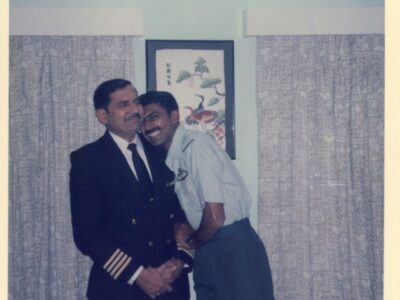
I’ve followed Akash Banerjee’s work since before he was a household name, through all the algorithmic evolutions of YouTube and India’s increasingly fragile relationship with truth. I’ve admired his relentless courage, the unapologetic humour, the sheer stamina it takes to show up week after week to hold power accountable. His voice is one of the few I trust in the cluttered din of digital despair. Which is why I find myself in the strange and uncomfortable position of writing this, not as an opponent, nor as a casual critic, but as someone who desperately wants him to get it right.
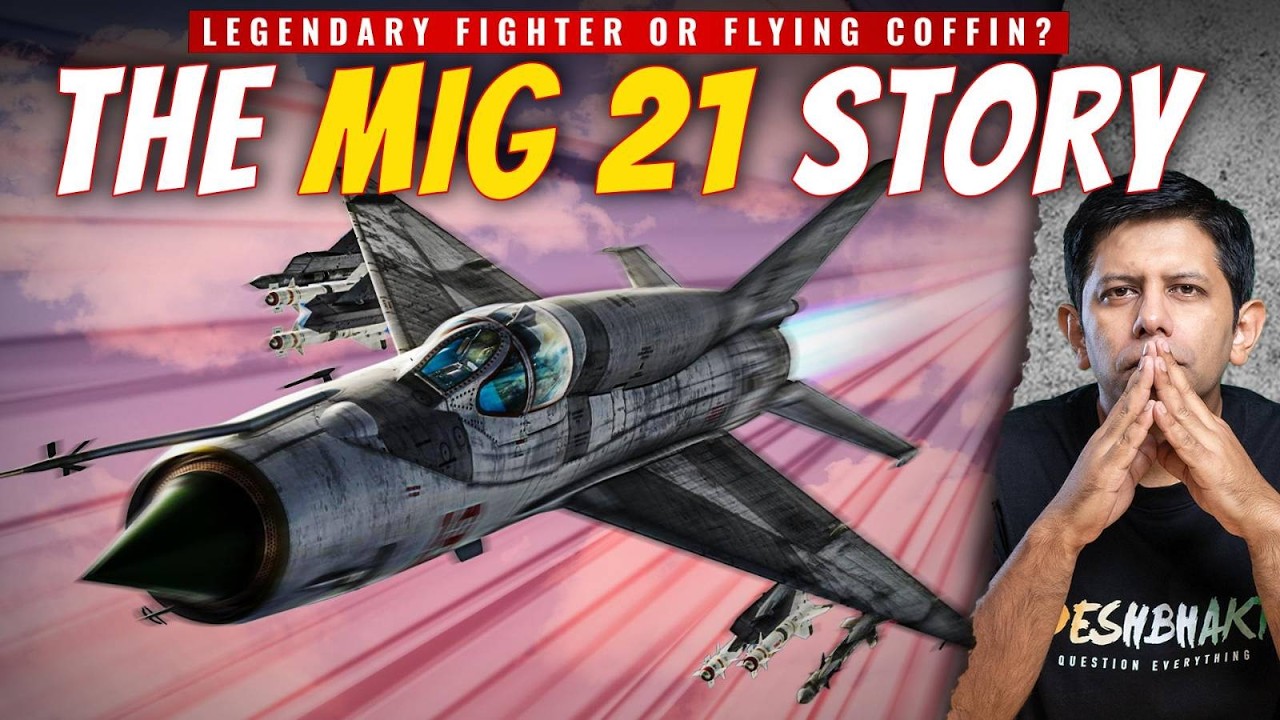
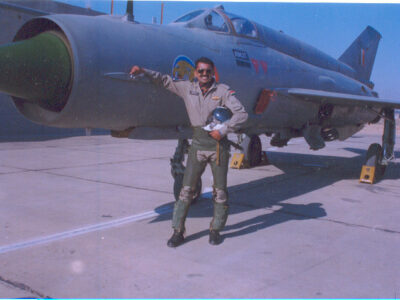
In his recent video on the retirement of the MiG-21s, a beautifully made, important video in many ways, Akash opens with the story of my brother, Flight Lieutenant Abhijit Gadgil, who died in a MiG crash at Suratgarh. That crash did not happen, as he repeatedly states, on 21 September 2001. It happened on the 17th. There is no ambiguity here. It is recorded in the news, in government correspondence, in every official and unofficial account, and more viscerally, in our memory.
How a research team as competent as Akash’s, and a presenter as diligent, could get something so basic wrong is perplexing. It is not just a date. It is the day the world broke for us. The error is not malicious. It is not even unusual. But it is unacceptable. Because if you cannot get the date of a death right, especially one you are building a national story around, what else might you have missed?
And then there is the rank. My brother was a Flight Lieutenant. Not a Lieutenant. This is not pedantry. This is the difference between two branches of the Indian Armed Forces, each with its own history, structure, traditions, and operational realities. A Lieutenant is an Army officer. A Flight Lieutenant is an Air Force officer. That distinction matters. Not because one is better than the other, but because they are not interchangeable. If we cannot expect our public commentators to understand that, how are we to expect the broader public to honour those who serve in uniform?
Akash also weaves the term “flying coffin” into the narrative. Again, he does not falsely attribute it to us, but he creates a contextual proximity that leaves the door ajar for assumption. Let me close that door firmly. We have never used that term. We have, in fact, pushed back hard against it in every public forum we’ve been given. We have explicitly stated that it is disrespectful, not just to the machine, but to the people who flew it, serviced it, lived with it, and in far too many cases, died in it.
The MiG-21 served the Indian Air Force with distinction for decades. It was not a joke, not an embarrassment, not a deathtrap. It was a Cold War workhorse. Obsolete in the 21st century? Certainly. Dangerous when not maintained? Of course. But it was never an object of villainy in our eyes. As my parents have said before, even a well-maintained bullock cart is roadworthy. But that doesn’t make it the right for the F1 track. The question was never about whether the MiG could fly. The question was whether it should still be asked to. It deserves retirement. Not ridicule.
And yes, we did receive letters. My father was telephoned. We were advised, politely and with more than a hint of condescension, to dial it down. We were told that our campaign, which demanded accountability and systemic reform, was “demoralising the force.” We responded by saying that if demoralising the force was an issue, perhaps 12 pilots dying per year in aircraft crashes should be more worrying than our press conferences. They backed down.
But here’s the thing. Nobody called us anti-national. Nobody suggested we were unpatriotic. The ruling government at the time was BJP-led, but it had not yet become what we see today. The press still had room for dissent. Civil society had not yet been infected with the poison of performative loyalty. We were not trolled, arrested, demonised, or subjected to character assassination. We were, in fact, heard. Firmly. Even uncomfortably. But always as citizens entitled to question their state.
Today, if we had done even a fraction of what we did then (writing letters to ministers, holding press conferences, meeting with the Defence Minister and the President, submitting petitions to the National Human Rights Commission, and appearing on television), we would have been branded traitors. Our photos would have been plastered on shouting panels. Our patriotism would have been questioned by those who wouldn’t know the difference between a MiG and a Mirage.
Akash doesn’t say this happened to us. But his script leaves open just enough ambiguity for the imagination to fill in the gaps with modern fear. That, too, needs correction. Not because I want to sanitise history, but because I want to preserve its truth. It is possible to criticise the government, even the military, without hating the nation. It was once even respected.
What saddens me most is that these are not unforgivable sins. A wrong date. A wrong rank. An unintended implication. These are fixable. But they matter. Because I suffer from the opposite of the Gell-Mann Amnesia Effect. When I see someone get a thing wrong, especially a thing I know in my bones, I begin to doubt the rest. Not because I want to. But because I cannot help it.
And that’s a shame. Because the rest of Akash’s video is excellent. Truly. His command over language, his timing, his sense of satire. All formidable. But when the foundations are mislabelled, the structure begins to wobble, no matter how well-painted the façade.
This is not a takedown. It is a request. To Akash, and to all of us who tell stories. Check your facts, not just your feelings. Especially when the stories involve the dead. Especially when the families are still watching.
Because some stories aren’t just history. They are still happening.
Postscript: It is indeed ironic that the last squadron from which the MiG-21 is to be retired is the 23 Squadron (Panthers), which was Abhijit’s squadron, and that this is being done in September, almost 24 years to the date of his crash.